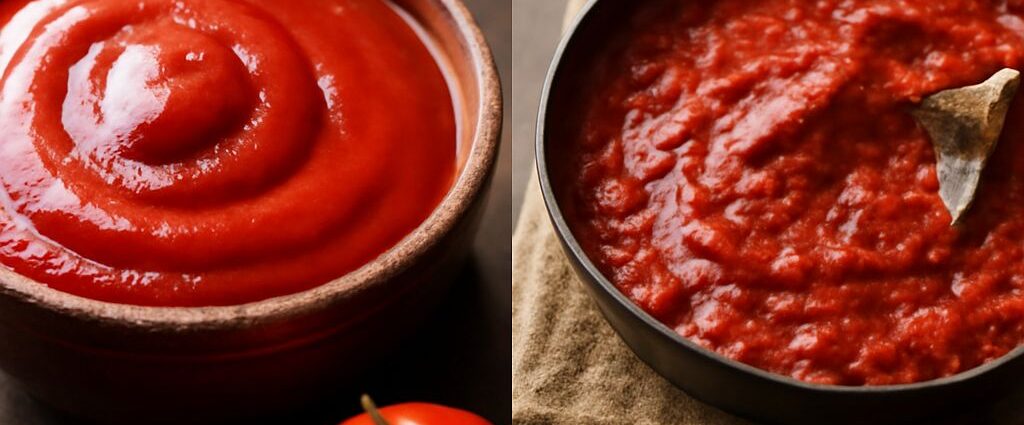
A can of plain tomato sauce is a starting ingredient; a jar of pasta sauce is usually closer to a finished sauce. One lets you choose the seasonings, while the other brings its own blend to the table. Both can go on a pizza, but they may need different treatment first.
If you want to put pasta sauce on pizza, check its texture and ingredients before opening the dough. A spoonful that runs quickly may need a little simmering to make the pasta sauce thicker; a chunky sauce may need chopping or blending. Taste first, then decide whether it needs anything else.
The difference in the can and the jar
Is tomato sauce the same as pasta sauce? No. In American grocery stores, canned tomato sauce is generally a cooked, smooth tomato product. It may contain salt or seasonings, so “plain” here means a relatively simple tomato sauce rather than a guarantee of a single ingredient. Read the label. Food & Wine’s guide to canned tomatoes describes tomato sauce as a cooked, puréed product and notes that seasonings can be included.
Pasta sauce is a broader, ready-to-use category. A jar may contain tomato purée or pieces, onion, garlic, herbs, oil, vegetables, sugar, or cheese. The USDA’s 2021 canned vegetable specification lists basil, garlic, and onion among ingredients for its spaghetti sauce; that is an example of a seasoned product, not a recipe for every jar.
The difference between plain tomato sauce and pasta sauce matters most when seasoning. The simpler can gives you a blanker canvas. A seasoned jar has already made some decisions for you, including how much garlic and salt belongs on your dinner.
Flavor, acidity, and texture
Tomatoes bring a tart note to both products, but acidity and perceived tartness vary with the tomatoes and other ingredients. Salt, sugar, fat, herbs, and cooking can change how a sauce tastes. A sweet sauce does not necessarily have a higher pH, and tasting cannot tell you whether a recipe is safe for preserving.
Pasta sauce is made to coat noodles: some liquid can help it cling once it is tossed with pasta. Pizza needs a spreadable layer that stays put on the dough. A sauce with large vegetable pieces may taste excellent over penne but make a lumpy, wet layer on a thin crust. Smoothness is a preference; excessive free liquid is the bigger practical concern.
Can a jar of pasta sauce go on pizza?
Can you use pasta sauce for pizza? Yes. Choose one whose flavor you enjoy, then adjust its texture and use a light hand. A smooth marinara with modest seasoning may be ready as it is. A chunky garden-vegetable sauce may benefit from a short simmer or a few pulses in a blender. A very sweet or heavily herbed sauce will carry those flavors into the finished pizza, so balance the toppings accordingly.
To use pasta sauce as a pizza topping, spoon a little into a bowl and look at it. If watery liquid separates around the edges, simmering can concentrate it. If it sits in a soft mound and spreads without pooling, try it as it is. Avoid dipping a utensil that has touched raw dough back into the jar.
For a pizza with a pasta sauce containing mushrooms, peppers, or onion, consider the size of the pieces. Chop them if they are too large to spread easily, or leave them visible for a rustic finish. Add fewer extra vegetables if the sauce already has plenty. For a smooth purée, let hot sauce cool slightly before blending and follow your blender’s instructions for hot liquids.
A jar labeled tomato and basil may need no extra basil. A garlic-heavy one probably does not need another handful of garlic. Check for cheese or other animal-derived ingredients if you are cooking vegan, and choose a plant-based topping if desired.
Thicken pasta sauce for a better pizza base
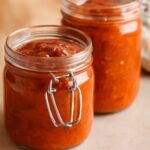
To thicken pasta sauce, use a saucepan for control. Pour the amount you need into a small pan, bring it to a gentle simmer, and leave it uncovered. Stir often, especially as it thickens, and lower the heat if it starts to catch. Stop when a spoon leaves a brief trail through the sauce and the mixture spreads rather than runs. Let it cool before putting it on dough.
There is no single reduction time for every brand. Starting thickness, pan width, heat, and batch size all matter. For a concrete reference, King Arthur Baking’s pizza sauce simmers a particular tomato, onion, and butter mixture for 45 to 60 minutes until thickened; that time belongs to that recipe, not automatically to your jar. Reduce a thin pasta sauce until its texture suits the crust rather than setting the same timer for every sauce.
Tomato paste is another option for a sauce that tastes too dilute. Stir in a small spoonful, warm the mixture, and taste before adding more: paste changes the tomato flavor as well as the body. This adjustment changes the sauce you have, so add the paste gradually. If you thicken the sauce for pasta before using it on pizza, remember that a little extra paste can go a long way.
A few pulses with an immersion blender can make a chunky sauce more even, but blending alone does not remove water. To give pasta sauce more body, simmer it after blending if it still pools. Conversely, if you reduce it too far, stir in a little water until it spreads easily again.
Choosing a sauce for the pizza you are making
A smooth marinara is a convenient match for a thin crust because it usually spreads without large pieces getting in the way. Taste it first: a bright tomato and basil jar may be good with sliced mushrooms or a little plant-based mozzarella. If the sauce is loose, simmer just the portion you need and cool it before spreading. If it already holds its shape on a spoon, use a thin layer as it comes.
A chunky vegetable sauce works well when you want those pieces to be part of the topping. Spoon off the amount you need and chop any pieces that would make spreading awkward. Simmer if liquid gathers around the vegetables, then spread the sauce and keep the remaining toppings modest. A thicker crust gives those pieces more room than a delicate, cracker-thin base.
For a strongly seasoned garlic or roasted-pepper sauce, let the jar lead your choice of toppings. Taste a spoonful before adding dried herbs, salt, or more garlic. Pair a sweet-tasting sauce with savory vegetables if that balance appeals to you; adding sugar to a tart sauce is a flavor decision, not a requirement. Add a small pinch at a time.
If you start with plain canned tomato sauce, consider its consistency and salt level separately. An unsalted, loose sauce may benefit from a little salt, herbs, and a gentle reduction. A seasoned and already thick can may need very little. Make adjustments in a bowl or pan, taste along the way, and spread only after the sauce has cooled. The ingredient label will tell you which seasonings are already there.
For an opened jar, follow its storage directions. If you have warmed a portion and have leftovers, place them in a covered container in the refrigerator and use within 3 to 4 days, following USDA’s guidance on refrigerated leftovers. Use a clean spoon each time you take sauce from the container.
How much sauce should go on the crust?
Start with a small spoonful in the middle and spread it outward, leaving a border for the crust. Add only enough to cover the dough in a thin layer. The exact amount depends on the size of your pizza, the consistency of the sauce, and how saucy you like the finished slice. You can always serve extra warmed sauce alongside.
This matters especially with pasta sauce on a pizza because jarred sauces range from concentrated and smooth to loose and chunky. A thick sauce can be spread thinly; a wet one can soak the surface before the crust sets. Similarly, drain juicy toppings when appropriate and avoid piling them into the center.
Bake according to your dough’s directions. Look for the crust color and doneness described there, and let the pizza rest briefly before slicing so the toppings are easier to handle. Avoid a puddle under every slice.
Choosing the right sauce tonight
For a quick tomato sauce vs pasta sauce decision, pick canned tomato sauce when you want to control seasoning from the beginning. Pick a simple marinara when you want a head start and like its flavor. Comparing tomato and pasta sauces at the store also means checking the ingredient list: one plain-looking can may contain salt, while a jar may include cheese, added sugar, or vegetables.
If plain tomato sauce differs from a pasta sauce in your pantry mainly because it is unseasoned, add herbs and garlic to suit your toppings. If the jar is already flavorful but loose, simmer a portion. If it is thick and tastes good, spread it straight from a clean bowl. Wondering whether pasta sauce can work for pizza? The useful answer is in the spoon: it should taste balanced, spread readily, and stay where you put it.






Comments are closed, but trackbacks and pingbacks are open.