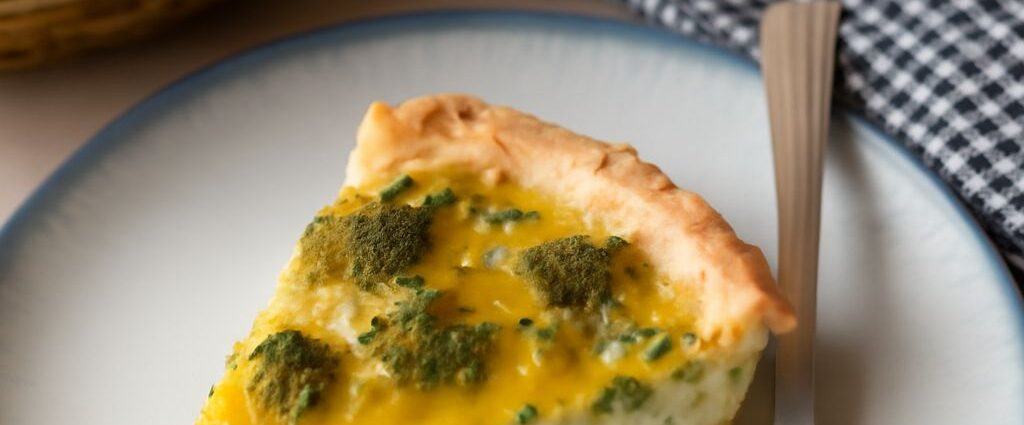
A golden crust, tender broccoli, and a sliceable egg filling make a comforting lunch or an easy centerpiece for brunch. This recipe for a broccoli quiche pairs the vegetables with cheddar and a simple milk-and-egg custard. Dry the broccoli well before assembly, then bake until the center is set and reaches a safe temperature.
This vegetarian broccoli-cheddar bake uses eggs and dairy; it is not vegan. Choose cheddar made with microbial or other vegetarian-suitable enzymes, and check the crust ingredients too. A ready-made pie shell keeps the preparation manageable, while a short rest after baking makes neat slices much easier.
Broccoli Quiche Recipes: An Easy Cheddar Version
This broccoli and cheddar quiche makes one 9-inch pie, or about six servings. Use a deep 9-inch shell with enough room for the filling. If your shell is shallow, place it on a baking sheet and leave out any custard that would overflow rather than filling it to the rim.
Ingredients
- 1 unbaked 9-inch deep-dish pie shell, vegetarian-suitable
- 2 cups small broccoli florets, about 8 ounces
- 1 cup shredded cheddar, about 4 ounces, made with vegetarian-suitable enzymes
- 4 large eggs
- 1 cup whole milk
- 1/2 cup heavy cream
- 1/2 teaspoon fine salt
- 1/4 teaspoon black pepper
- 1/4 teaspoon garlic powder, optional
Directions
- Heat the oven to 375°F. Place the pie shell on a rimmed baking sheet. If the shell’s package recommends prebaking for a filled pie, follow its directions; otherwise, line it with parchment, add pie weights, and bake for about 12 minutes. Remove the weights and parchment and bake another 3 to 5 minutes, until the base looks dry. Reduce the oven to 350°F.
- Cut the broccoli into small, even pieces. Steam for 3 to 4 minutes, until bright green and just tender. Drain well, spread on a clean towel, and blot dry. Let it cool slightly while you prepare the custard.
- Whisk the eggs, milk, cream, salt, pepper, and optional garlic powder until evenly combined. There is no need to beat in a great deal of air.
- Scatter the dry broccoli and shredded cheese evenly over the warm crust. Pour the egg mixture slowly over them, stopping below the rim. If pieces float, gently redistribute them with a fork.
- Bake at 350°F for about 40 to 50 minutes, until the edges are set and the center has only a slight, uniform wobble. Check the center with a food thermometer: egg dishes should reach 160°F. If the crust browns too quickly, cover its edge loosely with foil.
- Rest for 15 to 20 minutes before slicing. The filling will settle and become easier to cut. Serve warm, or cool and refrigerate promptly for later.
The best broccoli quiche recipe for a relaxed meal is one you can prepare without racing the clock. This version lets you cook and dry the broccoli while the crust bakes, then bring everything together in the same pie shell.
Prepare broccoli without excess water
In this quiche recipe, broccoli should be tender enough to eat but still hold its shape. Small florets distribute throughout the filling, so each slice gets some. Trim away any woody stem ends; peel and finely dice tender stems if you would like to use them. A few larger pieces can be cut in half after steaming.
Steaming briefly softens the vegetables before they enter the custard. Once drained, spread them in a single layer and blot thoroughly. Water trapped between florets can seep into the filling as it bakes, making the bottom wet and the slices less tidy. Do not squeeze them so hard that they fall apart; a gentle press with a towel is enough.
Frozen broccoli works too. Thaw it, drain it, and press out the excess water before adding it to the shell. Chop large pieces into small florets. Since frozen broccoli is usually blanched before freezing, it may already be tender enough without the full steaming time. Let the texture guide you: it should be easy to bite, not mushy.
If you prepare the vegetables in advance, refrigerate them in a covered container. Blot once more just before assembly if moisture has collected. This small step is especially helpful when the broccoli has been chilled overnight. The custard will bring plenty of moisture of its own.
Choose the crust and cheese
A purchased shell saves time, but packages vary. Check whether the crust contains lard or other ingredients that do not suit a vegetarian diet. A homemade butter or vegetable-shortening crust also works. Prebaking helps the base begin to set before the wet filling goes in; follow the particular shell’s instructions for weights, temperature, and timing when provided.
Cheddar adds flavor and melts into the custard. Sharp cheddar gives a stronger flavor than mild, so choose according to your preference. For vegetarian suitability, look for a statement that the cheese is vegetarian or made with microbial, plant, or fermentation-produced enzymes. If the label only says “enzymes” and the source matters to you, check with the manufacturer.
Shred the cheese yourself or use a packaged shredded version you enjoy. Scatter it evenly rather than leaving a thick pile in the center. The cheese should complement the eggs and broccoli rather than crowd them out. In this quiche, broccoli and cheddar both get a place in every slice.
A cheddar broccoli quiche can be served with a simple green salad or sliced tomatoes. Their fresh, juicy texture balances the warm filling and flaky crust. If making brunch for guests, set out the salad while the pie rests; the oven has done the hard work by then.
How to tell when the filling is done
Eggs and dairy form a custard as they heat. The outside sets before the center, so check the middle instead of judging only by the golden edge. Give the baking sheet a gentle nudge: the center should move slightly as one soft piece, without a wave of liquid. Insert an instant-read thermometer into the center of the filling, avoiding the metal pan, and look for at least 160°F. FoodSafety.gov gives 160°F as the safe temperature for egg dishes such as quiche.
In broccoli quiche recipes, baking time depends on the depth of the shell, the temperature of the ingredients, and the oven. Start checking near 40 minutes. If the top is browning while the middle is still loose, cover it loosely with foil and continue baking. The aim is a tender, set center rather than a dry filling with a deeply browned surface.
Resting is part of the process. A very hot slice can slump when lifted because the custard is still settling. Give it 15 to 20 minutes, then use a sharp knife and a pie server. The first slice may be a little untidy; it is also the cook’s opportunity to make sure the cheese is doing its job.
Serve, store, and reheat
This easy broccoli quiche works for breakfast, lunch, or dinner. Serve it warm with fruit for brunch, with a crisp salad for lunch, or with roasted carrots and beans for a more substantial evening plate. Cut six wedges for a main dish or smaller portions if it is one of several dishes on the table.
Refrigerate leftovers within two hours of baking, or within one hour if the surrounding temperature is above 90°F. Cover and keep at 40°F or below; use within three to four days. For reheating, warm a slice until it reaches 165°F throughout. A moderate oven helps preserve the crust, while a microwave is convenient for a quick lunch. These times and temperatures follow general FoodSafety.gov guidance.
For a vegetarian quiche with broccoli prepared ahead, bake it completely, refrigerate promptly, and reheat portions when needed. Do not leave it on a buffet table for the whole afternoon. If packing a slice to go, keep it chilled with an ice pack until you can reheat it.
Fix excess moisture or an unset center
If liquid pools around a cut slice, the broccoli may have carried extra water or the custard may still be underbaked. Return an unset pie to the oven, shielding the crust if needed, and check the center until it reaches 160°F. If the filling is set but the vegetables are watery, blot the visible moisture and serve; next time drain and dry the broccoli more thoroughly. A center that ripples like liquid needs more baking, while a slight even wobble and the safe thermometer reading signal that it is ready to rest.








Comments are closed, but trackbacks and pingbacks are open.