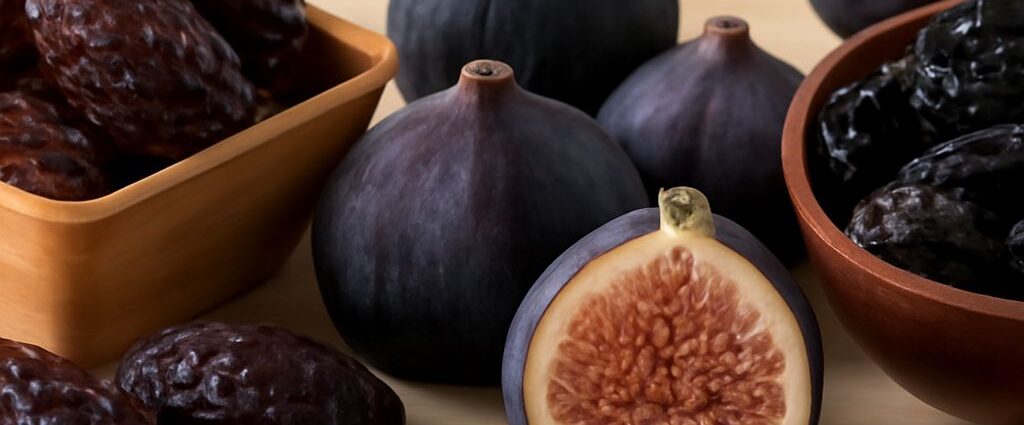
Choose soft dates when you want a sticky binder or a smooth, caramel-like sweetness. Choose dried figs when you want chewy pieces and a gentle crunch; reach for fresh figs when juicy fruit is the point of the dish. The choice between dates and figs begins with their texture as much as their flavor.
Both can be useful in a plant-based kitchen, but a fresh fig and a dried one behave quite differently in a bowl or pan. Check the form your recipe calls for before substituting, then adjust the mixture by feel rather than relying on a single exchange rate.
Difference Between Dates and Figs at a Glance
The difference between dates and figs starts with the plants. Dates grow on date palms and contain a single hard pit, which must be removed before blending or eating. Figs grow on fig trees and contain many tiny edible seeds inside their soft flesh. The University of California’s fig guide explains that the flowers develop inside the fig; at the table, the useful distinction is that there is no large central pit to remove.
When replacing figs, dates offer a different kind of sweetness in cooking: dates generally taste rich and caramel-like, while figs often have a fruitier, honeyed flavor and a noticeable seed crunch. The comparison of dates with figs changes with the fruit in your hand. A fresh fig is tender and juicy. A dried fig is denser and chewier. Soft Medjool dates can feel almost paste-like; firmer dates may need a brief soak before blending.
That is the practical answer to dates vs figs: decide whether the recipe needs moisture, a sticky paste, or distinct pieces. A soft date may disappear into a mixture, holding it together. A dried fig tends to leave little seeds and a more pronounced chew. A fresh fig can add juice and a delicate shape that neither dried fruit will reproduce.
Fresh Figs, Dried Figs, and Dates: What to Expect
A ripe fresh fig yields gently to pressure and bruises easily. Cut one open and the center may be pink, red, or pale depending on the variety, with tiny seeds throughout. Fresh figs are pleasant sliced into a salad or served on toast, where their softness can be appreciated. Wash them gently just before use, trim the stem if needed, and leave the skin on if you like its texture.
Dried figs have lost much of their water and are more concentrated and chewy. Their stems can be tough, so trim them before chopping or processing. Some are pliable straight from the package; others are firm enough to benefit from a short soak in warm water. Drain before adding them to a mixture, and reserve a little of the soaking liquid in case the blender needs help.
Many dates sold for everyday snacking are mature, partially dried fruit rather than juicy fresh fruit. Medjool dates are commonly soft, while other varieties and packages can be firmer. Check each date for its pit even if the package says pitted: a missed pit can damage a blender or surprise a tooth. If the flesh feels dry or hard, cover it with warm water for 10 minutes, drain, and test it again. The goal is pliability, not a bowl of date soup.
The distinction between the fig and the date matters most when a recipe depends on texture. A handful of dried fruit in granola is flexible; a no-bake mixture that must hold together asks much more of the fruit. Taste and handle the actual ingredients before making the swap.
Make a Snack Mixture That Holds Together
For a small batch of no-bake bites, start with 1 cup pitted soft dates, 1 cup rolled oats, 1/2 cup walnuts, and a pinch of salt. Pulse the oats and walnuts in a food processor until coarsely chopped. Add the dates and pulse until the mixture clumps when squeezed between your fingers. Roll into small balls or press into a lined container and chill until firm enough to cut.
If the mixture falls apart, the dates may be too firm or the dry ingredients too plentiful. Add a teaspoon of water, pulse again, and repeat only as needed. If it becomes too sticky to shape, pulse in a spoonful of oats. Different dates vary in size and moisture, so the squeeze test is more useful than counting a fixed number of fruits.
Dried figs can be used in a similar snack mixture, but trim their stems and soften firm fruit first. Start with 1 cup chopped dried figs in place of the dates, then pulse and squeeze. The seeds will remain noticeable, and the mix may need a little water or a spoonful of nut butter to hold. Add either gradually; the aim is a mass that clumps, not a purée that smears over the counter.
For binding, comparing dates to figs therefore points toward soft dates for a smoother, stickier result. Choose the fig version deliberately when a little crunch and chew sound good. Fresh figs contribute substantially more moisture and are better saved for serving on top than blended into this particular mixture.
Bake With Pieces or a Purée
In muffins or quick bread, chopped dried figs and dates can both add sweet pockets. Toss 1/2 cup chopped fruit with a spoonful of the recipe’s measured flour before folding it into the batter. This separates sticky pieces and helps distribute them. If the fruit is hard, soak briefly and drain well; extra soaking water changes the batter, so it should not go into the bowl by accident.
How dates compare with figs becomes clear when the fruits are puréed. Soft dates blend into a smooth paste that can add sweetness and moisture to a batter. Dried figs make a more textured paste because of their seeds. If a recipe specifically relies on date paste for both sweetness and structure, replacing it with fig paste can change the crumb. Try the swap in a small batch and look for a batter with the consistency described in the original recipe.
Fresh figs need a separate plan. Their juicy flesh can soften the area immediately around each piece during baking. Arrange a few slices on top of a muffin or cake batter rather than replacing all the dried fruit inside it. This keeps the fruit visible and lets you judge how much moisture the particular figs release. Bake according to your base recipe, checking the center for doneness away from a wet fruit slice.
Blend a Sauce or Build a Salad
For a quick fruit sauce, simmer 1/2 cup chopped pitted dates with 1/2 cup water for about 5 minutes, until soft. Blend with 1 teaspoon lemon juice and a small pinch of salt, adding water a tablespoon at a time until it pours from a spoon. Serve a little over oatmeal or unsweetened plant-based yogurt. Use it promptly, or refrigerate it in a covered container and use within three to four days as you would other prepared leftovers.
Dried figs can take the same route after their stems are removed, but expect a seedier sauce. Start with the same volume and adjust the water after blending; firmness varies from package to package. Fresh figs may need less water and a shorter simmer. Their milder, fresher flavor makes a lovely topping, but the result will not have the same concentrated sweetness as a sauce made with dried dates.
In a salad, the decision is simpler. Quarter fresh figs over arugula with toasted walnuts and a lemon-and-olive-oil dressing. Their juicy centers soften the peppery greens. To use dates instead, pit and slice two or three into thin strips; add a little at a time, since each piece brings concentrated sweetness. Dried figs work too: slice them thinly so their chew does not overwhelm a forkful of greens.
Buy and Store for the Texture You Want
Look for fresh figs that feel tender without being crushed or leaking. Refrigerate them in a shallow container so they do not press heavily on one another, and use them soon. Utah State University Extension recommends refrigerating fresh figs for up to two to three days. If a fruit is moldy or smells fermented, discard it.
For dried figs or dates, inspect the package and follow its storage directions. Keep opened dried fruit sealed to limit drying and protect it from moisture and pests. Refrigeration is a useful choice for soft dates, especially if you will not use them quickly; a University of California postharvest guide notes that storage life differs with the variety and moisture level. Let chilled fruit warm briefly if it is too firm to chop comfortably.
For any substitution, choose the fruit by its job: a soft paste for binding, chewy pieces for a bite, or a fresh fig for juice and shape. Then adjust moisture a little at a time until the mixture behaves as the dish requires.









Comments are closed, but trackbacks and pingbacks are open.