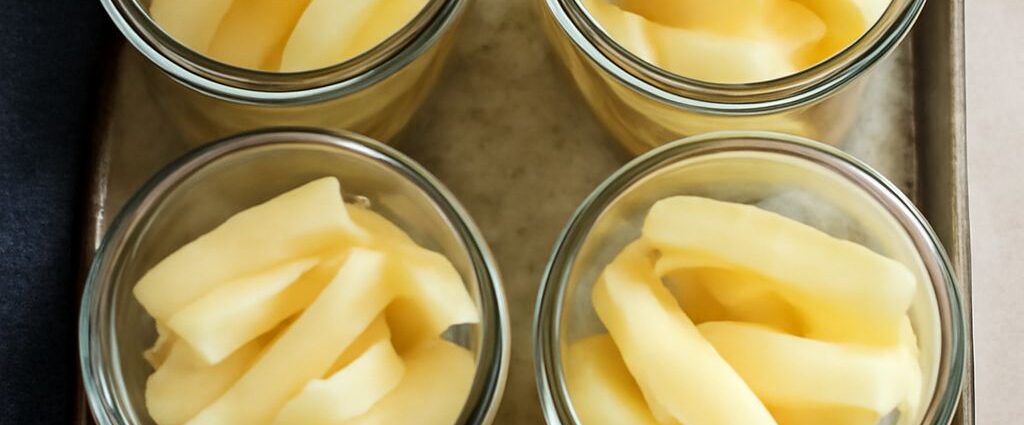
Yes, you can can potatoes at home, and the safest common method is canning potatoes raw pack in a pressure canner. Use peeled or scrubbed potatoes, hot jars, and the correct processing time for your jar size and altitude. The finished potatoes should be tender, not mushy, and fully covered by liquid after processing.
This method works best for plain potatoes, not mashed or seasoned potatoes. If you want shelf-stable potatoes for soups, hash, or quick sides, can potatoes with the steps below.
Can Potatoes Ingredients and Preparation
Ingredients for 7 quart jars or 9 pints:
- 10 to 12 pounds potatoes, preferably Yukon Gold, russet, or another firm variety
- Water for boiling and packing
- Canning salt, optional: 1 teaspoon per quart or 1/2 teaspoon per pint
Choose potatoes without green skin, sprouting, or soft spots. Scrub them well, then peel if the skins are thick or blemished. Cut into 1-inch cubes or leave small potatoes whole if they are 2 inches across or smaller.
Keep peeled potatoes in cold water while you work so they do not darken. Before packing, drain them well. Fill a large pot with fresh water and bring it to a boil. Parboil the potatoes for 2 minutes only, then drain again.
Make Can Potatoes
Use a pressure canner, not a boiling-water canner. Potatoes are a low-acid vegetable and need pressure canning for safety.
- Wash jars, lids, and bands. Keep jars hot until ready to fill.
- Add potatoes to the hot jars, packing them loosely. Do not mash or press them down.
- If using salt, add it now: 1 teaspoon per quart or 1/2 teaspoon per pint.
- Pour in boiling water or fresh boiling canning liquid, leaving 1 inch headspace.
- Remove air bubbles with a nonmetal tool. Adjust the liquid if needed to maintain headspace.
- Wipe jar rims clean, place lids on, and screw bands on fingertip-tight.
- Load jars into the pressure canner with the amount of water required by your canner model.
- Vent steam for 10 minutes, then bring the canner to pressure.
Process time:
- Pints: 35 minutes at 11 psi for weighted gauge canners, or 11 psi on dial gauges at 0 to 2,000 feet
- Quarts: 40 minutes at 11 psi for weighted gauge canners, or 11 psi on dial gauges at 0 to 2,000 feet
Raise pressure for higher altitudes according to your canner manual. Let the canner return to zero pressure naturally before opening. Remove jars carefully and leave them undisturbed for 12 to 24 hours.
Success cues: lids are sealed, jars are not leaking, and potato pieces stay covered by liquid. The liquid may look cloudy from starch, which is normal.
Failure cues: siphoned liquid, cracked jars, bulging lids, or jars that do not seal. Refrigerate unsealed jars and use them within 3 to 4 days.
Serve, Store, or Vary
Before serving, drain and rinse if you want a milder flavor. Canned potatoes are ready to warm in butter, roast in a skillet, add to soup, or turn into hash.
Store sealed jars in a cool, dark place for up to 1 year for best quality. Check seals before storing. Any jar with a failed seal must be refrigerated and used quickly.
For variety, you can pack potatoes plain and season later. That keeps them more versatile for chowders, breakfast potatoes, or casseroles. If you want firmer pieces, choose waxier potatoes. If you want softer mash-ready potatoes, russets work well, though they may break down more during storage.











Comments are closed, but trackbacks and pingbacks are open.