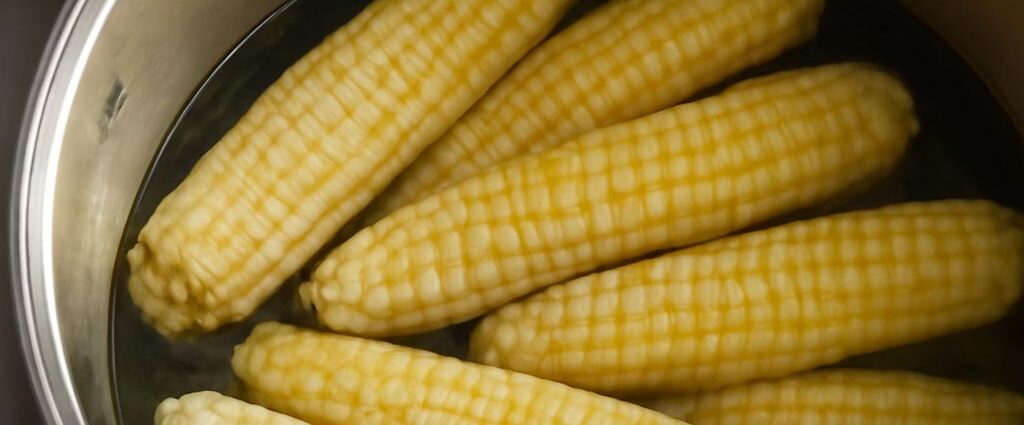
Blanching corn before freezing keeps the kernels sweeter, brighter, and less starchy in the freezer. The process is simple: prep fresh corn, blanch it in boiling water for the right amount of time, chill it fast, dry it well, and pack it airtight.
The key is timing. Small ears need less time than large ears, and cut kernels need a shorter blanch than whole ears. Use the steps below to freeze corn with good texture and flavor.
Prepare the Corn and Setup
Start with the freshest corn you can get. Look for ears with tight green husks, moist silk, and plump kernels. The sooner you freeze corn after harvest, the better it tastes later.
Husk the corn and remove as much silk as possible. A soft vegetable brush or a damp paper towel helps lift stubborn strands. Trim any damaged tips or broken ends.
Set up two things before you begin blanching corn for freezing:
- A large pot of water, deep enough to cover the ears fully.
- A large ice bath made with plenty of ice and cold water.
Bring the pot to a full rolling boil before adding the corn. Keep the ice bath nearby so you can move the corn straight from hot water to cold water without delay.
If you want to freeze kernels instead of whole ears, have a sharp knife and shallow trays or bowls ready for draining and packing.
How Long to Blanch Corn
The best answer to how long to blanch corn for freezing depends on ear size. Timing starts when the corn goes into boiling water and the water returns to a boil.
Small ears
Blanch small ears for 7 minutes. Small ears are tender and heat through quickly, so longer boiling can soften the kernels too much.
Medium ears
Blanch medium ears for 9 minutes. This is the most common timing for average sweet corn ears and works well for most home freezers.
Large ears
Blanch large ears for 11 minutes. Bigger ears need more time for the heat to reach the center and stop enzyme activity evenly.
Kernel option
If you plan to freeze cut kernels, the method changes slightly. Blanch the whole ears first using the same time guide above, then cool them quickly. After cooling and draining, cut the kernels from the cob. This preserves the best flavor and texture for most home kitchens.
Some people ask how long to boil corn before freezing as if boiling and blanching are different steps. For freezing, the boiling water step is the blanch. Use the timing above, then cool immediately.
Do not overblanch. Too much time can make corn mushy, dull, and more likely to lose flavor in storage.
Cool, Package, and Freeze
Once the blanching time is up, move the corn to the next step immediately. Fast cooling is just as important as correct boiling time.
Ice bath
Transfer the ears straight into the ice bath. Keep them there until completely cool, usually several minutes. Add more ice if the water warms up. The corn should stop cooking quickly, not sit in lukewarm water.
Drain and dry
Drain the ears well after chilling. For whole ears, set them on clean towels or a wire rack until the surface moisture is gone. Drying matters because excess water creates ice crystals and freezer burn.
If you are freezing kernels, cut them from the cob after the ears cool. A bundt pan or shallow bowl can help catch the kernels neatly. Let the kernels cool and drain again if needed before packaging.
Portion and seal
Pack corn in meal-size portions so you can use only what you need. Use freezer bags, vacuum bags, or freezer-safe containers. Press out as much air as possible before sealing.
- Label each package with the date.
- Write whether it is whole ears or kernels.
- Flatten bags for faster freezing and easier stacking.
Freeze the packages as soon as they are sealed. Place them in a single layer if possible so they freeze quickly and stay in better shape.
Use Frozen Corn Well
Frozen corn works best when you keep it moving from freezer to pan. You do not need to thaw it for most recipes. In many cases, cooking from frozen gives better texture than thawing first.
Cook from frozen
Add frozen kernels directly to soups, chowders, casseroles, skillet dishes, and side dishes. For whole ears, simmer or steam until heated through, then season as desired. If you are using kernels in a sauté, add them near the end so they stay sweet and firm.
Check quality
Good frozen corn should stay bright, sweet, and tender after cooking. If the texture turns watery or mushy, the usual cause is overblanching or slow cooling. If the flavor seems flat, the corn may have been too mature before freezing.
Watch for these common problems:
- Ice crystals in the package: usually means too much air or moisture was left behind.
- Dry, frosty kernels: often caused by poor sealing or long freezer storage.
- Soft texture: often comes from overblanching or not chilling fast enough.
For the best result, use frozen corn within a year. The flavor is usually strongest in the first several months, especially when the corn was fresh and properly blanched before freezing.









Comments are closed, but trackbacks and pingbacks are open.