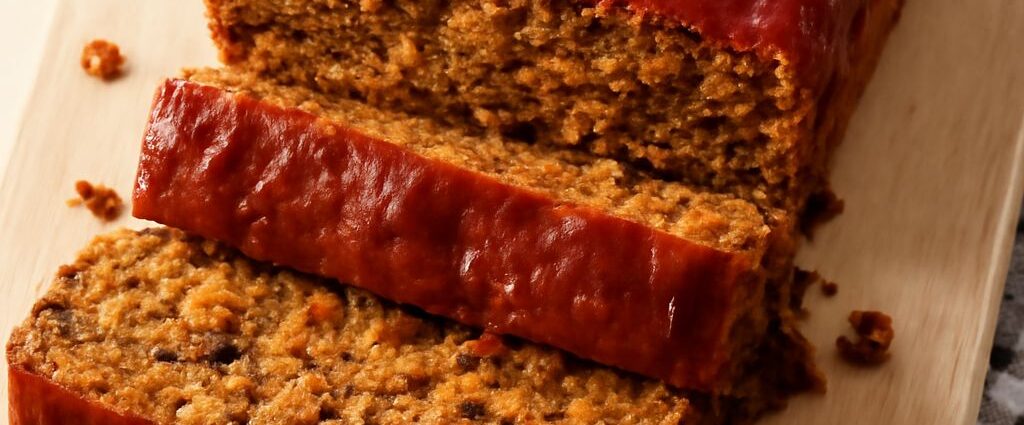
A lentil loaf that crumbles usually needs more binding or a longer rest; one that slumps and feels pasty has too much moisture. The difference matters because each problem calls for a different adjustment. A plant-based meatloaf recipe can be tender in the middle and still hold together when you cut it.
This vegan recipe for lentil loaf uses cooked lentils, walnuts, breadcrumbs, and ground flax. Sautéed vegetables bring flavor, while a tangy glaze makes the top as appealing as the slices underneath. Give the loaf time to settle after baking, and you can serve it with a spatula instead of a rescue operation.
Vegan Lentil Loaf Recipe: Ingredients and Method
This loaf makes about 6 servings in a 9-by-5-inch pan. Allow about 25 minutes of preparation, plus time to cook the lentils, 40–50 minutes to bake, and at least 15 minutes to rest. The proportions are adapted from Half Cup Habit’s lentil walnut loaf, which uses a cup of dry lentils, breadcrumbs, walnuts, and a flax binder. The method below adds mashing, moisture checks, and a resting period for easier slicing.
For the loaf
- 1 cup dried brown or green lentils, rinsed and picked over
- 3 cups vegetable broth or water
- 3 tablespoons ground flaxseed
- 1/2 cup water, for the flaxseed
- 1 large yellow onion, finely diced
- 1 large carrot, grated
- 1 celery stalk, finely diced
- 2 tablespoons olive oil
- 2 teaspoons minced garlic
- 1 cup plain vegan breadcrumbs, plus a little more if needed
- 3/4 cup walnuts, finely chopped
- 1 teaspoon dried oregano
- 1 teaspoon salt, or less if the broth is salty
- 1/2 teaspoon ground black pepper
For the glaze
- 2 tablespoons ketchup
- 1 tablespoon maple syrup
- 1 tablespoon balsamic vinegar
Check the breadcrumbs and broth labels for animal ingredients. If your breadcrumbs are seasoned or your broth is salty, start with less salt and adjust the mixture before baking. The glaze adds a sweet, sharp contrast without soaking the loaf.
Make the loaf
- Cook the lentils. Bring the lentils and broth to a boil in a saucepan, then lower the heat to a gentle simmer. Cook for about 25–35 minutes, until tender. Drain any remaining liquid well and let the lentils steam in the strainer for a few minutes.
- Prepare the binder and pan. Stir the ground flaxseed into the 1/2 cup water and set aside for at least 10 minutes to thicken. Heat the oven to 350°F. Lightly oil a 9-by-5-inch loaf pan and line it with parchment, leaving overhang on the long sides for lifting.
- Cook the vegetables. Heat the oil in a skillet over medium heat. Add the onion and celery and cook for about 6 minutes, stirring, until softened. Add the carrot and garlic; cook for another 4–5 minutes. Continue briefly if liquid pools in the pan, until it evaporates. Let the vegetables cool slightly.
- Combine. Mash roughly half the drained lentils with a fork or potato masher. Mix them with the remaining lentils, vegetables, flax mixture, breadcrumbs, walnuts, oregano, salt, and pepper. Let the mixture stand for 5 minutes so the crumbs can absorb moisture.
- Check and shape. Squeeze a spoonful in your hand: it should hold together without liquid running out. If wet and loose, mix in breadcrumbs a tablespoon at a time and wait a minute before checking again. Press the mixture firmly and evenly into the prepared pan, including the corners.
- Glaze and bake. Stir the ketchup, maple syrup, and vinegar together and spread over the top. Bake for 40–50 minutes, until the top looks set, the edges are lightly browned, and the center is hot. The loaf should feel firm when gently pressed, though it will still be tender.
- Rest and slice. Leave the loaf in its pan for at least 15 minutes. Lift it out with the parchment and cut with a sharp knife into thick slices. If it still feels delicate, give it another 10 minutes before slicing.
This vegan lentil loaf recipe is a good choice for a dinner where the main dish needs to be prepared ahead. Serve it with mashed potatoes and peas, or put a slice beside a crisp salad and a spoonful of extra ketchup. Serve with a spatula.
Choose and Prepare the Lentils
In this vegan lentil meatloaf recipe, brown or green lentils hold some shape when cooked, giving each slice texture. Red lentils soften much more readily, so they would change the consistency and need a different balance of liquid and binder. Use the brown or green kind for these proportions.
Taste a few lentils before draining. They should be tender all the way through, with no hard center. If the pot dries out before they are tender, add a little water and continue cooking. Drain thoroughly even if only a small amount of liquid remains: that liquid would otherwise enter the loaf. You can cook the lentils a day ahead and refrigerate them in a covered container.
Mashing half creates a sticky base while leaving enough whole lentils to give the finished slices definition. The mixture should resemble a coarse, moist stuffing rather than a smooth purée. If using a food processor, pulse only the portion you intend to mash, then stir everything together by hand.
Manage Moisture and Binding
Vegetables give a vegan loaf recipe with lentils sweetness and a savory foundation, but release water as they cook. Dice the onion and celery small enough to soften within the cooking time, and grate the carrot so it distributes evenly. A wide skillet helps moisture evaporate. Before adding the vegetables to the bowl, look for a mostly dry pan rather than a puddle beneath them.
In vegan recipes for meatloaf, ground flax absorbs water and thickens into a gel. It works with the mashed lentils and breadcrumbs to help hold the mixture together. Use ground flaxseed rather than whole seeds, and give it the full 10 minutes to hydrate. Breadcrumbs absorb additional moisture, so the brief standing time before shaping makes the squeeze test more reliable.
For a vegan meatloaf recipe, the right texture is moist and cohesive, not stiff like bread dough. When squeezed, a small handful should keep its shape and leave your palm damp, not dripping. If it crumbles immediately, mash a little more of the mixture and work it back in. If it seems dry after that, add water a teaspoon at a time. Small changes are easier to judge than a sudden pour.
Many vegan meatloaf recipes use oats or other grains as binders. This version uses breadcrumbs; if you need gluten-free ingredients, choose gluten-free breadcrumbs and check the broth and other packaged ingredients too. Texture varies between brands, so use the squeeze test before deciding whether to add more crumbs.
Bake, Rest, and Serve
As with other plant-based meatloaf recipes, press the mixture firmly into the pan, especially at the ends, to remove air pockets. Smooth the surface for an even glaze and bake on the center rack.
Look for a set surface and lightly browned edges. The center should yield slightly when pressed. If the top darkens before the center is hot and set, cover loosely with foil and continue baking.
Resting lets the loaf firm as it cools. Keep it in the pan for the first 15 minutes so the sides have support, then use the parchment to lift it onto a board. Cut slowly with a sharp knife and aim for slices about 3/4 inch thick. If a thinner slice breaks, make the next one wider. For especially tidy portions, chill the cooled loaf and slice it cold before reheating.
A vegan meatloaf recipe also fits a make-ahead meal: cool it promptly, cover, and refrigerate. Reheat slices until hot throughout, covered with a spoonful of water or sauce. Freeze wrapped slices for longer storage and thaw in the refrigerator.
Adjust the Flavor and Fix the Texture
Walnuts lend this meatloaf recipe made without animal products richness and a little crunch. Chop them finely so large pieces do not interrupt the structure. If nuts are off the menu, try finely chopped sunflower seeds in the same quantity; check the mixture’s texture before baking because different ingredients absorb moisture differently. Thyme can replace oregano for a familiar savory note, and a little smoked paprika can add warmth without changing the loaf’s structure.
When comparing vegetarian meatloaf recipes, check the binder as well as the main ingredient: eggs or dairy may appear in vegetarian versions. Here, flax and lentils do the binding. Other vegetarian recipes for meatloaf may also use cheese or butter, so inspect labels and ingredient lists when cooking for a vegan guest.
If a baked slice falls apart, first let the remaining loaf rest longer; cooling often gives the binder time to firm. If the mixture was visibly crumbly before baking, mash more lentils next time and press it more firmly into the pan. If the center is wet and slumps instead, return the loaf to the oven for a little longer. Next time, drain the lentils well, cook off the vegetable liquid, and add breadcrumbs gradually until a squeezed portion holds its shape.







Comments are closed, but trackbacks and pingbacks are open.