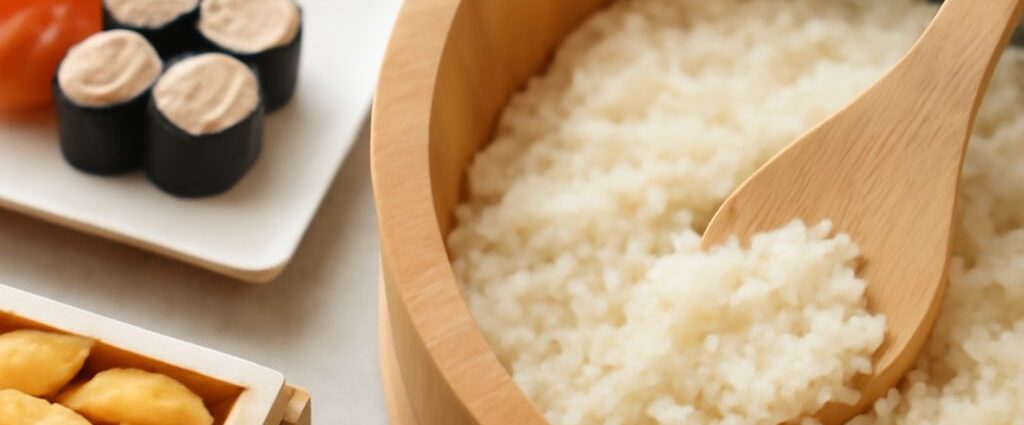
To make sushi rice in a rice cooker, rinse short-grain Japanese rice until the water runs mostly clear, cook it with a slightly reduced water ratio, then season it while the rice is still hot. The result should be glossy, tender, and sticky enough to hold shape without turning mushy.
The key is balance: clean grains, the right amount of water, and a gentle vinegar mixture folded in after cooking. If those steps are followed, sushi rice for rolls, bowls, or hand-formed pieces is straightforward.
Quick Answer
Use 2 cups sushi rice, rinse well, cook with 2 cups water in a rice cooker, then season with 3 tablespoons rice vinegar, 2 tablespoons sugar, and 1 teaspoon salt. Let the rice rest after cooking, then fluff and fold in the seasoning gently. You want grains that are sticky but still distinct.
If your rice cooker uses a line for white rice, that usually works too. For sushi rice, many cooks prefer a touch less water than a standard fluffy rice batch. Start with a 1:1 ratio and adjust slightly next time if needed.
Step-By-Step Method
- Measure the rice. Use short-grain Japanese rice or a labeled sushi rice. Long-grain rice will not give the same texture.
- Rinse thoroughly. Place the rice in a bowl, cover with cool water, swirl, and drain. Repeat 4 to 6 times, until the water is much clearer. This removes excess starch and helps the grains cook cleanly.
- Soak briefly. Let the rinsed rice sit in fresh water for 20 to 30 minutes, then drain well. This helps the grains cook evenly.
- Add water to the rice cooker. For 2 cups rice, add 2 cups water as a starting point. If your rice is very fresh and starchy, use slightly less. If it is older and dry, add a small splash more.
- Cook on the white rice setting. Start the cooker and let it finish its cycle without opening the lid. Avoid stirring during cooking.
- Rest after cooking. When the cycle ends, leave the rice covered for 10 to 15 minutes. This evens out moisture and improves texture.
- Mix the sushi seasoning. Warm 3 tablespoons rice vinegar, 2 tablespoons sugar, and 1 teaspoon salt just enough to dissolve the sugar. Do not boil it.
- Season the rice. Transfer the hot rice to a wide bowl or tray. Sprinkle the vinegar mixture over the top, then fold gently with a rice paddle or spatula. Avoid mashing the grains.
- Cool to serving temperature. Fan the rice lightly, if you like, until it becomes shiny and no longer steaming heavily. Sushi rice should be warm, not hot.
The finished rice should clump lightly when pressed, but each grain should still be visible. That is the best sign you have made proper sushi rice in a rice cooker.
Tips And Mistakes To Avoid
Do rinse enough. Skipping rinsing leaves too much surface starch, which can make the rice gummy and heavy. Clearer rinse water usually means better texture.
Use the right rice. Short-grain or medium-grain rice made for sushi gives the correct chew. Regular long-grain rice tends to stay separate and dry.
Do not overdo the water. Too much water turns the rice soft and sticky in a dull, pasty way. If you have a rice cooker with measurement lines, stay close to the white rice mark, then adjust based on results.
Season after cooking. Adding vinegar before cooking changes the texture and flavor in the wrong direction. The seasoning belongs in the hot rice after the rest period.
Fold, don’t stir. Aggressive mixing breaks the grains. Use a slicing and lifting motion to coat the rice evenly.
Let it breathe briefly. If you cover the rice tightly while it is still very hot and seasoned, condensation can soften the texture too much. A short cooling period helps keep the rice glossy.
For kitchen checks, look for these signs:
- The rice is tender but not wet.
- The seasoning tastes balanced, not sharply sour or overly sweet.
- The grains stick together when shaped, but do not collapse into paste.
Storage And Serving Notes
Sushi rice is best served the same day, ideally within a few hours. It tastes and textures best when warm or at room temperature. If it sits too long uncovered, the top layer dries out.
If you need to hold it briefly, keep it in a covered bowl with a clean, slightly damp cloth over the top. Do not refrigerate freshly cooked sushi rice unless you must. Cold storage makes it firm and less pleasant for sushi-style serving.
If you do refrigerate leftovers, store them in an airtight container for up to 1 day. Reheat gently with a small splash of water, covered, just until warmed through. The texture will not be as good as fresh, but it can still work for fried rice or a quick rice bowl.
For serving, use sushi rice for rolls, nigiri, hand rolls, poke bowls, or simple rice bowls with fish, vegetables, or cooked toppings. Keep fillings dry enough that they do not water down the rice. A well-made batch should hold its shape while still feeling soft and polished on the palate.









Comments are closed, but trackbacks and pingbacks are open.