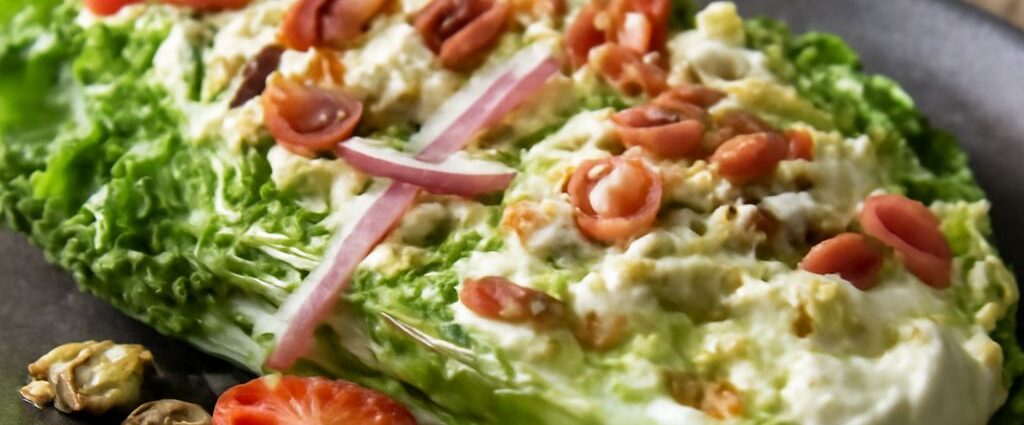
These romaine lettuce recipes go beyond tossed salad. Grilling, sautéing, and braising transform sturdy hearts into tender vegetables while preserving some of their satisfying crunch.
For the most reliable cooked result, grill romaine halves over medium-high heat. The cut sides develop smoky char in minutes, while the thick ribs stay crisp. The complete romaine lettuce recipe below serves four.
Romaine Lettuce Recipes: Grilled Romaine Hearts
Complete romaine lettuce recipe: ingredients and grill method
Serves: 4 Grill temperature: 400–450°F Total cooking time: 3–5 minutes
Ingredients
- 2 large romaine hearts
- 2 tablespoons olive oil, plus 3 tablespoons for the dressing
- 2 tablespoons fresh lemon juice
- 1 teaspoon Dijon mustard
- 1 small garlic clove, finely grated or minced
- 1/2 teaspoon kosher salt, divided
- 1/4 teaspoon black pepper
- 1/3 cup finely grated Parmesan cheese
- Whisk 3 tablespoons olive oil, lemon juice, Dijon, garlic, 1/4 teaspoon salt, and the black pepper in a small bowl. Set the dressing aside.
- Heat a clean grill to medium-high, about 400–450°F. Cut each romaine heart in half lengthwise, keeping the base attached so the leaves hold together.
- Rinse the halves between the leaves, then dry them thoroughly. Brush the cut sides and outer leaves with the remaining 2 tablespoons olive oil. Sprinkle with the remaining salt.
- Place the romaine cut-side down over direct heat. Grill for 2–3 minutes, without moving, until the cut surface has clear grill marks and the edges begin to char.
- Turn the halves and grill the rounded sides for 1–2 minutes. Remove them when the outer leaves are lightly wilted and the thick center ribs remain crisp-tender.
- Arrange the grilled hearts cut-side up. Spoon over the lemon dressing and finish with Parmesan. Serve immediately while the leaves are warm.
Grilling cues and serving
Good grilled romaine has browned edges, a lightly smoky flavor, and a warm but structured center. The leaves should bend easily without collapsing. If the hearts still feel completely rigid, grill them for another 30 seconds per side.
Watch the grill closely if the leaves are very dry or the heat runs above 450°F. Black, brittle edges before the ribs soften indicate excessive heat. Move the hearts to a cooler section and finish cooking there. Avoid grilling more than 5 minutes total, or the leaves can become limp and watery.
Serve the halves as a side dish, or slice them crosswise for a warm topping on grilled chicken, salmon, beans, or toasted bread. Add toasted breadcrumbs, cracked pepper, or a little extra Parmesan for more texture.
Choose and Prepare Romaine Hearts
Select firm hearts and trim the base
Choose compact romaine hearts with bright green leaves, firm ribs, and no slippery spots. A few dry outer leaves are easy to remove, but avoid hearts with extensive browning or a soft base.
Trim only a thin slice from the stem end. Removing too much makes the leaves separate before grilling or braising. For grilled hearts, cut lengthwise through the base. For braising, quarter the hearts lengthwise. For sautéing, remove the base after slicing if the thick core pieces seem especially tough.
Rinse, dry, and keep the core intact
Separate the outer leaves slightly and rinse away grit under cool water. Drain the hearts cut-side down, then pat them dry with a clean towel. Thorough drying matters because excess water prevents browning and causes hot oil to splatter.
Keep the central core attached whenever you grill or braise romaine. It acts as a natural support and holds the leaves together. Slice the heart into 1-inch ribbons only when you plan to sauté it.
Cooking romaine lettuce: Sautéed and Braised
Sautéed: slice into 1-inch ribbons and cook 3–4 minutes
This fast method works well for two romaine hearts. Slice the hearts crosswise into 1-inch ribbons. Heat 1 tablespoon olive oil in a large skillet over medium-high heat. Add one minced garlic clove and cook for 30 seconds, just until fragrant.
Add the romaine, 1/4 teaspoon salt, and a pinch of black pepper. Toss continuously for 3–4 minutes. The outer leaves should wilt and turn glossy, while the pale ribs remain tender-crisp. Finish with 1 teaspoon lemon juice or a splash of rice vinegar.
If the skillet becomes crowded, cook in two batches. A crowded pan steams the lettuce instead of browning it. If liquid pools in the bottom, raise the heat and cook for another 30–60 seconds. Stop when the ribbons are bright and just tender; longer cooking can make them watery and dull.
Braised: sear quarters, add 1/2 cup stock, and cook covered 8–10 minutes
For a softer, more savory preparation, quarter two romaine hearts lengthwise while keeping each piece attached at the base. Heat 1 tablespoon olive oil in a deep skillet over medium-high heat. Season the quarters with 1/4 teaspoon salt, then sear the cut sides for about 2 minutes per side.
Pour in 1/2 cup vegetable or chicken stock. Add 1 teaspoon Dijon mustard if you want a sharper flavor. Cover the skillet, reduce the heat to medium-low, and cook for 8–10 minutes.
The braised romaine is ready when a knife slides through the thick ribs with slight resistance. The leaves should be soft but still intact, and most of the stock should remain as a shallow, flavorful sauce. If the ribs are still firm, cover and cook for 2 more minutes. If the pan is dry before the romaine softens, add 2 tablespoons stock or water.
Recipes with romaine lettuce: Fresh Salad Variation
Use raw romaine when you want the strongest crunch. For four servings, chop two hearts into bite-size pieces and toss them with 1/4 cup thinly sliced cucumber, 1/2 cup halved cherry tomatoes, and 1/3 cup toasted chickpeas or croutons.
For a quick dressing, whisk 3 tablespoons olive oil, 2 tablespoons lemon juice, 1 teaspoon Dijon mustard, 1/2 teaspoon honey, 1/4 teaspoon salt, and a pinch of pepper. Add the dressing just before serving so the ribs stay crisp. Shaved Parmesan, sliced avocado, grilled corn, or chopped boiled egg can make the salad more substantial.











Comments are closed, but trackbacks and pingbacks are open.