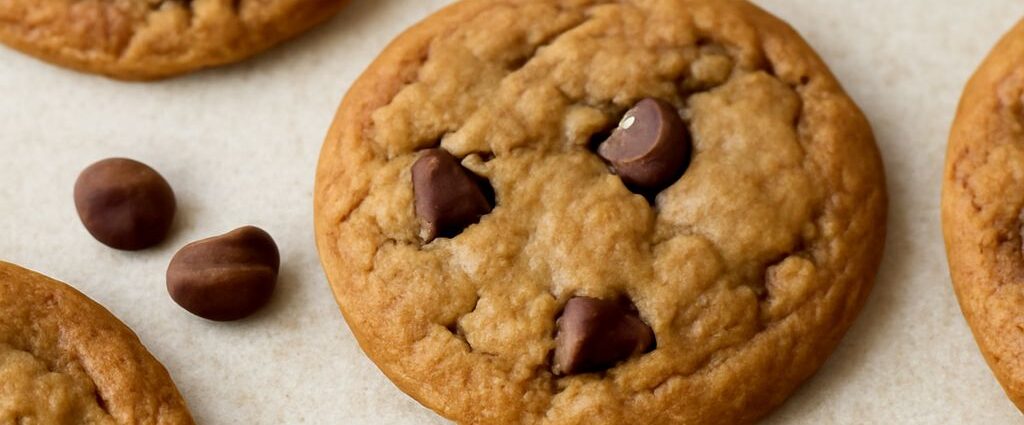
Stir peanut butter, sugar, and an egg together, shape the dough, and bake until the edges are set. These peanut butter cookies made with no flour have crisp edges, tender centers, and plenty of peanut flavor. Let them cool on the pan before moving them; they are delicate while hot.
This recipe for cookies with peanut butter and no flour uses one bowl and makes about 18 cookies. It contains egg, so it is vegetarian but not vegan. There is no dairy in the basic ingredient list; check your peanut butter and any additions if you need to avoid dairy.
Peanut Butter Cookies No Flour: Ingredients and Directions
Allow about 15 minutes to mix and shape the dough, 10 to 12 minutes per tray in the oven, and at least 10 minutes of cooling on the pan. Heat the oven fully before the first tray goes in.
Ingredients
- 1 cup (about 250 grams) creamy, no-stir peanut butter
- 3/4 cup granulated sugar
- 1 large egg
- 1 teaspoon vanilla extract
- 1/2 teaspoon baking soda
- 1/4 teaspoon fine salt, if the peanut butter is unsalted
Directions
- Heat the oven to 350°F. Line a large baking sheet with parchment paper. If using two sheets, bake them one at a time on the center rack for the most consistent result.
- Stir the peanut butter and sugar together in a medium bowl until evenly blended. Add the egg and vanilla and stir until no streaks of egg remain. Sprinkle in the baking soda and salt, if using, and mix thoroughly. The dough should be thick enough to scoop and hold a soft mound.
- Scoop level tablespoons of dough and roll them gently into balls. Arrange them about 2 inches apart on the lined sheet. You should have approximately 18 balls; use a second lined sheet or bake in batches if necessary.
- Press each ball gently with the tines of a fork, first in one direction and then across it, to make a crosshatch. Flatten each to about 1/2 inch thick. If the fork sticks, dip it lightly in sugar between presses.
- Bake for 10 to 12 minutes, until the edges look set and the tops are puffed with small cracks. The centers may still look a little soft. The bottoms should be lightly golden; check one carefully with a thin spatula if you are unsure.
- Leave the cookies on the baking sheet for 10 minutes. Then transfer them carefully to a wire rack to cool completely. The centers firm as they cool.
For no flour peanut butter cookies, the cooling time is part of the method. Fresh from the oven, the cookies can bend or break when lifted. Give the pan a little patience and the cookies will be much easier to handle.
Choose peanut butter that makes a manageable dough
A creamy, no-stir peanut butter gives this recipe its most predictable texture. Look for a spread that is smooth and evenly blended throughout the jar, including the last spoonful. Some brands contain added sugar and salt; that is fine here. If yours is salted, omit the additional salt and taste the baked cookie before deciding whether a future batch needs any.
Natural peanut butter made from peanuts, or peanuts and salt, varies more from jar to jar. Oil can separate at the top while the solids at the bottom become very stiff. If that is what you have, stir the jar thoroughly from the bottom up before measuring. A runny top layer alone can make greasy, spreading dough; a dry layer from the bottom can make it crumbly. Even after stirring, a particularly loose spread may produce flatter flourless peanut butter cookies than the no-stir kind.
Measure after mixing the jar. Spoon the peanut butter into a dry measuring cup, press it into the corners, and level the top. A scale helps you measure consistently. Scrape the peanut butter into the bowl with a flexible spatula.
Crunchy peanut butter gives flourless peanut cookies a pleasant bite but can make the dough less cohesive. Press the scoops gently so they hold their shape.
What the egg, sugar, and baking soda do
The egg brings moisture and helps bind the ingredients as it cooks. Beat it into the peanut butter mixture until the dough looks uniform, with no clear or yellow streaks. Use one large egg for the quantities above: a much smaller egg may leave the dough dry, while extra egg can loosen it.
Sugar sweetens these peanut butter cookies made without flour and contributes to spread and crisp edges. Granulated sugar also gives the finished cookies a little texture. Measure it level rather than packing it into the cup. Substituting a liquid sweetener changes both the moisture and consistency, so use a recipe written for that sweetener if you want to make that change.
Baking soda gives the cookies a little lift and encourages browning. Sprinkle it evenly over the mixture, then stir well. Vanilla rounds out the peanut flavor.
Peanut butter cookies without flour rely on the peanut butter, egg, and sugar working together. Flourless describes the absence of flour; it does not tell you whether a cookie contains eggs, milk, or other animal ingredients. These cookies have egg and no added dairy. For an egg-free or vegan batch, choose a recipe developed for the specific binder it uses rather than assuming any egg replacement will behave the same way.
Shape the dough for even baking
A tablespoon measure or small scoop keeps portions similar so they bake evenly. Roll only enough to bring each portion together.
The fork marks do more than look familiar. Pressing gives each ball a consistent thickness and helps these flourless peanut butter cookies bake evenly. Press gently: you want a thick disk with visible ridges, not a pancake with cracks all the way through. If the dough breaks apart at the edges, cup it back together with your fingers before baking.
Leave space between cookies so they can spread. For batches, cool the sheet between uses; dough on a hot pan can start spreading before it reaches the oven.
For peanut butter cookies, no flour is needed, and the exact spread depends in part on the peanut butter. If the dough feels unusually soft after mixing, refrigerate it for 15 to 20 minutes, then shape and bake a test cookie. The test shows how your particular peanut butter behaves.
Read the oven cues
Set a timer for 10 minutes and look at the cookies through the oven door. The edges should appear dry and set, while the centers can remain slightly soft. Small surface cracks and a lightly golden bottom are helpful signs. If the dough still looks wet across the top, give the tray another minute or two and check again.
The peanut butter cookies baked without flour continue to firm on the warm sheet. Waiting for the centers to feel hard in the oven can produce a dry cookie after cooling. If the bottoms brown quickly, use a light-colored baking sheet and check early.
No flour peanut butter cookies are fragile when hot. Slide the whole sheet onto a heatproof surface and leave it undisturbed for the full 10 minutes. Then slip a thin spatula underneath each cookie and move it to the rack. If a cookie still bends, leave the rest on the sheet a few minutes longer. A broken one is an excellent candidate for the cook’s first taste.
Additions, serving, and storage
Serve the cookies with coffee, tea, or your preferred milk. For a small variation, press a few dairy-free chocolate chips into the tops before baking, checking the package if avoiding milk matters to you. A few chopped peanuts add crunch; keep additions modest so the dough can still hold each portion together.
Let these flourless cookies made with peanut butter cool completely before packing them. Trapped warmth creates condensation, which softens the edges. Store them in an airtight container at room temperature and enjoy within about four days for the best texture. Separate layers with parchment if the cookies are soft or decorated. For longer storage, freeze cooled cookies in a freezer-safe container, separating layers, and thaw at room temperature.
Flour free peanut butter cookies can also be frozen as portioned dough. Arrange the shaped, unbaked disks on a lined tray, freeze until firm, and transfer to a freezer-safe container. Bake from frozen at the same temperature, allowing a little extra time and checking for the same set edges and soft centers. Label the container with the date.
If the cookies spread or crumble
If the first tray spreads into thin, greasy rounds, the peanut butter may have been particularly loose or insufficiently stirred. Chill the remaining dough for 20 minutes and bake one test cookie on a cool sheet. If it still spreads excessively, use a thicker, evenly mixed no-stir peanut butter for the next batch. If the cookies crumble when moved, leave them on the sheet longer; if they are dry after cooling, check the next tray earlier and take it out when the edges are set but the centers are still soft.






Comments are closed, but trackbacks and pingbacks are open.