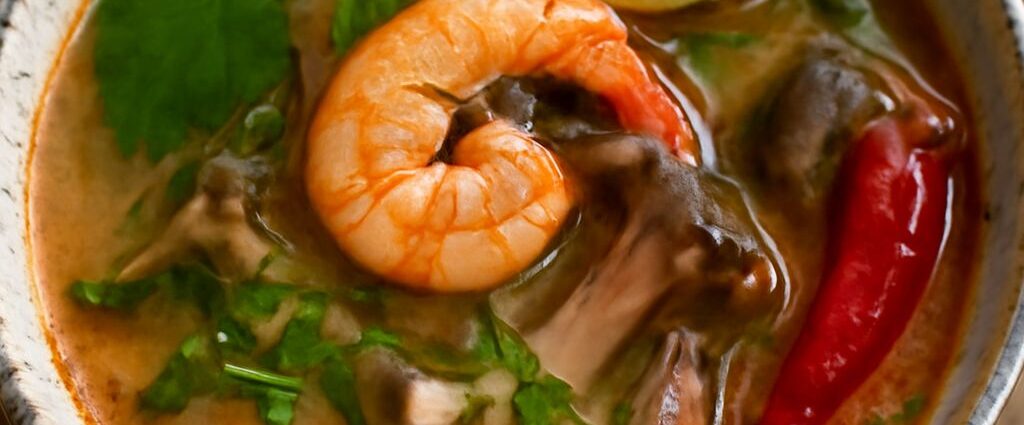
Make a bright, hot-and-sour bowl of tom yum with lemongrass, galangal, lime leaves, and tender mushrooms. The clear broth gets its fragrance from a short simmer and its lively finish from fresh lime juice stirred in at the end.
This plant-based take on the Thai soup uses soy sauce for savory depth and a chili paste without fish or shrimp. Have a spoon ready for tasting: the best balance of sour, salty, and spicy is the one you enjoy at your own table.
Thai Tom Yum Soup: Ingredients for Two
This Thai tom yum soup recipe is adapted from Cilantro and Citronella’s vegetarian version, published in 2017. It makes two generous bowls. Assemble the ingredients first; once the broth is fragrant, the remaining steps move quickly.
- 5 cups water
- 2 stalks lemongrass
- 2 shallots, peeled and halved
- One 1 1/2-inch piece galangal, sliced
- 4 makrut lime leaves, central ribs removed
- 1 medium tomato, cut into 8 wedges and seeded
- 3 tablespoons soy sauce
- 1 teaspoon sugar
- 1 tablespoon plant-based Asian chili paste
- 9 ounces mixed edible mushrooms, such as shiitake, oyster, or button, trimmed and sliced if large
- 3 to 4 tablespoons fresh lime juice, about 2 limes
- 5 cherry tomatoes, halved or quartered
- A small handful of fresh cilantro
Choose a chili paste whose ingredient list is suitable for you. Some Thai chili pastes contain shrimp paste, dried seafood, or fish sauce; a red color alone does not tell you what is inside. Soy sauce replaces the savory seasoning in this particular plant-based broth. If using a vegan fish-style sauce instead in another preparation, check its label and taste carefully because brands differ in saltiness.
Build the Aromatic Broth
Bring the water to a boil in a medium pot. While it heats, lightly bruise the lemongrass stalks with the back of a knife or a pestle, then cut each into three or four pieces that fit comfortably in the pot. Bruising opens the stalks enough to release their fragrance without scattering tiny fibers throughout the soup.
Add the lemongrass, shallots, sliced galangal, lime leaves, and medium tomato. Simmer for about 5 minutes, until the broth smells herbal and citrusy. Press the tomato wedges gently against the side of the pot with a spoon as they cook, helping them soften into the liquid.
In the Thai soup, tom yum, lemongrass and lime leaves bring different citrus notes: one is grassy and lemony, the other more floral. Galangal adds its own sharp, aromatic character. Ginger can be used in other dishes, but it has a different flavor; for this bowl, seek out galangal if you can.
The larger pieces are there to perfume the liquid, not to be chewed. You can leave them in the pot while the mushrooms cook and remove them before serving. If you prefer a clear path from spoon to mouth, use a slotted spoon to fish out the stalks, galangal slices, and leaves before adding the mushrooms.
Add the Mushrooms and Seasonings
Stir in the soy sauce, sugar, chili paste, and mushrooms. Bring the soup back to a boil. Cook until the mushrooms are tender and fully cooked; button mushrooms in particular may need a few minutes. Larger pieces take longer than thin slices, so cut them into spoon-friendly sizes before adding them to the pot.
Turn off the heat and stir in 3 tablespoons of lime juice to begin. Taste, then add some or all of the remaining tablespoon if the broth needs more brightness. Add the cherry tomatoes and let them warm briefly in the hot soup. Their fresh texture gives the bowl a contrast to the softened tomato in the broth.
For tom yum, Thai soup cooks often balance sourness, salt, and chili by tasting as they go. A little more lime can sharpen a broth that tastes flat; a small splash of soy adds saltiness. If it is too intense for you, a little hot water can soften the concentration. Make one change at a time and taste again.
Chili pastes differ considerably in heat, and the soy sauce contributes salt. If you are unsure about the paste, start with less than the tablespoon, then stir in more after tasting. You can add heat at the end; coaxing it back out of the pot is much less cooperative.
Why These Ingredients Matter
Lemongrass, galangal, and makrut lime leaves each contribute an aroma that is difficult to reproduce with one substitute. Fresh lime juice provides acidity as well as fragrance, but it does not replace the leaves. If shopping at an Asian grocery, look for fresh or frozen aromatics; keep the pieces large enough to remove easily.
In this tom yum broth, the medium tomato is simmered and pressed into the liquid, while the cherry tomatoes go in near the end. That gives the two additions distinct jobs: one deepens the broth and the other stays more recognizable in the finished bowl. You don’t need to chase a perfectly transparent liquid; this clear-style broth can still have small pieces of tomato.
Mushrooms give the soup substance without making the broth heavy. Buy edible mushrooms from a reliable seller, trim away tough parts, and clean off any soil. Shiitake stems can be firm, so remove them if they are too woody to eat. A mix brings different shapes and textures, but one readily available variety works too.
How This Bowl Differs From Other Soups
The spelling tom yam soup refers to the same family of Thai hot-and-sour soups often written as tom yum. Preparations vary: some broths are clear, while others include a creamy ingredient. This tom yum mushroom broth uses water, herbs, mushrooms, and lime, with no coconut milk.
Tom kha is another Thai soup associated with galangal; coconut milk is common in versions such as tom kha gai. The two soups can share aromatics, so the distinction is not a rule that every bowl of one must look identical. Here the practical difference is the clear-style broth and the prominent hot-and-sour finish.
A bowl sold as tomyum soup may have different ingredients depending on the kitchen. Ask about fish sauce, shrimp paste, stock, and toppings if you need an animal-free meal. Similarly, a noodle curry may be delicious but has its own balance and texture; adding curry paste or noodles changes this recipe rather than simply giving the same broth a new name.
Make the Broth Fit Your Pantry
Read the soy sauce and chili paste labels before you start, especially if you are cooking for someone who avoids a particular ingredient. Soy sauce is often made with wheat; a suitable tamari may be an option if the package confirms it meets your needs. The paste should say what is in it, including any seafood ingredients.
If you want more vegetables, slice them small enough to cook in the brief simmer. Carrots need more time than tender leafy greens, so add them accordingly and cook until tender. Extra ingredients also absorb or dilute some of the seasoning, which makes the final taste especially useful.
Some tom yum soup recipes include tofu, rice, or noodles. They can make a bowl more substantial, but prepare them appropriately and adjust the broth to the extra food. For the version above, serve the fragrant mushroom broth on its own or with a separate bowl of cooked rice.
Don’t assume all tom-yum-style broths have the same heat level. Chili varies from paste to paste, and different limes yield different amounts of juice. Measuring gives you a sound starting point; tasting gives you a bowl that suits the ingredients you bought.
Serve and Balance
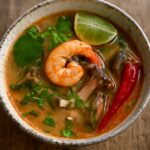
Before ladling, remove the lemongrass, galangal, and lime leaves if you have not already done so. Divide the mushrooms, tomatoes, and broth between two bowls and scatter cilantro over the top. Taste one last spoonful while it is hot: the broth should smell of herbs, carry a distinct lime brightness, and have enough chili and salt for your preference. Serve promptly with lime or extra chili paste at the table if you like.






Comments are closed, but trackbacks and pingbacks are open.