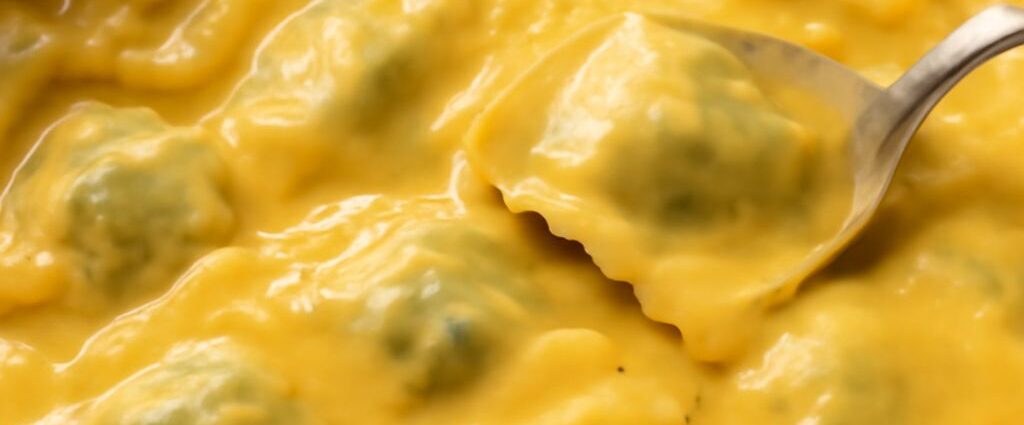
This butternut squash ravioli recipe makes tender, homemade pasta filled with concentrated roasted squash, ricotta, Parmesan, and sage. The recipe yields about 24 ravioli, with one tablespoon of filling in each.
For intact ravioli, roast and then cook the squash puree until thick before shaping. Roll the dough to 1/16 inch, press out excess air, and seal each edge firmly. Fresh ravioli boil in about 3–4 minutes, then finish in a quick sage and olive-oil sauce.
Butternut Squash Ravioli Recipe: Pasta Dough and Squash Filling
Yield: 24 ravioli
Prep time: 1 hour, plus resting
Cook time: 3–4 minutes per batch
For the pasta dough:
- 2 cups (250 g) all-purpose or tipo 00 flour, plus more for dusting
- 3 large eggs
- 1 large egg yolk
- 1/2 teaspoon fine salt
- 1 teaspoon olive oil
- 1–2 teaspoons water, only if needed
For the filling:
- 1 small butternut squash, about 1 1/2 pounds, peeled, seeded, and cubed
- 1 tablespoon olive oil
- 1/2 cup whole-milk ricotta
- 1/3 cup finely grated Parmesan
- 1 egg yolk
- 1 teaspoon finely chopped fresh sage
- 1/4 teaspoon ground nutmeg
- 3/4 teaspoon kosher salt, divided
- 1/4 teaspoon black pepper
Heat the oven to 425°F. Toss the squash with the olive oil and 1/4 teaspoon salt. Roast on a lined baking sheet for 25–35 minutes, turning once, until completely soft and lightly browned. Roasting removes more water than boiling and gives the filling a deeper flavor.
For the dough, mound the flour on a work surface and make a wide well. Add the eggs, yolk, salt, and olive oil. Beat the wet ingredients with a fork, gradually pulling in flour from the sides. Knead for 8–10 minutes, until smooth and elastic. If the dough feels crumbly after several minutes, add water one teaspoon at a time.
Wrap the dough and let it rest at room temperature for at least 30 minutes. Resting relaxes the gluten, so the sheets roll thinner without springing back.
Cook and Dry the Filling Until Thick and Concentrated
Transfer the roasted squash to a food processor and blend until smooth. You should have about 1 1/2 cups of puree. If the squash is stringy, process it longer or press it through a fine sieve.
Place the puree in a wide skillet over medium-low heat. Cook for 8–12 minutes, stirring often, until it becomes thick enough to hold a soft mound. This step is essential for a successful homemade butternut squash ravioli filling. Excess moisture can make the pasta slippery, weaken the seal, and cause the ravioli to burst during boiling.
Let the squash cool for 10 minutes. Stir in the ricotta, Parmesan, egg yolk, sage, nutmeg, remaining 1/2 teaspoon salt, and pepper. The finished mixture should be spreadable but not runny. When lifted with a spoon, it should fall slowly rather than pour.
For an especially wet batch, spread the filling on a plate and refrigerate it for 20–30 minutes. Do not fill the pasta with warm filling; heat softens the dough and makes clean sealing difficult.
Homemade Butternut Squash Ravioli: Roll, Fill, and Seal
Cut the rested dough into four pieces. Keep three pieces covered while working. Flatten one piece and roll it through a pasta machine, starting on the widest setting and narrowing the setting one pass at a time. Dust lightly with flour only when necessary.
Continue until the sheet is about 1/16 inch thick. It should feel smooth and flexible, with the outline of your hand faintly visible through it. If rolling by hand, use a long rolling pin and aim for the same thinness. Thick pasta can remain chewy around the filling.
Lay one sheet on a lightly floured surface. Mark portions with a cutter or ruler, leaving at least 1 inch between mounds. Place 1 tablespoon of filling per raviolo in the center of each portion. Avoid adding more, even if the pasta seems spacious; overfilled ravioli are difficult to seal.
Brush the pasta around each mound with a very thin layer of water. Drape a second pasta sheet over the filling, starting at one edge. Use your fingertips to press the top sheet down around each mound, pushing air toward the open edge. Air pockets expand in boiling water and can split the ravioli.
Press firmly along every edge, then cut the ravioli into squares with a fluted cutter or sharp knife. Aim for a border of about 1/2 inch. Press the edges once more with your fingertips or the tines of a fork. A properly sealed raviolo has no visible gaps, trapped air, or loose corners.
Arrange the finished ravioli in a single layer on a flour-dusted baking sheet. Keep them covered with a clean towel while shaping the rest. Cook within a few hours, or freeze them uncovered until firm before transferring them to a sealed container. Boil frozen ravioli without thawing.
Squash Ravioli Recipe: Boil 3–4 Minutes, Check Texture, and Sauce
Bring a large pot of water to a gentle boil. Salt it generously, then lower the ravioli in with a slotted spoon. Cook in batches so the water keeps moving without crowding the pasta.
Fresh ravioli generally need 3–4 minutes. They often float after 2–3 minutes, but floating alone does not always mean the dough is ready. Once they float, cook for another 1–2 minutes, then test one. The pasta should be tender but still slightly firm at the sealed edge, and the filling should be hot.
Frozen ravioli usually need 4–6 minutes. Start timing when the water returns to a gentle boil, and test one before removing the batch. Lift the ravioli carefully; vigorous stirring can damage the seals.
While the pasta cooks, warm 4 tablespoons olive oil in a large skillet over medium-low heat. Add 8 fresh sage leaves and, if desired, one thinly sliced garlic clove. Cook for 2–3 minutes, until the sage is crisp and the oil smells fragrant. Remove the garlic if it begins to brown.
Transfer the cooked ravioli to the skillet with a slotted spoon. Add 2–3 tablespoons pasta water and gently turn for 30–60 seconds, coating the pasta without breaking it. Finish with grated Parmesan, black pepper, and a small squeeze of lemon. This simple sauce keeps the sweet squash flavor at the center of the squash ravioli recipe, while the crisp sage adds contrast.











Comments are closed, but trackbacks and pingbacks are open.