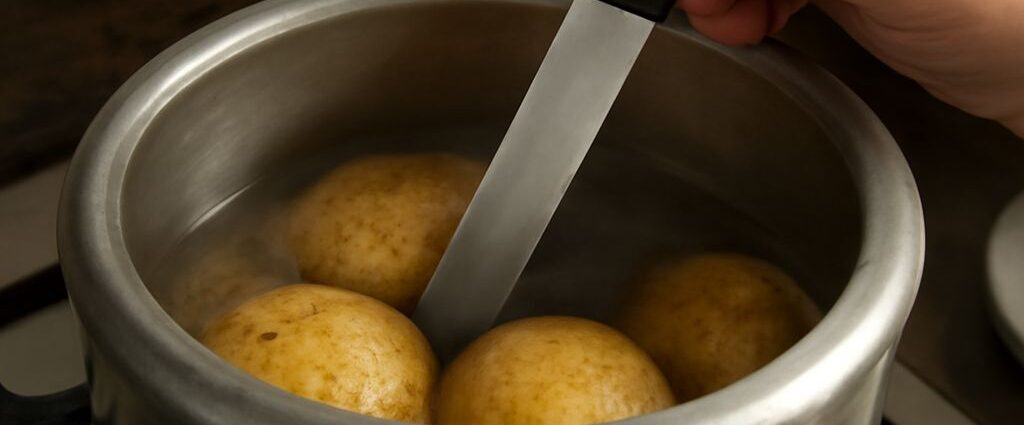
To pressure cook potatoes, add at least 1 cup of thin liquid, cook at high pressure, and choose the time according to size. One-inch cubes need about 3 minutes; whole potatoes need 10–20 minutes. Use a quick release immediately after cooking, especially for small pieces, so they do not become waterlogged or fall apart.
These pressure cooker potato cooking times assume an electric pressure cooker, high pressure, and potatoes placed in a basket or on a rack. Start checking at the lower end of each range. Potato variety, starting temperature, and piece size can shift the result by a minute or two.
How to Pressure Cook Potatoes by Size and Use (3–20 Minutes)
Match the cut to the finished texture you need. Waxy red potatoes and Yukon Golds hold their shape well for salads, while russets become light and fluffy for mashing.
- 1-inch cubes: Cook for 3 minutes for potato salad or diced side dishes.
- 1½-inch chunks: Cook for 4–5 minutes for salad, serving, or a slightly softer texture.
- 2-inch chunks: Cook for 6–7 minutes for mashing or very tender serving pieces.
- Small whole potatoes, 1½–2 inches: Cook for 10 minutes.
- Medium whole potatoes, 2½–3 inches: Cook for 14–16 minutes.
- Large whole potatoes, 3½–4 inches: Cook for 18–20 minutes.
For salad, aim for a fork that enters the center but meets slight resistance. For mashing, the fork should slide through with almost no resistance. If the potatoes are still firm, lock the lid again and cook for 1–2 additional minutes at high pressure.
Potatoes in a Pressure Cooker: 1 Cup Liquid and Placement
Pour at least 1 cup of water, stock, or another thin liquid into the inner pot of a 6-quart pressure cooker. If your appliance specifies a higher minimum, follow that requirement. The liquid creates the steam needed to build pressure; it does not need to cover the potatoes.
- Wash the potatoes and remove eyes or blemishes. Peel them if you want smooth mashed potatoes.
- Cut potatoes into pieces of similar size so they finish together. Leave small potatoes whole, but halve any noticeably larger ones if you want an even cooking time.
- Set a trivet or steamer basket above the liquid. Add the potatoes in a single, loose layer when possible.
- Close the lid, set the valve to sealing, and select high pressure.
A rack or basket keeps potatoes above the liquid, which helps them stay firm and makes draining easy. For mashed potatoes, a basket is especially useful because the pieces steam rather than absorb excess water. If your recipe requires potatoes to cook directly in broth or sauce, keep the liquid thin and use the same timing based on the cut.
Do not pack the potatoes tightly against the lid. Leave room for steam to circulate, and keep the cooker within its marked maximum-fill line.
Pressure Cooker Potato Cooking Times by Cut and Texture
Use the following timing as a practical starting point. The timer begins after the cooker reaches full pressure, not when you press the cooking button.
- For potato salad: Cook 1-inch cubes for 3 minutes or 1½-inch pieces for 4 minutes. Choose waxy potatoes when you want clean edges and a firm bite.
- For serving whole: Cook small potatoes for 10 minutes, medium potatoes for 15 minutes, and large potatoes for 18–20 minutes. These times suit boiled-style sides and plain seasoned potatoes.
- For mashing: Cut peeled potatoes into 1½- to 2-inch chunks and cook for 5–7 minutes. Use the longer time for russets or very soft mashed potatoes.
- For baby potatoes: Cook them whole for 8–10 minutes when they are about 1½ inches across. Add a minute for larger baby potatoes.
- For mixed-size pieces: Cut the largest potatoes down rather than extending the cooking time. Small pieces can turn mushy while the largest pieces finish.
Pressure cooker potatoes continue softening briefly after the heat stops. That carryover is why a quick release matters more for diced potatoes than for large whole ones. If you prefer very soft mashed potatoes, a one-minute rest before releasing pressure is acceptable, but longer natural release can overcook small pieces.
Cooking Potatoes in a Pressure Cooker: Quick Release and Doneness
When the cooking time ends, carefully move the valve to venting for a quick release. Keep your hand and face away from the steam. Once the pressure pin drops, open the lid away from you.
Release pressure immediately for potato salad, diced potatoes, and small chunks. This stops the cooking quickly and preserves their shape. For whole potatoes, you can also use an immediate quick release. If you prefer a slightly softer center, let the cooker rest naturally for 5 minutes, then release the remaining pressure manually.
Test doneness in the thickest part of a potato, not just at the surface. Use a thin knife, fork, or skewer:
- Salad potatoes: The utensil should enter fully with slight resistance, and the piece should hold together when lifted.
- Serving potatoes: The center should be tender, with no hard or chalky core.
- Mashing potatoes: The utensil should pass through effortlessly. A firm center will leave lumps, while an overly soft piece may break apart in the cooker.
- Whole potatoes: Check the largest potato from the center. If it is undercooked, return the lid and pressure-cook for 1–2 more minutes.
If the valve sputters starchy liquid during release, stop venting briefly and wait a few minutes before continuing. Drain the potatoes as soon as they reach the texture you want, then season, dress, or mash them while hot.












Comments are closed, but trackbacks and pingbacks are open.