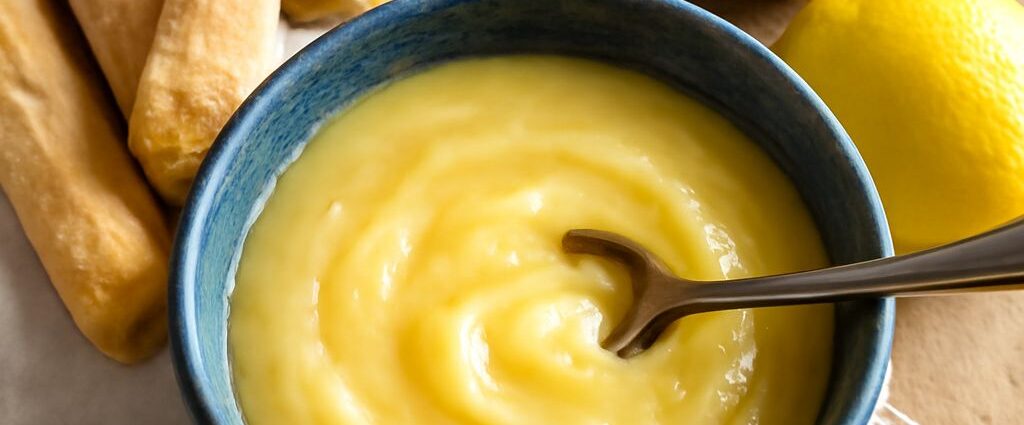
Whisk your thickener into the lemon mixture before applying heat, then cook gently and chill until the curd thickens. For a dairy-free, egg-free lemon spread, cornstarch provides the body; for a richer traditional version, egg yolks and butter do the work. Both are soft while warm and become more substantial in the refrigerator.
A curd made with Meyer lemons tastes gentler and sweeter than one made with standard lemons. Below you’ll find a measured Meyer version, a separate plant-based method, and an egg-based sous-vide option with its own time and temperature. Choose the texture and ingredients that suit your dessert.
Vegan Lemon Curd Recipe for Spreading
This vegan lemon curd recipe uses cornstarch and plant milk instead of eggs and dairy. It makes about 2 cups and is adapted from Nora Cooks. Allow about 10 minutes to cook, plus several hours to chill.
- 1 cup unsweetened almond milk
- 1/2 cup fresh lemon juice
- 1 tablespoon finely grated lemon zest
- 1 cup granulated sugar, checked for vegan suitability
- 2 tablespoons cornstarch
- 2 tablespoons vegan butter
- Whisk the sugar and cornstarch together in a small saucepan. Gradually whisk in the almond milk, then add the lemon juice and zest. Stir in the vegan butter.
- Cook over medium heat, whisking frequently and scraping the bottom, for about 5 to 10 minutes. The mixture should become smooth and noticeably thicker; it will still flow when warm.
- Pour into a shallow container, press a food-safe cover onto the surface to reduce skin, and refrigerate promptly. Chill for several hours or overnight. Stir before serving.
The chilled result is a soft spread or spoonable sauce for toast, pancakes, or yogurt. Cornstarch creates a different set from egg yolks: it can feel more pudding-like, especially when cold. Don’t expect a hot spoonful to show its final thickness. For a cake layer that must hold a particular shape, use a filling recipe formulated for that purpose and test its chilled consistency before assembling the cake.
For this egg-free lemon curd, the cornstarch must be dispersed before it heats. If it goes into hot liquid in a dry clump, the outside can thicken around a dry center. Whisking it with sugar first gives it room to mix evenly. A fine strainer will catch zest and small lumps if you prefer a smoother finish.
Meyer Lemon Curd With Egg Yolks
This meyer lemon curd recipe follows the proportions in Williams Sonoma’s citrus curd. It makes a rich batch for spreading or spooning:
- 8 large egg yolks
- 1 cup granulated sugar
- 1/2 cup Meyer lemon juice
- Finely grated zest of 2 Meyer lemons
- 12 tablespoons unsalted butter, cut into small pieces
For lemon curd, egg yolks give the mixture its rich color and help it thicken as they heat. In a lemon curd recipe, egg yolk also brings a custard-like texture that differs from the starch-set version.
Whisk the yolks and sugar in a heatproof bowl, then whisk in the juice and zest. Set the bowl over a saucepan of barely simmering water, keeping the bottom of the bowl above the water. Stir constantly, scraping the sides and bottom, until the mixture thickens enough to coat a spoon; the source gives 10 to 15 minutes. Cook the egg mixture to at least 160°F, checking with an instant-read thermometer, then whisk in the butter a piece at a time until smooth.
Strain into a clean shallow container if you want to remove the zest and any small cooked bits. Cover the surface and refrigerate promptly. The curd will firm further as it cools, becoming easier to spread. Meyer lemons can vary in sweetness, so taste the finished, safely cooked mixture; the measured sugar above is part of the recipe’s balance and structure.
If you have ordinary lemons instead, their sharper flavor will make the result more tart. Use a recipe developed for them when you want a predictable balance, rather than assuming every variety tastes identical. Zest only the colored outer skin, leaving the bitter white pith behind.
A Separate Sous-Vide Version
For sous vide lemon curd, use a recipe written for the water bath rather than putting either stovetop mixture above into a bag and guessing at the timing. This version follows the Curtis Stone sous-vide cooker manual, which specifies the proportions and bath together:
- 3 large eggs
- 2/3 cup granulated sugar
- 1/2 cup fresh lemon juice
- 1/2 cup unsalted butter, melted and cooled slightly
Heat the circulating water bath to 180°F. Whisk the eggs, sugar, juice, and butter until blended. Transfer to a quart-size food-safe bag suitable for sous-vide cooking at that temperature. Use water displacement to remove air, seal the bag, and keep the food submerged while keeping the seal above the water. Cook for 45 minutes in the preheated bath.
Carefully remove the hot bag, empty its contents into a bowl, and whisk until smooth. Transfer to a shallow container, cover the surface, and refrigerate promptly for at least 2 hours until chilled. This method uses whole eggs, not the eight-yolk Meyer formula, and its timing is specific to the stated batch and bag method. It is not a shelf-stable preserve.
The controlled bath heats the mixture gently without requiring a whisk at the stove. It still needs careful handling: secure the bag so it cannot float, keep water out, and use a container and circulator according to their instructions. If the bag leaks or the bath fails to hold temperature, do not assume the batch cooked as intended.
How to Tell When Curd Is Ready
When making lemon curd on the stove, keep stirring as the mixture heats. The yolk version is ready when it coats the back of a spoon and a finger drawn through the coating leaves a clear path, with the temperature reaching at least 160°F. Check the temperature in several places while stirring; a thick spot on the bottom is not the same as an evenly heated batch.
The plant-based mixture should visibly thicken in the pan, though it will still pour. If it looks milky and watery after the suggested time, continue heating and whisking until it thickens, then chill before judging the final set. Don’t add a spoonful of dry cornstarch to hot curd: whisk a little starch into cold liquid first if adjusting a separate batch.
The mixture can thicken unevenly if the heat is too high or stirring stops. With eggs, that may produce small cooked pieces. Strain promptly for a smoother spread; if there are many firm pieces, the texture will be harder to rescue. Next time, lower the heat, scrape the corners of the pan, and use a thermometer alongside the spoon test.
Cool, Refrigerate, and Freeze
Transfer cooked curd to a clean shallow container so it cools quickly, then refrigerate promptly at 40°F or below. Don’t leave either version on the counter to set or store it at room temperature. Use clean spoons each time, and keep the container covered.
Can lemon curd be frozen? Yes. For the egg-based versions, freeze promptly in a freezer-safe airtight container, leaving room for expansion; the National Center for Home Food Preservation provides a freezer method for lemon curd. The linked plant-based recipe suggests freezing its curd for up to 3 months. Thaw in the refrigerator and stir well. Cornstarch mixtures can change texture after freezing, so freeze a small portion first if a perfectly smooth cake filling matters.
Refrigerate the Meyer batch for up to 3 days, following its source. For the plant-based and sous-vide batches, use within 3 to 4 days; freeze portions you won’t use within those periods. Date the container so you know when it was made. If the mixture develops mold or an off odor, discard it. Refrigeration and freezing are the storage methods here; a closed jar alone does not make a fresh curd shelf-stable.
Choose a Substitute for the Job
A lemon curd substitute should match what the recipe needs. For toast or a topping, lemon marmalade offers citrus flavor but has a chunkier, sweeter finish. For a dairy-free spoonable layer, the cornstarch version above provides a smoother result. For a tart filling that must slice cleanly, choose a tested filling designed to set in a crust rather than relying on a loose sauce.
To add brightness to yogurt or oatmeal, a little lemon zest and a spoonful of fruit preserves can stand in for the flavor, though the texture will differ. For a cake layer, consider a firm frosting with lemon zest; use a filling dam if the recipe calls for one. Match the replacement to the job first, then adjust the sweetness of the finished dessert.
If chilled curd still runs off a spoon like juice, the mixture may not have thickened enough during cooking. The next time you prepare it, whisk over the recommended heat until it coats the spoon or visibly thickens, then allow the full chilling time before spreading it.





Comments are closed, but trackbacks and pingbacks are open.