
Asian rice noodles are made primarily from rice flour and water, then shaped into thin vermicelli, round sticks, or flat ribbons. Their width and added starch determine how quickly they soften, absorb sauce, and hold together in a stir-fry.
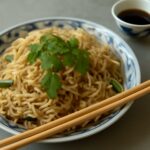
This Asian rice noodle recipe uses medium-width dried noodles, crisp vegetables, chicken, and a savory Chinese-style sauce. It serves four and includes soaking and doneness cues so the noodles stay springy instead of mushy.
What Asian Rice Noodles Are Made From
Most rice noodles contain rice flour and water. Manufacturers may also add tapioca, corn, or potato starch, along with salt or a small amount of oil. These extra ingredients change the noodle’s texture and cooking time.
Plain rice-flour noodles tend to be delicate and soften quickly. Noodles with tapioca or another starch are usually more elastic and better at surviving vigorous tossing. Some products are steamed before drying, while others are partially cooked. That difference explains why one brand may need a 10-minute soak and another may need 25 minutes.
In practical terms, rice noodle ingredients affect three things:
- Firmness: Added starch often creates a springier bite.
- Absorption: Porous, thin noodles take up sauce rapidly and can become salty or soft.
- Preparation: Dried noodles generally need soaking, while fresh noodles need only separation and heating.
Rice noodles are commonly made without wheat, but packaged products and flavoring mixes can vary. Check the ingredient label when wheat avoidance matters, especially for instant or seasoned versions.
Common Shapes, Widths, and How to Prepare Them
Choose the width according to the dish. Thin noodles cook quickly and absorb liquid readily. Wider noodles take longer to heat but have a chewier center and carry substantial sauces well.
- Rice vermicelli: These very thin strands are used in Vietnamese noodle salads, spring rolls, soups, and quick stir-fries. Soak them in warm or room-temperature water until flexible, often 5 to 15 minutes. Drain as soon as they bend easily.
- Medium rice sticks: About 2 to 3 millimeters wide, these are the most versatile choice for stir-fries. They usually need 15 to 30 minutes in room-temperature water before cooking. The strands should bend without breaking but still feel firm in the center.
- Wide flat noodles: Fresh or dried ribbons work in dishes such as beef chow fun and other saucy noodle preparations. Fresh ribbons need no soaking. Dried versions may require boiling or a long soak, depending on the package.
- Round rice noodles: Medium and thick round noodles are common in brothy dishes and noodle bowls. Prepare them according to their diameter because thick varieties need more time to soften evenly.
For stir-frying, under-soak rather than over-soak. The noodles finish cooking in the wok as they absorb the sauce. If they are already completely soft before cooking, they can break or clump. Drain thoroughly, and rinse briefly only if the strands feel especially sticky.
Chinese Rice Noodles Recipe: Measured Stir-Fry Method
This Chinese rice noodles recipe uses dried medium rice sticks. Prepare all ingredients before heating the wok because the final cooking stage takes only a few minutes.
Yield: 4 servings
Ingredients
- 8 ounces dried medium-width rice noodles
- 2 tablespoons neutral oil, divided
- 8 ounces boneless, skinless chicken thighs, thinly sliced
- 3 garlic cloves, finely chopped
- 1 teaspoon grated fresh ginger
- 1/2 medium yellow onion, thinly sliced
- 1 medium carrot, cut into matchsticks
- 1 red bell pepper, thinly sliced
- 2 cups thinly sliced green cabbage
- 2 scallions, sliced, for serving
Sauce
- 1/4 cup low-sodium soy sauce
- 2 tablespoons oyster sauce
- 1 tablespoon Shaoxing wine or dry sherry
- 1 teaspoon toasted sesame oil
- 1 teaspoon granulated sugar
- 1/4 teaspoon ground white pepper
- 2 tablespoons water
- Mix the sauce. Stir the soy sauce, oyster sauce, wine, sesame oil, sugar, white pepper, and water in a small bowl until the sugar dissolves.
- Soak the noodles. Cover the dried noodles with room-temperature water and soak for 20 to 25 minutes. Test one strand: it should bend easily while retaining a slightly firm center. Drain very well. If the noodles are longer than your wok, cut them in half with kitchen scissors.
- Cook the chicken. Heat a large wok or skillet over high heat for about 1 minute. Add 1 tablespoon of oil, then the chicken. Stir-fry for 3 to 4 minutes, until the pieces are opaque throughout and reach 165°F internally. Transfer them to a plate.
- Stir-fry the vegetables. Add the remaining tablespoon of oil. Cook the onion and carrot for 2 minutes. Add the bell pepper and cabbage, then stir-fry for 2 to 3 minutes more. The vegetables should be brightly colored and tender-crisp.
- Add aromatics and noodles. Stir in the garlic and ginger for 30 seconds. Add the drained noodles and return the chicken to the wok. Pour the sauce around the sides, where it will heat quickly.
- Finish the dish. Toss with tongs for 2 to 3 minutes, lifting and turning rather than aggressively stirring. The noodles are ready when they are tender, springy, evenly coated, and free of a hard white core. Add 1 or 2 tablespoons of water if they seem dry before becoming tender.
Serve immediately with sliced scallions. If the noodles become soft before the sauce is absorbed, the soak was too long or the wok was not hot enough. If they remain firm after the sauce disappears, add a tablespoon of water and toss for another minute.
More Asian Rice Noodle Uses by Width
Thin vermicelli works best with light dressings, herbs, and broths because it absorbs liquid almost instantly. Use it in a chilled noodle salad with cucumber, herbs, shredded carrot, and a lime-based dressing, or soften it for fresh spring rolls.
Medium rice sticks are ideal for stir-fries with assertive sauces. Their surface area captures soy, oyster, curry, or tamarind-based sauces, while their thickness gives them enough structure for vegetables and sliced meat. They also work in noodle soups when added near the end of cooking.
Wide flat noodles suit richer preparations. Their broad surface holds dark soy, mushroom sauce, or beef juices, and their thicker center stays pleasantly chewy. Separate fresh ribbons gently with oiled fingers before cooking; pulling them apart forcefully can tear them.
For a lighter dish, combine medium noodles with blanched greens, shredded chicken, roasted peanuts, and a measured sesame-soy dressing. For a saucier meal, choose wide noodles and add them only after the protein and vegetables are nearly finished.








Comments are closed, but trackbacks and pingbacks are open.