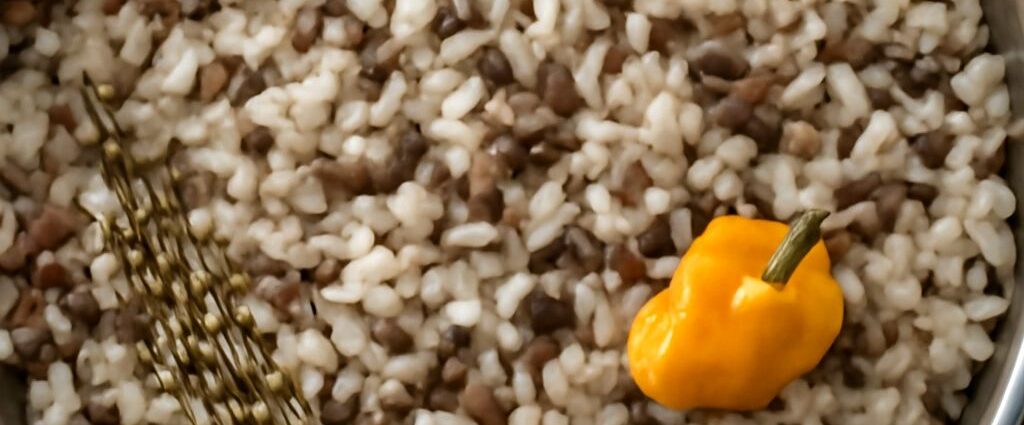
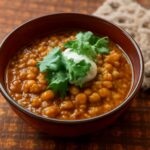
This pigeon peas recipe makes a creamy, savory coconut-tomato dish from 1½ cups cooked peas. It yields four side servings or two generous bowls, with enough sauce to spoon over rice.
Use canned pigeon peas for the fastest method, or cook dried peas ahead. The final skillet simmer takes 20–30 minutes and ends with tender peas and a sauce that coats each spoonful.
Pigeon Peas Recipe: Ingredients, Yield, and Canned vs. Dried Prep
Yield: 4 side servings or 2 main-dish servings. Prep and cook time: about 40 minutes with canned peas.
Ingredients:
- 1½ cups cooked pigeon peas, from one 15-ounce can or prepared dried peas
- 2 tablespoons neutral oil
- 1 small yellow onion, finely diced
- ½ red bell pepper, finely diced
- 3 garlic cloves, minced
- 1 tablespoon grated fresh ginger
- 1 cup crushed tomatoes
- 1 teaspoon ground cumin
- 1 teaspoon ground coriander
- ½ teaspoon ground turmeric
- ½ teaspoon smoked paprika
- 1 teaspoon fresh thyme leaves, or ½ teaspoon dried thyme
- ¾ teaspoon fine salt, plus more to taste
- 1 cup full-fat coconut milk
- ½ cup vegetable stock
- ¼ teaspoon black pepper
- 1 tablespoon lime juice and ¼ cup chopped cilantro, for finishing
For canned peas, drain and rinse them under cool water before measuring. For dried peas, soak ¾ cup overnight, drain, and cover with fresh water by 2 inches. Simmer for 45–60 minutes, or until creamy-tender, then drain. Older dried peas may need longer. Do not add uncooked dried peas directly to the skillet; the final simmer is for seasoning and softening cooked peas. When adapting recipes for pigeon peas, keep this cooked-bean measure and liquid balance.
Pigeon Pea Recipes: Cook the Aromatics, Herbs, and Warm Spices
Heat the oil in a wide, heavy skillet or Dutch oven over medium heat. Add the onion and bell pepper with a small pinch of the salt. Cook for 5–6 minutes, stirring occasionally, until the onion turns translucent and the pepper softens.
Add the garlic and ginger. Stir for 30 seconds, just until fragrant. Add the cumin, coriander, turmeric, smoked paprika, thyme, and black pepper. Cook for another 30 seconds. Toasting the spices briefly deepens their flavor without burning them.
Stir in the crushed tomatoes. Cook for 4–5 minutes, scraping the bottom of the pan, until the tomatoes darken slightly and the mixture looks thick and glossy. If the aromatics begin sticking, lower the heat and add a tablespoon of water.
Simmer the Peas in 1½ Cups Liquid for 20–30 Minutes Until Creamy-Tender
Add the cooked pigeon peas, coconut milk, vegetable stock, and remaining salt. Stir well so the tomato-spice mixture reaches the bottom of the pan. The measured cooking liquid is exactly 1½ cups: 1 cup coconut milk plus ½ cup stock.
Bring the mixture just to a gentle boil, then reduce the heat to low. Simmer uncovered for 20–30 minutes, stirring every 5 minutes. Keep the heat gentle; a hard boil can make the coconut sauce look grainy and may split it.
The peas are ready when you can press one easily with the back of a spoon, without finding a firm center. The sauce should be creamy and thick enough to coat a spoon, while still loose enough to ladle over rice. If the peas remain firm after 30 minutes, add ¼ cup stock or water, cover, and simmer for 10 more minutes. If the sauce is watery, uncover it and cook for 5–10 minutes longer.
Turn off the heat and stir in the lime juice and cilantro. Taste before serving. Add salt for fuller flavor, or another squeeze of lime if the coconut milk tastes too rich.
Serve With Rice or Flatbread for a Complete Meal
Spoon the pigeon peas over 3 cups cooked basmati, jasmine, or brown rice. Rice absorbs the coconut-tomato sauce and turns this savory side into a filling meal. Warm roti, naan, or another soft flatbread also works well for scooping.
For a balanced plate, add sautéed greens, roasted squash, or a crisp cucumber salad. Finish each serving with extra cilantro, lime wedges, and a pinch of smoked paprika or chili flakes.





Comments are closed, but trackbacks and pingbacks are open.