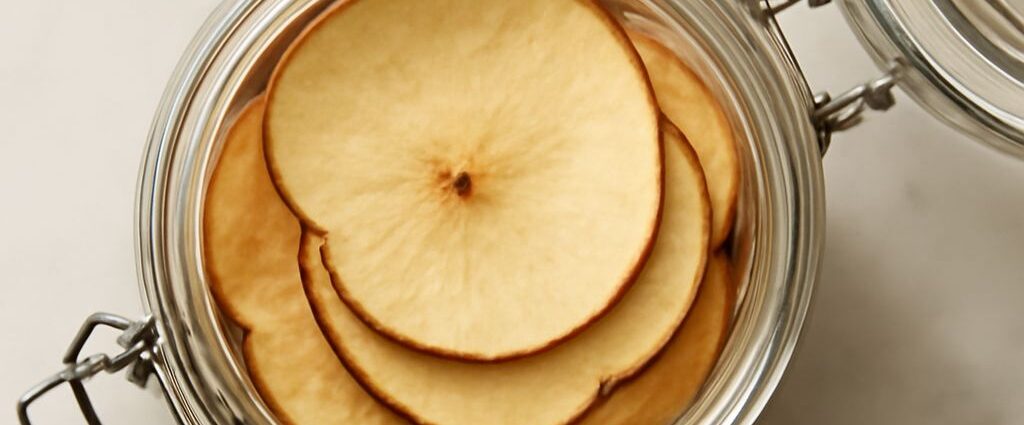
This dehydrated apples recipe makes tender, leathery slices or crisp apple chips. Slice apples 1/8 inch thick for a crisp finish or 1/4 inch thick for a chewier texture. Dry them in a dehydrator at 125–135°F or use a 200°F oven.
Plan on 6–12 hours in a dehydrator or 2–4 hours in the oven. Apples are finished when they have no moist center, then become firmer as they cool.
Dehydrated Apples Recipe: Choose Firm Apples and Slice 1/8- to 1/4-Inch Evenly
Use three medium, firm apples. Fuji, Gala, Honeycrisp, Granny Smith, and Pink Lady apples all work well. Avoid bruised or overripe fruit, which can dry unevenly.
- 3 medium apples
- Optional lemon-water or ascorbic acid solution
- Dehydrator trays or parchment-lined baking sheets
Wash and dry the apples. Peel them if you prefer a softer texture, or leave the skins on for more color and fiber. Remove the cores, then slice the apples evenly from edge to edge.
Choose the thickness based on the finished result. Cut 1/8-inch slices for crisp chips that dry quickly. Cut 1/4-inch slices for flexible, chewy pieces. A mandoline helps create uniform slices, but a sharp knife works well. Uneven slices finish at different times, so keep thicker pieces separate from very thin ones.
Prevent Browning if Desired: Lemon Water or Ascorbic Acid
Apple slices can brown while you prepare the remaining fruit. Browning does not affect their safety or dried texture, but an acid soak keeps the slices lighter.
For lemon water, stir 1/4 cup lemon juice into 4 cups cold water. Soak the slices for 3–5 minutes, then drain and blot them thoroughly with clean towels. Excess water extends the drying time.
For a milder flavor, dissolve 1 teaspoon ascorbic acid powder in 1 quart of water. Soak the slices for 3–5 minutes, drain, and blot dry. Skip this step if you do not mind naturally darkened apples.
Dehydrated Apple Recipe: Dehydrator 6–12 Hours at 125–135°F; Oven 2–4 Hours at 200°F for Chewy or Crisp Results
Arrange the slices in one layer on dehydrator trays. Leave a little space between pieces so air can circulate. Do not overlap them, because covered spots stay soft.
- For chewy apples, set the dehydrator to 125–130°F and dry 6–10 hours.
- For crisp apples, set it to 135°F and dry 8–12 hours.
- Rotate the trays from top to bottom halfway through drying. If slices have curled, turn them over at the same time.
- Begin checking thin slices after 6 hours and thicker slices after 8 hours.
For an oven version of this dried apples recipe, heat the oven to 200°F. Arrange the slices on parchment-lined baking sheets without overlapping them. Place the sheets in the oven, leaving the door slightly ajar to release moisture.
Dry the slices for 2–4 hours, rotating the baking sheets and flipping the slices halfway through. Thin slices may finish near two hours; thicker pieces usually need closer to four. Check often near the end, because oven temperatures and apple moisture vary.
Test one of the thickest pieces before removing the batch. Let it cool for five minutes, then bend it. A chewy slice should bend easily without a wet or sticky center. A crisp slice should feel dry throughout and break or snap when bent. If it still feels damp, return the apples to the dehydrator or oven and check them every 30 minutes.
Dried Apples Recipe: Rotate Trays, Cool, Condition, Test, and Store
Transfer finished slices to a plate or cooling rack in a single layer. Cool them completely for 30–60 minutes. They often become noticeably firmer as they reach room temperature, so do not judge crispness while they are still warm.
For longer storage, condition the cooled apples. Place them loosely in a clean glass jar, filling it no more than two-thirds full. Seal the jar and shake it once daily for seven days. Check for condensation or softened pieces. If you see moisture, return the apples to the dehydrator at 125°F until dry, then cool and condition them again.
Once no moisture appears, store the apples in an airtight container in a cool, dark cupboard. Keep chewy and crisp batches separate, since softer pieces can transfer moisture to crisp chips. Refrigerate the container for storage beyond a few weeks, and discard any apples that develop mold, an unusual smell, or visible moisture.








Comments are closed, but trackbacks and pingbacks are open.