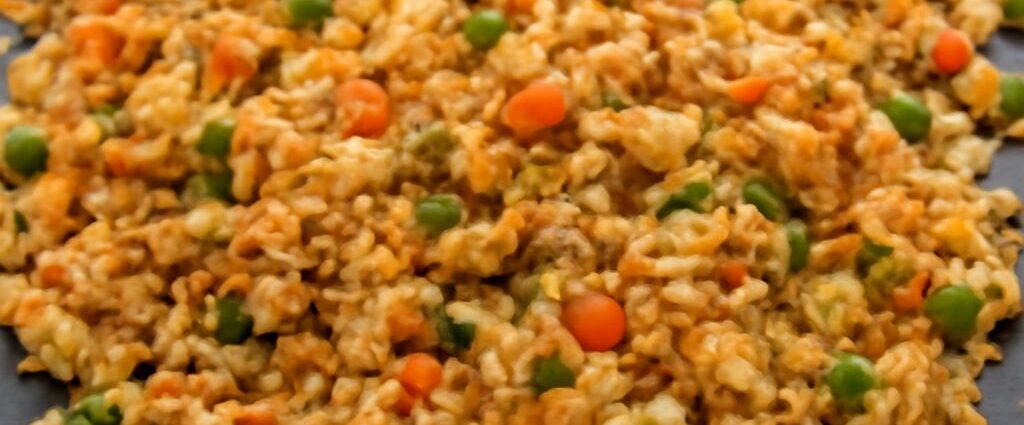
Yes, fried rice can be gluten-free. Rice, eggs, meat, vegetables, garlic, and scallions are naturally gluten-free, but sauces and prepared add-ins can introduce wheat. The most common problem is regular soy sauce, which typically contains wheat.
Use gluten-free tamari or a clearly labeled gluten-free soy sauce, then check every packaged ingredient. This recipe makes four servings with hot, separate grains and a savory sauce.
Is Fried Rice Gluten-Free?
Plain fried rice is gluten-free when all its ingredients are gluten-free and the cooking surface has not been contaminated by wheat-containing foods. The rice itself does not contain gluten.
However, restaurant fried rice often includes standard soy sauce, oyster sauce, hoisin sauce, seasoning powder, or a premade marinade. These products may contain wheat. Shared woks and utensils can also transfer gluten, so ask about ingredients and preparation when ordering out.
At home, read the label on every sauce and prepared ingredient. Choose products specifically labeled gluten-free when possible, especially tamari, broth, spice blends, and meat substitutes.
Gluten-Free Fried Rice: Sauces and Add-Ins
Use these naturally gluten-free ingredients for the main mixture:
- Cooked white or brown rice
- Eggs
- Plain chicken, shrimp, pork, or tofu
- Peas, carrots, corn, onions, garlic, and scallions
- Neutral cooking oil, sesame oil, ginger, and pepper
Replace regular soy sauce with gluten-free tamari or gluten-free soy sauce. Tamari is often made without wheat, but not every brand is gluten-free, so check the label rather than assuming.
Oyster sauce, hoisin sauce, chili crisp, curry paste, bouillon, and frozen seasoning mixes need the same check. Use plain cooked protein instead of marinated meat, and avoid imitation seafood unless its label confirms it is gluten-free.
The Recipe: Quantities, Heat, and Cooking Order
Yield: 4 servings
Total cooking time: about 12 minutes
Ingredients
- 3 cups cold, cooked long-grain white rice
- 2 tablespoons neutral oil, divided
- 2 large eggs, lightly beaten
- 1 cup frozen peas and diced carrots
- 2 garlic cloves, finely chopped
- 1 cup diced, fully cooked chicken or tofu
- 2 tablespoons gluten-free tamari
- 1 teaspoon toasted sesame oil
- 2 scallions, thinly sliced
- 1/4 teaspoon white or black pepper
- Break up the cold rice with your fingers, removing compacted lumps. Heat a wok or large skillet over high heat for 1 to 2 minutes. The surface should be very hot before the oil goes in.
- Add 1 tablespoon of oil, swirl, and pour in the eggs. Stir for 30 to 45 seconds, until softly set. Transfer the eggs to a plate.
- Add the remaining oil. Stir-fry the peas and carrots for 2 minutes, then add the garlic and cook for 30 seconds.
- Add the chicken or tofu and cook for 1 minute. Add the rice and toss, press, and stir for 4 to 5 minutes. Break up remaining clumps without crushing the grains.
- Pour the tamari around the hot edge of the wok or skillet, not directly onto one pile of rice. Toss for 1 minute, until the grains are evenly colored and lightly glossy.
- Return the eggs to the pan. Add sesame oil, scallions, and pepper, then toss for 30 seconds. The finished rice should be hot, separate, and lightly crisp in a few spots, not wet or clumped.
Variations and Leftover-Rice Guidance
For shrimp fried rice, use 8 ounces of peeled, cooked shrimp and add it with the rice. For a vegetarian version, replace the chicken with firm tofu or add 1 cup of mushrooms. Ginger, chopped cabbage, or bean sprouts also work well, but cook watery vegetables until their moisture evaporates before adding the rice.
Cold rice from the refrigerator gives the best texture because its grains are firm and separate. Store cooked rice promptly in a shallow container and use it within three to four days. If making rice the same day, spread it on a tray and refrigerate it for at least 30 minutes before stir-frying. Fresh, steaming rice tends to produce soft, sticky fried rice.







Comments are closed, but trackbacks and pingbacks are open.