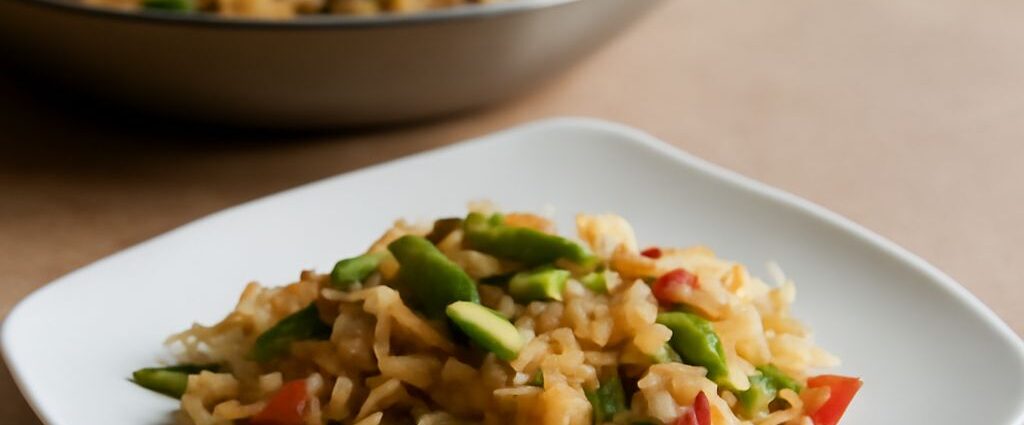
Is fried rice healthy? It can be, but the answer depends on the rice portion, cooking fat, sodium, vegetables, protein, and the rest of your meal. A homemade version with plenty of vegetables and a moderate amount of oil can be a balanced one-bowl meal.
Restaurant fried rice is often more energy-dense because it combines a large rice portion with generous oil, salty sauces, and limited vegetables. It is not automatically unhealthy, but serving size and recipe choices change the nutritional picture.
Is Fried Rice Healthy? The Short Answer
Fried rice can fit into a healthy diet when it includes a reasonable rice portion, vegetables, and a satisfying protein source. The dish becomes less balanced when most of the bowl is refined rice cooked in substantial oil, with little protein or produce.
A useful serving guideline is about 1 cup of cooked rice as the starch portion of a meal. Larger servings may still fit your needs, especially after exercise, but they provide more calories and carbohydrates. If fried rice is served alongside egg rolls, noodles, or another rice dish, a smaller portion makes more sense.
What Changes the Nutrition of Fried Rice
Rice portion: Rice supplies carbohydrates for energy, but it is easy to serve more than you need. Using chilled cooked rice can improve texture without requiring extra oil. Brown rice adds more fiber, while white rice can still work in a balanced meal.
Cooking fat: Oil contributes flavor and helps prevent sticking, but it is calorie-dense. A home cook can often use 1 to 2 teaspoons of oil per serving, depending on the pan and ingredients. Restaurant portions may contain considerably more because oil supports high-heat cooking and a glossy texture.
Sodium: Soy sauce, oyster sauce, bouillon, and other seasonings can make fried rice high in sodium. Use a smaller amount of regular soy sauce, or choose a reduced-sodium version and add flavor with garlic, ginger, scallions, chili, rice vinegar, or lime.
Vegetables: Peas, carrots, cabbage, mushrooms, bell peppers, broccoli, and edamame add fiber, vitamins, minerals, and volume. Aim for at least as many vegetables as rice by volume if you want a more filling bowl with fewer calories per bite.
Protein: Eggs provide protein and useful nutrients, while chicken, shrimp, tofu, tempeh, or edamame can make the meal more satisfying. A dish made mostly from rice and vegetables may leave you hungry sooner than one with a clear protein source.
Is Fried Rice Good for You? Restaurant vs. Homemade Versions
Restaurant fried rice is convenient and can include eggs, meat, and vegetables, but portions are often large. It may also use more oil and salty sauce than you would choose at home. A takeout container can represent multiple servings, even when it looks like one meal.
Home cooking gives you control over every major factor. You can measure the oil, use more vegetables, select a protein, and season gradually. You can also serve the fried rice with a simple side salad or steamed vegetables instead of another fried appetizer.
Leftover rice is convenient for homemade fried rice, but refrigerate it promptly and reheat it thoroughly. Keep cooked rice cold until you are ready to use it, and avoid leaving it at room temperature for extended periods.
How to Build a More Balanced Bowl
For a practical serving, combine:
- 1 cup cooked rice, preferably chilled from a previous meal
- 1 to 1½ cups mixed vegetables, such as peas, carrots, cabbage, and mushrooms
- 1 egg plus 3 ounces of tofu, chicken, shrimp, or extra-firm tempeh
- 1 to 2 teaspoons of oil for cooking
- 1 to 2 teaspoons reduced-sodium soy sauce, adjusted to taste
Cook the protein first, then stir-fry the vegetables until crisp-tender. Add the rice and break up clumps before seasoning lightly. Return the egg or protein to the pan, toss everything together, and stop cooking when the rice is hot and the vegetables retain some texture.
Serve that bowl with water or an unsweetened drink and additional vegetables if needed. In this form, healthy fried rice can serve as a complete meal rather than an oversized, salty side dish.






Comments are closed, but trackbacks and pingbacks are open.