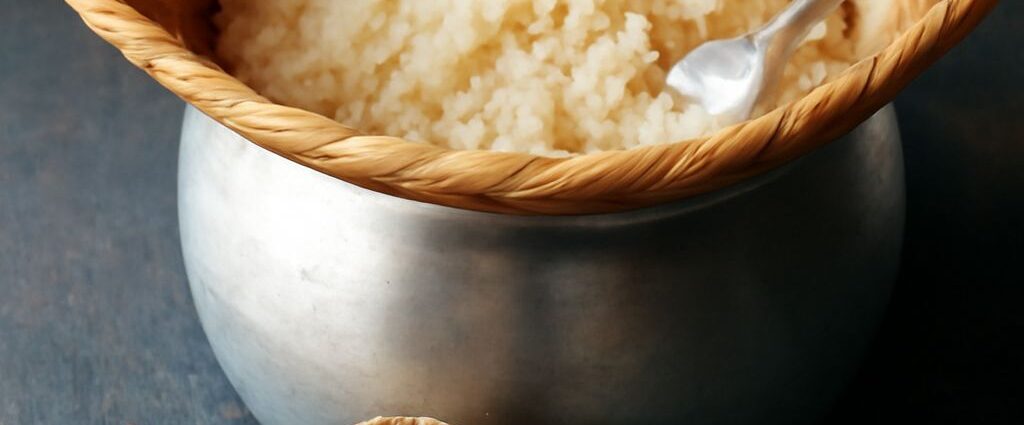
Sticky rice in a rice cooker is easy when you start with the right grain, enough soak time, and a measured water ratio. The result should be soft, glossy, and clinging together without turning mushy.
This method works for sweet or savory meals, from simple bowls with sesame and scallions to fruit, coconut, or vegetable toppings. With a few prep notes, a rice cooker can handle sticky rice reliably and with very little effort.
What Makes This Work
Sticky rice, sometimes called glutinous rice or sweet rice, has a different starch profile from standard long-grain rice. That is why it cooks up dense, chewy, and cohesive instead of fluffy.
A rice cooker helps because it holds steady heat and traps steam evenly. The key is to rinse the grains well, soak them first, and avoid too much water. Without soaking, the center can stay hard. With excess water, the texture turns pasty.
For the best sticky rice rice cooker result, think in three parts: clean the grains, hydrate them, then steam them gently until tender. A short rest after cooking finishes the texture and helps the rice set.
Ingredients and Variations
For a basic batch, you only need a few ingredients:
- 2 cups sticky rice, also labeled glutinous rice or sweet rice
- Water, for rinsing and soaking
- About 1 to 1 1/4 cups water for cooking, depending on your cooker and soak time
- Pinch of salt, optional for savory serving
If your rice cooker has a sticky rice or steam setting, use it. If not, the regular cook cycle still works well with proper soaking. The rice should be fully submerged during soaking, then drained before cooking.
Useful variations depend on how you plan to serve it:
- Sweet version: finish with coconut milk, a little sugar, and toasted sesame seeds.
- Savory version: add salt and serve with sautéed mushrooms, greens, tofu, or edamame.
- Herb-forward version: fold in chopped scallions, cilantro, or toasted nori after cooking.
- Mixed grain bowl base: pair with roasted vegetables and a soy-ginger dressing.
If you want a softer texture, use slightly more water and a longer rest. For firmer grains that still cling together, reduce the water a little after a full soak.
How to Cook Sticky Rice in a Rice Cooker
- Rinse the rice in cool water until the water runs less cloudy. This removes surface starch and keeps the texture cleaner.
- Soak the rinsed rice for 4 to 8 hours, or at least 1 hour if you are short on time. Longer soaking gives a more even result.
- Drain well. Transfer the rice to the rice cooker insert.
- Add water. Start with 1 cup water for every 2 cups soaked rice, then adjust slightly for your machine.
- If using salt, stir in a small pinch now.
- Close the lid and cook on the regular rice setting or sticky rice setting, if available.
- When the cycle ends, let the rice rest for 10 to 15 minutes with the lid closed.
- Fluff gently with a rice paddle or spoon. Use a lifting motion rather than stirring hard.
Check the texture before serving. Proper sticky rice should feel tender and cohesive, with no dry center. If it seems undercooked, add a few tablespoons of water and run another short cook cycle or steam briefly. If it is too wet, leave the lid open for a few minutes and let excess moisture escape.
For especially even results, line the steamer basket with cheesecloth or use the steaming function if your cooker includes one. That method is helpful when you want a drier, more traditional texture.
Serving and Storage Tips
Sticky rice is best served warm, when the grains are soft and elastic. It works well as a side for grilled tofu, stir-fried vegetables, curries, or braised mushrooms. It also makes a good base for bowls with cucumber, avocado, pickled vegetables, or roasted squash.
For a simple finish, shape it into a bowl and top with toasted sesame seeds, scallions, and a drizzle of soy sauce or chili oil. For a sweeter plate, pair it with mango, banana, or coconut cream.
Store leftovers in an airtight container once cooled. Keep them in the refrigerator for up to 4 days. Sticky rice firms up as it chills, so reheat it with a splash of water and cover it while warming. A microwave, steamer, or covered skillet all work.
To freeze, portion the rice into small packs and wrap tightly. Thaw in the refrigerator or reheat directly with added moisture. The texture will not be quite as fresh, but it still works well in savory bowls and quick meals.
If you want the simplest path to sticky rice rice cooker success, remember the formula: rinse well, soak long enough, use modest water, and let it rest before serving. That is usually enough for a tender, glossy result.









Comments are closed, but trackbacks and pingbacks are open.