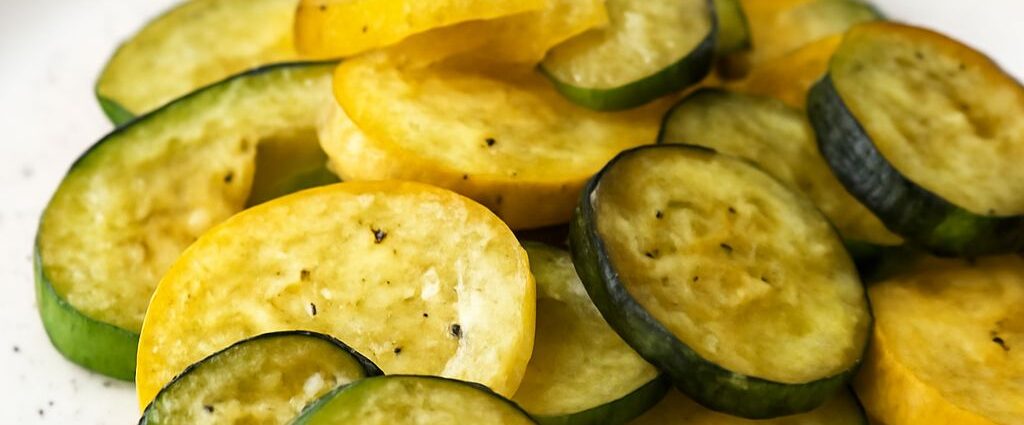
These zucchini and yellow squash recipes use the same vegetable pair in three dependable ways: sautéed, roasted, and baked. The key is controlling moisture with dry vegetables, high heat, and enough space for browning.
Start with the quick skillet version for a crisp-tender side dish. Then use the measured oven variations when you want deeper browning or a lightly crisp topping.
Prepare Zucchini and Yellow Squash
For four servings, use two medium zucchini and two medium yellow squash. Choose firm squash with smooth skin and no soft spots. Similar-sized vegetables cook more evenly.
- Wash the squash, then dry it thoroughly with a clean kitchen towel.
- Trim both ends and cut each squash into 1/2-inch-thick half-moons.
- Keep the slices fairly thick. Thin slices soften quickly and release more water.
- Slice the pieces evenly so smaller slices do not overcook before larger ones become tender.
Do not rinse the cut squash again. Surface moisture creates steam, while dry slices make direct contact with the hot pan or baking sheet. If the squash seems particularly juicy, spread the slices on a towel for 10 minutes before cooking.
Prepare the remaining ingredients before heating the pan. Once the squash begins cooking, the process moves quickly. A wide skillet, large sheet pan, or shallow baking dish works better than a deep, crowded pan.
Zucchini and Yellow Squash Recipes: Quick Sauté
This zucchini and yellow squash recipe serves four as a side dish. It takes about 10 minutes once the vegetables are sliced.
Ingredients
- 2 medium zucchini, about 8 ounces each
- 2 medium yellow squash, about 8 ounces each
- 2 tablespoons olive oil, divided
- 1/2 small yellow onion, thinly sliced
- 2 garlic cloves, finely chopped
- 1 teaspoon kosher salt, divided
- 1/4 teaspoon freshly ground black pepper
- 1 teaspoon fresh lemon juice
- 2 tablespoons chopped fresh parsley
Method
- Cut the zucchini and yellow squash into 1/2-inch half-moons. Pat them dry if needed.
- Heat a 12-inch or larger skillet over medium-high heat for about 1 minute. Add 1 tablespoon of the olive oil.
- Add the sliced onion and cook for 2 minutes, stirring once, until it begins to soften. Transfer it to a plate.
- Add the remaining olive oil. Add the squash in a single layer. If the skillet is crowded, cook the squash in two batches.
- Cook without stirring for 2 to 3 minutes. This gives the cut sides time to brown instead of steam.
- Toss the squash and cook for another 3 to 4 minutes. The pieces should show golden edges while remaining firm in the center.
- Return the onion to the skillet. Add the garlic, remaining 1/2 teaspoon salt, and black pepper. Cook for 1 minute, stirring constantly.
- Remove the skillet from the heat. Add the lemon juice and parsley, toss gently, and serve immediately.
The finished squash should be bright, lightly browned, and tender when pierced with a fork. It should not collapse or sit in a pool of liquid. If the center still feels firm after browning, reduce the heat to medium and cook for 1 additional minute.
Roasted and Baked Variations
Roasting gives the vegetables more caramelized edges than sautéing. Baking uses gentler heat and can add a crisp Parmesan topping. Both methods work best when the squash is arranged in one layer.
Roasted squash: Heat the oven to 425°F. Toss two medium zucchini and two medium yellow squash, cut into 1/2-inch half-moons, with 1 1/2 tablespoons olive oil, 3/4 teaspoon kosher salt, and 1/4 teaspoon black pepper. Spread the pieces across a large, rimmed sheet pan.
Roast for 18 to 22 minutes, turning the squash after 10 minutes. For darker edges, move the pan to the upper oven rack and broil for 1 to 2 minutes at the end. Watch closely because the thin edges can burn quickly. The squash is ready when the centers are fork-tender and the undersides are browned.
For more browning, use two sheet pans rather than crowding one. Keep the pans on separate oven racks and rotate them halfway through cooking. Add fresh herbs or lemon juice after roasting, not before, so the vegetables stay dry while they cook.
Baked Parmesan variation: Heat the oven to 400°F. Toss the sliced squash with 1 tablespoon olive oil, 1/2 teaspoon kosher salt, and 1/4 teaspoon black pepper. Arrange it in a lightly oiled 9-by-13-inch baking dish without overlapping too heavily.
Bake uncovered for 15 minutes. Meanwhile, combine 1/3 cup panko breadcrumbs, 1/3 cup finely grated Parmesan, and 1 tablespoon olive oil. Sprinkle the mixture over the partially baked squash, then return the dish to the oven for 8 to 10 minutes.
The baked version is ready when the squash is tender but still holds its shape and the topping is golden. If the vegetables release liquid, carefully drain it before adding the breadcrumb mixture. For a softer result, cover the dish for the first 10 minutes, but leave it uncovered for the remaining baking time.
Preventing Soggy Squash
Zucchini and yellow squash contain a great deal of water. They become watery mainly when moisture cannot evaporate quickly enough. These adjustments preserve a firmer texture.
- Dry before cooking: Water on the surface turns into steam immediately. Pat the whole squash dry after washing, and dry the cut pieces if they feel damp.
- Use a wide cooking surface: A crowded skillet or baking dish traps steam between the slices. Keep the pieces in one layer with a little space around them.
- Heat the pan first: Add the vegetables only after the oil is shimmering. A cool pan slowly warms the squash and encourages moisture release.
- Season at the right time: Salt draws water toward the surface. For sautéed squash, add most of the salt near the end. For roasting or baking, salt lightly before cooking and pat away any visible moisture after 10 minutes.
- Cook uncovered: Lids hold steam inside the pan. Leave the skillet, sheet pan, and baking dish uncovered unless a softer texture is specifically desired.
- Avoid overcooking: Squash continues softening from residual heat. Remove it when the centers are just fork-tender rather than completely soft.
If the squash is pale and limp, the pan was probably too cool or too crowded. If the edges burn while the centers stay firm, the slices are too thick or the heat is too high. Cut the next batch slightly thinner, use medium-high heat, and turn the pieces once rather than repeatedly stirring them.









Comments are closed, but trackbacks and pingbacks are open.