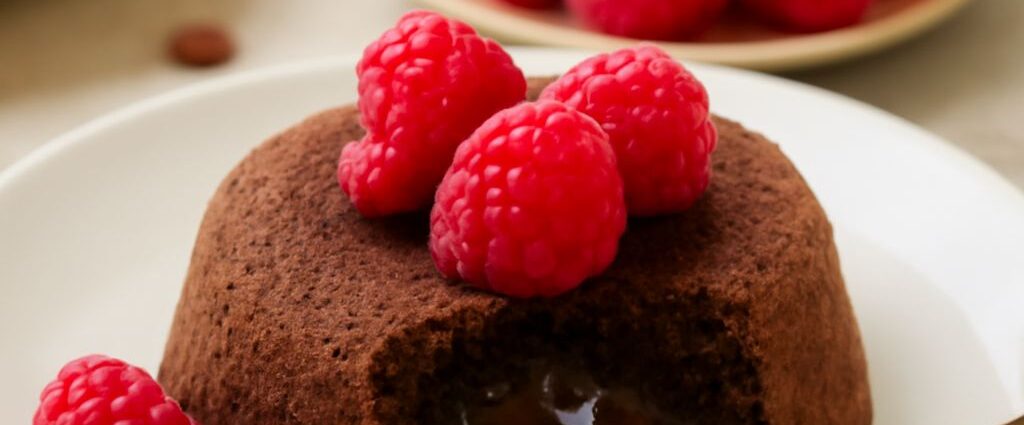
Chill a small scoop of chocolate ganache before making the batter. In this simple recipe for molten chocolate cake, the ganache becomes the flowing center while the cake around it bakes until set. Four individual ramekins make the portions easy to serve warm.
The filling needs a short stay in the freezer, so prepare it first. Then mix the batter, cover each scoop completely, and bake until the tops look matte. A few minutes of resting help the cakes hold their shape when turned onto plates.
Easy Lava Cake Recipe: Ingredients and Equipment
This makes four individual cakes in 6-ounce oven-safe ramekins. Allow about 30 minutes to chill the filling, 20 to 25 minutes to bake, and 5 minutes to rest, plus preparation time.
For the ganache:
- 3 ounces semisweet or dark chocolate, finely chopped
- 3 tablespoons heavy cream
For the cakes:
- 3/4 cup all-purpose flour, spooned and leveled
- 1/4 cup unsweetened cocoa powder, plus a little for the ramekins
- 1/2 cup granulated sugar
- 1 teaspoon baking powder
- 1/4 teaspoon fine salt
- 1/2 cup milk
- 1/4 cup neutral vegetable oil, plus more for greasing
- 1 teaspoon vanilla extract
You will also need a small heatproof bowl, a whisk, a spatula, a baking sheet, and four dessert plates. Weigh the flour if you have a scale: 3/4 cup is about 90 grams.
This easy chocolate lava cake recipe uses a separate chocolate-and-cream filling. This easy lava cake recipe has an egg-free batter and a soft ganache center. Choose chocolate you enjoy eating: its flavor will be especially noticeable in the filling. Semisweet chocolate makes a balanced choice; a darker bar gives a more intense, less sweet result.
Make the ganache first
Place the chopped chocolate in a small heatproof bowl. Heat the cream in a small saucepan until steaming and beginning to bubble at the edges. Pour it over the chocolate, let stand for 2 minutes, then stir slowly from the center outward until smooth. If a few pieces remain, warm the bowl briefly over a pan of barely simmering water and stir again.
Refrigerate until scoopable, about 20 to 30 minutes, or freeze for about 15 minutes while you prepare the ramekins. Divide into four equal portions, about 1 tablespoon each, and set them on a small plate. Chill again until firm enough to handle. They need to fit inside a ring of batter.
The cream keeps the warmed chocolate softer than a piece of chocolate alone. If the mixture looks grainy, stir gently with a teaspoon of warm cream until smooth. Let it cool again before portioning, or it may spread through the batter instead of staying in the center.
Prepare the ramekins and batter
Heat the oven to 350°F with a rack in the center. Brush the bottoms and sides of four 6-ounce ramekins generously with oil. Add a little cocoa powder to each and turn the dish to coat the interior, tapping out the excess. Set the ramekins on a baking sheet; this makes moving four hot dishes much easier.
In a bowl, whisk the flour, cocoa, sugar, baking powder, and salt until the cocoa is evenly distributed. In a second bowl or measuring cup, stir together the milk, oil, and vanilla. Pour the liquid into the dry ingredients and fold until just combined. Scrape the bottom of the bowl to catch dry pockets. The batter should be thick but spoonable, with no streaks of flour.
Mix gently once the liquid is added. Working the batter vigorously can make the cakes firmer, while a few small lumps are fine. Measure cocoa with a light hand too: packing it tightly changes the balance of dry ingredients and can make the batter stiff. If it is too thick to spoon, stir in milk one teaspoon at a time until it drops slowly from the spoon.
Fill, bake, and turn out
- Make a base. Divide about half the batter among the prepared ramekins. Spread it across each bottom; this layer supports the filling and keeps it from touching the dish.
- Add the ganache. Place one chilled portion in the middle of each ramekin. Leave a gap between the filling and the sides. If it is too soft to handle, chill it a few minutes longer.
- Cover completely. Divide the remaining batter over the filling, spreading it gently to cover the top and sides. Fill the ramekins no more than three-quarters full.
- Bake. Place the baking sheet in the oven and bake for 20 to 25 minutes. The tops should be matte and set, and the edges should feel firm and begin to pull slightly away from the ramekins. Insert a thin skewer into the cake near the edge, avoiding the center: it should come out without wet batter. Check more than one cake if they appear to be baking unevenly.
- Rest and release. Set the baking sheet on a heatproof surface and rest the cakes for 5 minutes. With oven mitts, run a thin knife around the inside of each ramekin. Place a dessert plate over the top, hold plate and ramekin together, and carefully invert. Lift the ramekin straight up.
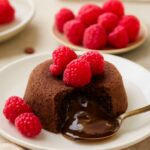
- Serve warm. Cut into a cake with a spoon. The cake should hold its shape while the warmed ganache flows from the middle. The filling and ramekins will be hot, so give each guest a moment before the first bite.
If the cakes need another minute, return the whole baking sheet to the oven and check again. The ganache will mark a skewer, so the edge test is more informative than poking the middle. Wet batter on the skewer means the cake needs time.
Why the center flows
The cake and filling have different jobs. Flour and baking powder give the outer portion structure and lift, while the oil adds tenderness. The ganache starts as a firm scoop, then softens as it warms inside the cake. When you break the shell, the chocolate center can spread onto the plate.
That distinction makes the chocolate molten cake recipe easier to judge. Look for a baked surface and cooked crumb at the edge, while keeping the filling enclosed. A shiny spot of ganache peeking through a crack can look different from raw batter; if you are unsure, test an area of cake away from the center. Do not taste the batter as a doneness test.
The filling can thicken as it cools, so serve promptly after the five-minute rest. Letting the cakes stand for a long time will give you a softer chocolate center rather than the same flowing effect. Both are enjoyable, but the timing matters if you want the dramatic first spoonful.
Serving and small variations
A spoonful of lightly whipped cream, vanilla ice cream, or a few raspberries balances the rich chocolate. Keep the topping separate until the cakes are on their plates. A light dusting of powdered sugar is another option.
To make a dairy-free version, use a dairy-free dark chocolate, unsweetened plant milk, and full-fat coconut cream in place of the dairy cream. Check the chocolate label for milk ingredients. Coconut cream adds its own flavor, and the consistency of the center can vary by brand. The cake batter itself needs no egg substitute.
For a subtle coffee note, dissolve 1/2 teaspoon instant espresso powder in the milk before mixing. Or add a small pinch of cinnamon to the dry ingredients. Keep additions small so they support the chocolate rather than overwhelm it. Avoid adding a large quantity of chopped nuts to the batter: pieces can interfere with the neat layer around the center.
Plan the timing
If you are wondering how to make a chocolate lava cake for guests, prepare and portion the ganache earlier in the day, then cover and refrigerate it. Mix the batter and assemble the cakes close to baking time. Set the plates and toppings out while the oven heats so the cakes can be served after their brief rest.
The recipe makes four molten chocolate cakes, and each ramekin should receive a similar amount of batter and filling. Uneven portions may finish at different times. Leave space between the dishes on the baking sheet so hot air can circulate. If using a different size or material, watch the cakes closely: the depth of the batter and the way the dish conducts heat affect baking time.
A little preparation makes the chocolate lava cake recipe easy to follow even when dinner is happening at the same time. Keep mitts nearby and choose plates wider than the ramekins. If one cake sticks, loosen its edge once more and give the inverted dish a gentle tap; you can also serve it in the ramekin.
If the cake breaks or the center is firm
If a cake collapses and the surrounding crumb looks wet, return the remaining ramekins to the oven and test the cake near an edge again. If the shell is set but the center is thick rather than flowing, it may have cooled too long: serve the next cakes promptly after their five-minute rest. For the next batch, check the oven a little earlier while still making sure the cake itself is baked through.







Comments are closed, but trackbacks and pingbacks are open.