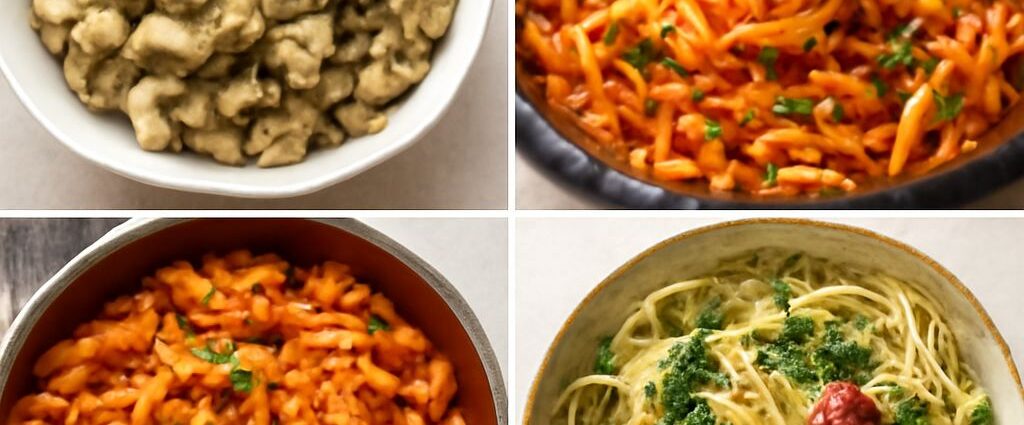
Choose a base, a sauce, and something hearty: pasta with tomato sauce and white beans is a straightforward place to begin. Plant-based Italian recipes can also center on polenta, vegetables, bread, or rice. A little olive oil, garlic, herbs, and lemon can bring the parts together without making every meal taste the same.
The following ideas show how to build an Italian-inspired vegan meal from familiar ingredients. They also explain what eggs and dairy do in particular preparations, so you can choose a replacement that performs the same job. Some Italian dishes already rely on vegetables and legumes; others need adjustments to fit a vegan table.
Vegan Italian Meals: Start With a Simple Combination
For a quick dinner, pair dried pasta with a tomato and chickpea sauce and a green salad. For a slower meal, layer baked eggplant with tomato sauce, then serve it alongside creamy polenta. Beans, lentils, nuts, and tofu can make a plate more substantial, while vegetables add texture and freshness.
Consider what you want the dish to do. A bowl of pasta may need a sauce that clings, a lasagna needs distinct layers that slice, and a filled pasta needs a mixture thick enough to stay sealed inside. These are different preparations, even when they share tomatoes or basil.
Stock your pantry with dried pasta, canned tomatoes, beans, olive oil, garlic, and dried oregano. Add fresh produce and herbs when available. Check ingredient lists on pasta, bread, broth, pesto, and prepared sauces: eggs, cheese, butter, or other animal ingredients can appear in products that look similar on the shelf. Many dried durum-wheat pastas contain only wheat and water, but the label settles the question for the package in your hand.
Tomato pasta with white beans
For two generous servings, bring a pot of salted water to a boil. Cook 8 ounces dried spaghetti or another egg-free pasta according to the package directions. Meanwhile, warm 2 tablespoons olive oil in a skillet over medium heat. Add 2 thinly sliced garlic cloves and cook for about 30 seconds, until fragrant. Add one 14-ounce can crushed tomatoes, a pinch of dried oregano, and a pinch of salt. Simmer for 10 minutes.
Drain and rinse one 15-ounce can of cannellini beans, then stir them into the sauce and warm through. Reserve a cup of pasta cooking water before draining the pasta. Toss pasta and sauce together, adding a splash of the cooking water until the sauce coats the strands. Finish with basil and black pepper.
The beans make the sauce more filling without demanding a separate pan. Starchy pasta water helps sauce cling. Add it a little at a time to avoid thinning the sauce too much. Vegan Italian recipes can be as simple as this, provided each component is seasoned as it cooks.
Build a meat-free ragù
For a deeper, savory sauce, finely chop an onion, a carrot, and 8 ounces of mushrooms. Cook the vegetables in olive oil over medium heat, stirring occasionally, until the mushrooms release their moisture and begin to brown. Stir in minced garlic and a spoonful of tomato paste; cook briefly. Add a 14-ounce can of crushed tomatoes and 1 cup cooked brown lentils, then simmer until thick enough to sit on a spoon.
Taste and add salt, pepper, and a little water as needed. Serve over rigatoni or tagliatelle made without eggs. Mushrooms contribute savory flavor and small pieces of texture, while lentils make the sauce substantial. Browning takes a little patience: crowding the pan can cause the mushrooms to steam, so give them room or cook them in batches.
This is one of many Italian vegan recipes that use legumes for body. If you prefer a smoother sauce, mash a few lentils against the side of the pan. For a chunkier result, leave them whole. Make extra and refrigerate it in a covered container for up to 3 to 4 days, then reheat until steaming; add a splash of water if it thickens in storage.
Lasagna: layers that hold together
Lasagna is a layered baked dish, so the key is balancing moisture between the noodles, sauce, and filling. Use egg-free lasagna sheets and follow their package directions: some need boiling, while others are designed to soften in the oven. A plant-based béchamel can replace a dairy version by providing a creamy layer between the sheets.
To make a small batch, whisk 2 tablespoons olive oil and 2 tablespoons flour in a saucepan over medium heat for about a minute. Gradually whisk in 2 cups unsweetened soy or oat milk. Simmer, stirring, until the sauce coats the back of a spoon; season with salt and a little nutmeg. Use unflavored milk, since vanilla belongs in a different part of dinner.
Spread tomato sauce in a baking dish, add a layer of noodles, then alternate sauce, béchamel, and cooked spinach. Finish with sauce and a little béchamel, cover, and bake according to the noodle package until the pasta is tender. Uncover briefly to brown the top, then rest 15 minutes before cutting. The rest helps the layers settle. If the dish looks dry before baking, add more sauce around the edges so the noodles have enough liquid to soften.
Ravioli: filling and sealing
Ravioli are individual pockets of pasta, not a layered casserole. Choose a ready-made egg-free dough or wrapper suitable for boiling, and check its ingredients. For a simple filling, crumble firm tofu and mix with well-drained cooked spinach, lemon zest, salt, and pepper. The tofu supplies a mild, ricotta-like body; the spinach adds flavor and color.
Squeeze excess liquid from the spinach before mixing. Put a small spoonful of filling in the center of each wrapper, moisten the edge with water, and press out trapped air as you seal. Follow the wrapper’s cooking directions, cooking a few at a time in gently simmering water. Serve with warm tomato sauce or olive oil and herbs.
If the filling leaks, reduce the amount in each pocket and press the edges together more firmly. Wet filling can weaken the seal.
Polenta, beans, and vegetables beyond pasta
For a bowl of soft polenta, bring 4 cups of water to a boil with 1 teaspoon salt. Slowly whisk in 1 cup of regular yellow cornmeal, reduce the heat, and cook according to the package directions, stirring frequently and adding water if it becomes too thick. Cornmeal varies in grind, so use the package time as your guide. Finish with olive oil and black pepper.
Top the polenta with sautéed mushrooms and warmed cannellini beans. A spoonful of tomato sauce or a squeeze of lemon brightens the bowl. For a different supper, pile roasted peppers, zucchini, and white beans onto toasted bread rubbed with garlic. Both combinations suit recipes for plant-based Italian meals without relying on a cheese substitute.
Risotto offers another texture altogether. Warm vegetable broth in one pan. In another, soften a chopped shallot in olive oil, stir in arborio rice, and add warm broth gradually, stirring until the rice is creamy and tender with a slight bite. Mushrooms or peas can go in as they cook. Olive oil can add richness at the end; nutritional yeast can add a savory note, though it tastes different from cheese. Choose vegetable broth without animal-derived ingredients.
Choose replacements by their role
For creaminess, use unsweetened plant milk in béchamel or blend soaked cashews with water for a smooth sauce. Cashew cream is richer and thicker; thin it gradually to the consistency you need. For a crumbly filling, seasoned firm tofu can stand in for ricotta in lasagna or ravioli. Drain it well so it doesn’t water down the dish.
For savory finishing flavor, try toasted breadcrumbs with garlic and parsley, chopped nuts, or a little nutritional yeast. These toppings bring different textures, so choose according to the dish rather than expecting an exact copy of Parmesan. For binding, the answer depends on the preparation: pasta dough can be made with flour and water, while a vegetable patty may need breadcrumbs or a spoonful of ground flax mixed with water.
Commercial pesto often contains cheese, so make a simple version by blending basil, olive oil, pine nuts or walnuts, garlic, and salt. Loosen it with pasta water before tossing. If using a packaged plant-based pesto, taste it first; saltiness and texture vary. These substitutions make vegan recipes inspired by Italy flexible without suggesting that every traditional recipe starts out dairy-free.
Put together a meal
A tomato-and-bean pasta already combines a starch, sauce, and legumes; add a crunchy salad if you want a fresh contrast. For guests, make the lasagna ahead, serve it with roasted vegetables, and let it rest before slicing. A bowl of polenta with mushrooms is a good choice when you want something spoonable and comforting without assembling layers.
Choose ravioli when you have time to fill and seal individual pieces. Choose a lentil ragù for an Italian-inspired meatless recipe you can make ahead. For quick weeknight cooking, the white-bean tomato sauce needs the fewest separate steps; for a leisurely meal, the layered bake rewards the extra assembly with tidy, creamy slices.






Comments are closed, but trackbacks and pingbacks are open.