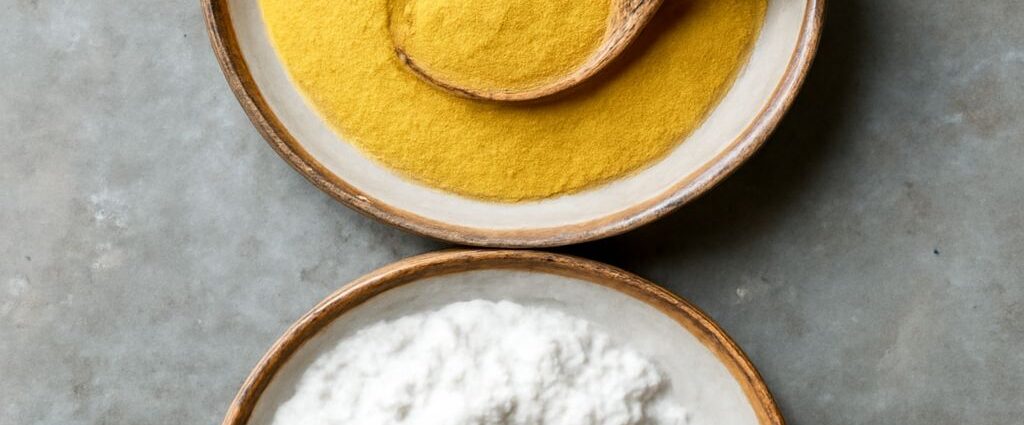
Corn flour and cornstarch both start with corn, but they are not interchangeable pantry staples. The corn flour vs cornstarch question trips up many home cooks because both are fine, white powders that look similar on the shelf. Corn flour is the whole corn kernel ground into a fine meal, carrying a pale yellow hue and a distinct toasted-corn taste. Cornstarch is a pure starch extracted only from the endosperm, leaving behind a stark white, flavorless powder with exceptional thickening power. Knowing which one to reach for changes the texture, clarity, and flavor of everything from a glossy stir-fry sauce to a tender slice of cornbread.
Quick Comparison: Corn Flour vs Cornstarch at a Glance
The difference between corn flour and cornstarch comes down to composition, appearance, and how they behave under heat. Corn flour contains protein, fiber, and a small amount of fat from the whole grain. It feels slightly coarse between your fingers and tastes gently sweet and earthy. Cornstarch is nearly 100 percent starch, with no fiber or protein. It feels silky and squeaky when rubbed, and it contributes zero flavor.
When heated with liquid, cornstarch thickens quickly into a translucent, glossy gel. It reaches full power just below a boil and then begins to thin if cooked too long or stirred too vigorously. Corn flour thickens more slowly, produces an opaque, matte finish, and holds its body better during longer cooking. That makes corn flour a better choice for gravies and rustic stews, while cornstarch shines in delicate sauces and fruit pie fillings where clarity matters.
A critical regional note: in the United Kingdom and many Commonwealth countries, “cornflour” is the term for what Americans call cornstarch. If you are following a British recipe that lists cornflour, use cornstarch, not finely ground cornmeal. This article uses U.S. naming conventions, so corn flour means whole-grain corn flour and cornstarch means the pure starch.
Best Uses for Corn Flour and Cornstarch
Corn flour works best when you want the flavor and golden color of corn to come through. It is the foundation of classic cornbread, corn muffins, and homemade tortillas. Because it contains no gluten, it is often blended with wheat flour in baking to add tenderness and a subtle crunch. Use corn flour in pancake or waffle batters for a heartier texture, or as a breading for fried fish and chicken when mixed with seasonings. It also thickens chili, hearty soups, and sausage gravy, giving them a rich, full-bodied consistency without turning gluey.
Cornstarch is the go-to thickener for clear, glossy sauces and stir-fries. A slurry of cornstarch and cold water whisked into a hot liquid creates the signature sheen of a Chinese-American broccoli beef sauce or a lemon chicken glaze. It is the secret to a fruit pie filling that holds its shape without clouding the jewel-toned fruit. In baking, a small amount of cornstarch blended with all-purpose flour mimics the lower protein content of cake flour, yielding softer cookies and more delicate shortbread. It also creates an ultra-crisp coating on oven-fried potatoes or tofu when used as part of a dry dredge.
Taste and texture behavior differ sharply. Corn flour brings a warm, corny sweetness and a slightly gritty mouthfeel that works beautifully in rustic dishes. Cornstarch is completely neutral, so it never competes with delicate flavors like vanilla, citrus, or seafood. For cold applications such as pudding or pastry cream, cornstarch sets to a sliceable, firm gel, while corn flour would leave a starchy, raw-tasting paste unless fully cooked first.
Substitution Notes: Swapping Corn Flour and Cornstarch
Substituting one for the other is possible in a pinch, but the results will not be identical. For thickening, you can replace 1 tablespoon of cornstarch with 2 tablespoons of corn flour. Expect a cloudier, softer set and a noticeable corn flavor. This swap works in beef stew, pot pie filling, or country gravy, but it will ruin a clear lemon sauce or a delicate consommé. Always cook the mixture long enough to eliminate the raw grain taste of corn flour.
If a recipe calls for corn flour as a primary dry ingredient, such as in cornbread or tortillas, cornstarch cannot take its place. Cornstarch lacks the structure, flavor, and bulk of whole-grain flour. You can, however, use fine cornmeal as a substitute for corn flour in most baked goods. The texture will be slightly coarser, but the corn flavor remains. Masa harina, the nixtamalized corn flour used for tamales and tortillas, has a distinct lime-treated taste and behaves differently; use it only when the recipe specifically calls for it.
When cornstarch is used in small amounts to lighten the texture of cakes or cookies, you can replace it with an equal amount of arrowroot powder or tapioca starch. These starches create a similarly tender crumb and work at slightly lower temperatures. Avoid substituting corn flour in these delicate baking applications, as the added protein and fiber will toughen the final product.
Common Mistakes to Avoid
One of the most frequent errors is dumping cornstarch directly into a hot liquid. It seizes into stubborn lumps that are nearly impossible to break apart. Always make a cold-water slurry first, then whisk it into the simmering liquid. Another mistake is boiling a cornstarch-thickened sauce for too long. Once the sauce reaches its maximum thickness, extended boiling breaks down the starch molecules and turns the sauce thin and watery again. Stir gently and remove from heat as soon as the desired consistency is reached.
Confusing UK cornflour with US corn flour leads to ruined recipes. If a British pudding recipe asks for cornflour, it means cornstarch. Using whole-grain corn flour instead will produce a gritty, savory-tasting dessert. Check the origin of your recipe and the label on your package carefully. In the US, corn flour is often sold as “finely ground cornmeal” or “corn flour” in the baking aisle, while cornstarch is typically found near the pudding mixes and baking supplies.
Finally, do not treat corn flour as a gluten-free all-purpose flour replacement in yeast breads or pizza dough. It lacks gluten and the elasticity needed for structure. Use it in combination with a gluten-free flour blend or in recipes specifically developed for corn flour. Storing both ingredients correctly also matters: keep corn flour in an airtight container in a cool, dry place to prevent the natural oils from turning rancid, and store cornstarch indefinitely in a sealed container away from moisture and strong odors.






Comments are closed, but trackbacks and pingbacks are open.