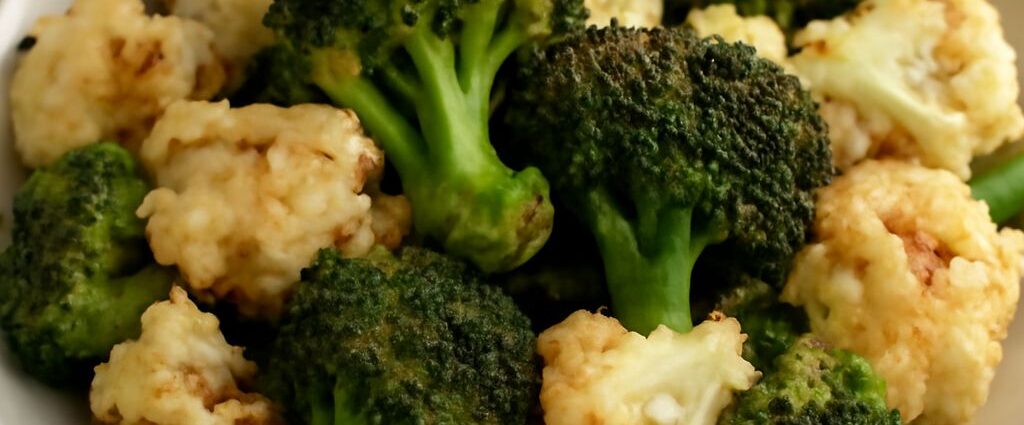
This broccoli cauliflower recipe roasts 1 pound each of broccoli and cauliflower at 425°F for 20 to 25 minutes. Cut both vegetables into matching 1½-inch florets, keep the broccoli near the center of the pan, and turn everything once so the florets become tender inside with browned edges.
The recipe makes four side-dish servings. You need one large rimmed sheet pan, 2 tablespoons olive oil, 1 teaspoon kosher salt, and ½ teaspoon black pepper. Keep space between the florets; that is the key to browning instead of steaming.
Broccoli and Cauliflower Recipe: Cut Both to 1½-Inch Florets
Start with vegetables that are similar in size. Cauliflower takes longer to soften than broccoli, while broccoli’s tips can brown quickly. Matching the florets helps both vegetables finish at nearly the same time.
- Cauliflower: 1 pound, cut into florets about 1½ inches across.
- Broccoli: 1 pound, cut into florets about 1½ inches across, with thick stems trimmed and sliced into ½-inch pieces.
- Olive oil: 2 tablespoons.
- Kosher salt: 1 teaspoon, or ¾ teaspoon fine salt.
- Black pepper: ½ teaspoon.
Cut large cauliflower florets through the stem so each piece has a flat side. For broccoli, include a short section of stem beneath each crown. The stem becomes tender and adds useful texture, but pieces thicker than ½ inch may remain firm when the tops are already browned.
Discard any tiny broccoli crumbs or separate them from the larger pieces. Small fragments can burn before the main florets are tender. If your vegetables produce more than one generous layer on a standard 13-by-18-inch pan, use two pans rather than crowding them.
Cauliflower and Broccoli Recipe: Season and Arrange for Browning
Heat the oven to 425°F. Place the broccoli and cauliflower in a large bowl. Drizzle with the 2 tablespoons oil, then sprinkle with salt and pepper. Toss until every floret has a thin, even coating. The vegetables should look lightly glossy, not wet or coated in a pool of oil.
Arrange the florets on a large rimmed sheet pan in one layer. Put the broccoli closer to the center of the pan and arrange the cauliflower around it. The center position gives broccoli slightly more protection from the hottest pan edges, helping its tips avoid over-browning before the cauliflower softens.
Leave about 1 inch between the larger pieces whenever possible. Set the cut sides of the cauliflower and broccoli against the pan. Those broad, flat surfaces make direct contact with the hot metal and develop deeper golden-brown color.
Do not pile florets on top of one another. Overlapping vegetables trap steam, leaving them soft and pale. A little space is more important than arranging every piece perfectly. If the pan is crowded, divide the vegetables between two pans and rotate their positions halfway through cooking.
For the most even cooking, use a light-colored aluminum sheet pan. A very dark pan may brown the undersides faster, so begin checking a few minutes early. Avoid adding lemon juice, wet sauces, or minced garlic before roasting; they add moisture and can cause scorching.
Roast Cauliflower and Broccoli at 425°F for 20–25 Minutes
- Place the pan on the center oven rack and roast for 12 minutes without disturbing the vegetables.
- Remove the pan and turn the florets with tongs or a thin spatula. Rotate the pan 180 degrees, then spread out any pieces that have shifted together.
- Return the pan to the oven and roast for another 8 to 13 minutes, checking at the 20-minute mark.
The total roasting time is usually 20 to 25 minutes. Smaller florets may finish around 18 minutes, while unusually dense cauliflower or a crowded pan may need a few extra minutes. Keep the broccoli toward the middle when turning it, especially if its crowns already have dark tips.
The finished vegetables should show browned edges and a few deep golden spots. A thin knife should slide into the thickest cauliflower stem with slight resistance, not crunch. Broccoli stems should be tender when pierced, and the crowns should feel soft without collapsing. The broccoli tips may be darker than the cauliflower edges, but they should taste toasted rather than bitter.
If the florets are tender but still pale, roast for 2 to 4 more minutes. If the broccoli is darkening quickly while the cauliflower remains firm, move the broccoli farther from the pan edges and continue roasting. If the vegetables release a lot of liquid, the pan was likely crowded; keep roasting until that moisture evaporates and the edges begin to brown.
Let the roasted vegetables stand on the pan for 2 minutes before serving. This brief rest allows excess steam to escape and keeps the browned surfaces from becoming immediately soggy.
Flavor Variations for Cauliflower and Broccoli
Keep the basic oil, salt, temperature, and timing, then add flavor according to the variation you prefer. Most finishing ingredients should go on after roasting so they do not interfere with browning.
- Lemon-garlic: Toss the hot vegetables with 1 finely grated garlic clove, the zest of ½ lemon, and 1 tablespoon lemon juice. Add the lemon juice gradually so the florets stay crisp at the edges.
- Parmesan and pepper: Sprinkle with ¼ cup finely grated Parmesan and an extra pinch of black pepper as soon as the pan leaves the oven. The residual heat helps the cheese cling to the florets.
- Smoky-spiced: Add 1 teaspoon smoked paprika and ½ teaspoon ground cumin with the salt before roasting. Finish with a squeeze of lime for a sharper flavor.
- Sesame: Sprinkle 1 tablespoon sesame seeds over the vegetables during the final 5 minutes. Toss the roasted florets with 1 teaspoon toasted sesame oil after cooking.







Comments are closed, but trackbacks and pingbacks are open.