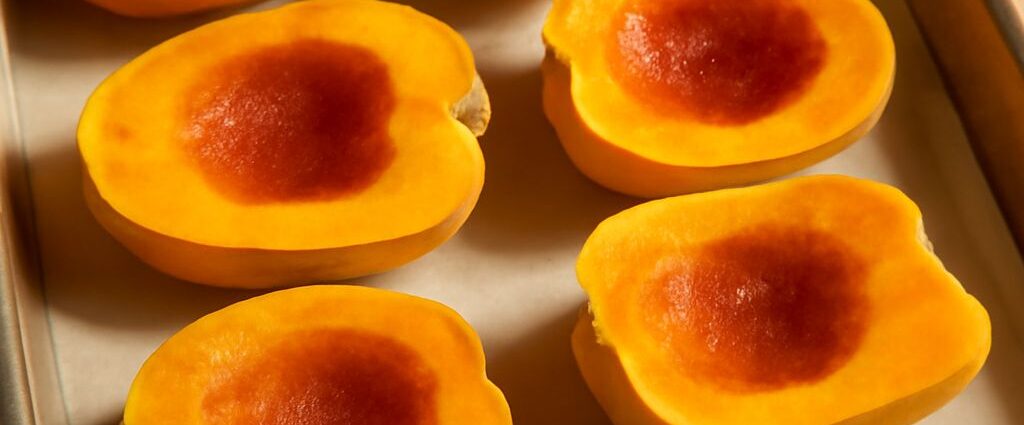
This carnival squash recipe roasts two small halves until the flesh is creamy, sweet, and caramelized around the edges. Each squash weighs about 1 to 1½ pounds and yields two generous servings or four smaller portions.
Season the halves simply with olive oil, salt, and pepper, or fill them with quinoa, chickpeas, and feta for a complete vegetarian meal. The cooked squash makes an attractive edible serving vessel, so you can bring it straight to the table.
Carnival Squash Recipe: Sweet, Nutty Flavor and Preparation
Choose a 1–1½-pound squash
Carnival squash has striped cream, orange, and green skin with sweet, nutty flesh. Choose squash that feel heavy for their size, with firm skin and no soft spots. Their compact shape makes them easier to roast as halves than as peeled chunks.
Before cutting, scrub the skin and dry the squash. Use a sturdy chef’s knife and a stable cutting board. Slice each squash lengthwise from stem to base. If the stem is especially tough, cut around it first rather than forcing the knife through.
Scoop out the seeds and stringy fibers with a large spoon. The seeds can be rinsed, dried, tossed with oil and salt, and roasted separately. Leave the squash skin intact; it helps the halves hold their shape during cooking.
How to Cook Carnival Squash: Simple Roasted Halves
Halve, seed, and brush with 1 tablespoon oil
Yield: 2 roasted squash halves, serving 2 people.
- 1 carnival squash, weighing 1 to 1½ pounds
- 1 tablespoon olive oil, divided between the two halves
- ½ teaspoon kosher salt
- ¼ teaspoon black pepper
- Optional: ½ teaspoon maple syrup, ¼ teaspoon ground cinnamon, or a pinch of smoked paprika
- Heat the oven to 400°F. Line a baking sheet with parchment if desired.
- Place the seeded squash halves cut-side up on the baking sheet. Brush the cut surfaces and rims with the oil.
- Sprinkle evenly with salt and pepper. Add maple syrup and cinnamon for a sweeter side, or smoked paprika for a savory version.
- Roast at 400°F until fork-tender, 35–45 minutes. Start checking at 35 minutes because smaller squash cook faster.
The squash is ready when a fork slides through the thickest part of the flesh without resistance. The surface should look glossy, while the edges should be browned and caramelized. If the flesh still feels firm at 45 minutes, continue roasting in 5-minute increments.
Do not rely on color alone. Dark edges with hard centers mean the oven may be running hot; loosely cover the squash with foil and keep roasting until tender. Let the halves rest for five minutes before serving so the hot flesh settles and becomes creamier.
Carnival Squash Recipes: Stuffed Halves
Mix 1 cup cooked quinoa, ½ cup chickpeas, and ¼ cup feta
For a measured stuffed variation, prepare the roasted squash halves above, using salt, pepper, and smoked paprika for seasoning. While they roast, combine the following in a bowl:
- 1 cup cooked quinoa
- ½ cup drained chickpeas
- ¼ cup crumbled feta
- 1 tablespoon chopped parsley or cilantro
- 1 teaspoon lemon juice
- 1 teaspoon olive oil
Stir the filling gently so the chickpeas stay whole. Taste and add another pinch of salt only if needed; feta already adds saltiness. For extra texture, add 2 tablespoons toasted pepitas or chopped walnuts.
Fill the roasted halves and warm for 10 minutes
When the squash is fork-tender, remove it from the oven. Spoon the quinoa mixture into the two cavities, mounding it slightly rather than packing it down. Return the stuffed halves to the oven and warm for 10 minutes at 400°F.
The filling should be hot in the center, and the feta should soften without fully melting. If the tops brown too quickly, cover them loosely with foil. Serve each half as an edible serving vessel, scooping the creamy squash flesh together with the savory filling.
Serve and Store
Serve roasted halves with a spoon while they are warm. A drizzle of lemon juice, tahini, or maple syrup balances the sweet, nutty flesh. For the stuffed version, add a green salad or roasted vegetables to make the meal more substantial.
Cool leftovers promptly, then refrigerate them in an airtight container for up to four days. Reheat at 350°F for 15–20 minutes, or microwave individual portions until hot throughout. Store the filling separately when possible so it keeps its texture.







Comments are closed, but trackbacks and pingbacks are open.