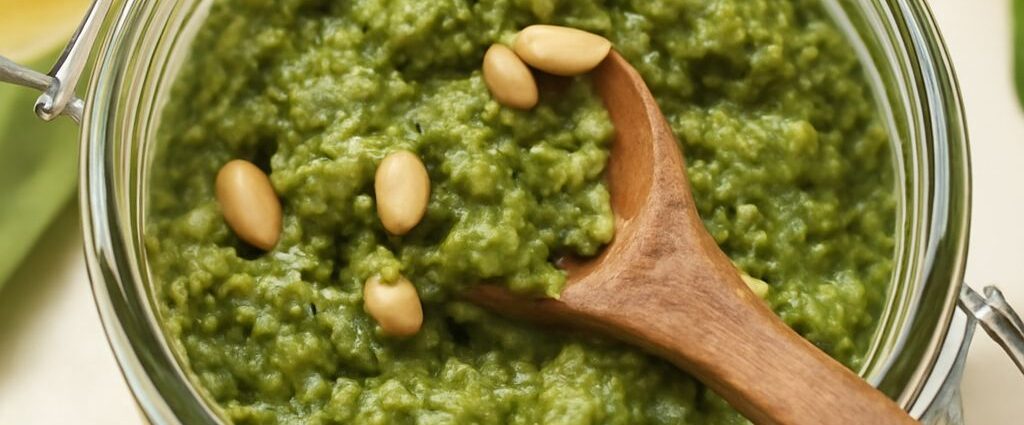
Vegan pesto is a simple basil sauce made without cheese. If you want the quick answer, use basil, nuts, garlic, olive oil, lemon juice, and a salty vegan substitute such as nutritional yeast or a little extra salt. Blended well, it becomes a bright, spoonable sauce for pasta, sandwiches, roasted vegetables, and grain bowls.
If you are searching for how to make vegan pesto, the method is straightforward. The key is balancing fresh herbs, fat, salt, and acidity so the sauce tastes round instead of flat or greasy.
Quick Answer: What Vegan Pesto Is
Traditional pesto usually includes basil, garlic, pine nuts, olive oil, and cheese. Vegan pesto keeps the herb-and-oil base but leaves out the dairy. That means the flavor comes from basil, garlic, nuts or seeds, and a savory vegan ingredient that replaces the salty depth cheese would add.
The result is still pesto vegan in the everyday kitchen sense: a fast blended sauce with a fresh herbal taste. There is no single fixed formula, but the best versions stay simple and use good ingredients in the right balance.
A basic batch makes about 1 cup, enough for 4 servings of pasta or several sandwiches. It should look green, smell fresh, and taste bright with a little bite from garlic and lemon.
How to Make Vegan Pesto Step by Step
This method gives you a reliable starting point. It is easy to adjust once you know the flavor you want.
- Gather the ingredients. Use 2 packed cups fresh basil leaves, 1/3 cup nuts or seeds, 1 to 2 garlic cloves, 1/4 cup olive oil, 1 to 2 tablespoons lemon juice, 2 to 4 tablespoons nutritional yeast, and salt to taste.
- Toast the nuts if you want deeper flavor. This is optional, but a quick toast in a dry pan can make the pesto taste nuttier. Cool them before blending.
- Add the basil, garlic, nuts, lemon juice, and nutritional yeast. Pulse in a food processor or blender until the mixture is chopped fine.
- Stream in the olive oil. Blend just until the pesto becomes loose and spoonable. Stop early if you want a chunkier texture.
- Taste and adjust. Add more salt for savoriness, more lemon for brightness, or a little more oil if the sauce feels too thick.
- Check the texture. It should be spreadable and coated, not dry or watery. If needed, add a teaspoon of water or oil at a time.
If you prefer a mortar-and-pestle style texture, crush the garlic and nuts first, then work in the basil and oil gradually. The flavor is usually a little rougher and more rustic, which some cooks like for toast and simple pasta dishes.
Best Ingredients and Simple Swaps
The best vegan pesto starts with fresh basil, but you can use other greens if needed. Parsley, arugula, spinach, or a mix of herbs can work, though the flavor will change. For the nut base, pine nuts are classic, but walnuts, cashews, almonds, or sunflower seeds are all practical options.
If you want a richer taste, cashews make the sauce creamier. If you want a more classic, slightly bitter edge, pine nuts or walnuts are closer to the traditional profile. Sunflower seeds are useful when you want a nut-free version for ordinary kitchen use.
Nutritional yeast is a common savory ingredient in vegan pesto. It adds a mild cheesy note without dairy. If you do not like it, increase salt a little and use a squeeze more lemon, but keep tasting as you go so the sauce does not become sharp.
Good olive oil matters because it carries the flavor. Use one that tastes clean and not overly bitter. Garlic should be fresh, but if raw garlic feels too strong, start with half a clove and add more after tasting.
Tips and Mistakes to Avoid
One common mistake is overblending. Too much blending can warm the sauce and make the herbs taste dull. Pulse in short bursts and stop as soon as the mixture comes together.
Another mistake is adding all the oil at once. Start with less, then adjust. That makes it easier to control the texture and avoid a greasy finish.
Watch the salt level carefully. Since vegan pesto does not have cheese, it may need a little extra seasoning, but the goal is savory, not overly salty. Taste with something plain, such as bread or a noodle, because pesto often tastes stronger on its own than it does in a dish.
If the sauce turns dark, that usually means too much air exposure. Lemon juice helps slow that a little, and a thin layer of oil on top can help protect the surface in the container.
Do not expect every version to taste exactly like the dairy version. The point is a balanced herb sauce that works well in normal meals. The best vegan pesto is the one that tastes fresh, lively, and usable with the ingredients you have.
Storage and Serving Notes
Store vegan pesto in a sealed container in the refrigerator. It usually keeps for 3 to 5 days. For best color, smooth the surface and add a thin layer of oil on top before closing the lid.
If it thickens in the fridge, stir in a spoonful of warm water or olive oil before using. You can also freeze it in small portions for longer storage. Ice cube trays work well for single servings, then the cubes can be moved to a freezer bag once solid.
Serve it in pasta, on grilled bread, with roasted vegetables, or as a sauce for beans and grains. It also works as a sandwich spread or a topping for potatoes. If you are using it on hot pasta, save a little cooking water to loosen the sauce and help it coat evenly.
For the best result, add pesto at the end of cooking rather than boiling it. Gentle heat keeps the color brighter and the basil flavor fresher.







Comments are closed, but trackbacks and pingbacks are open.