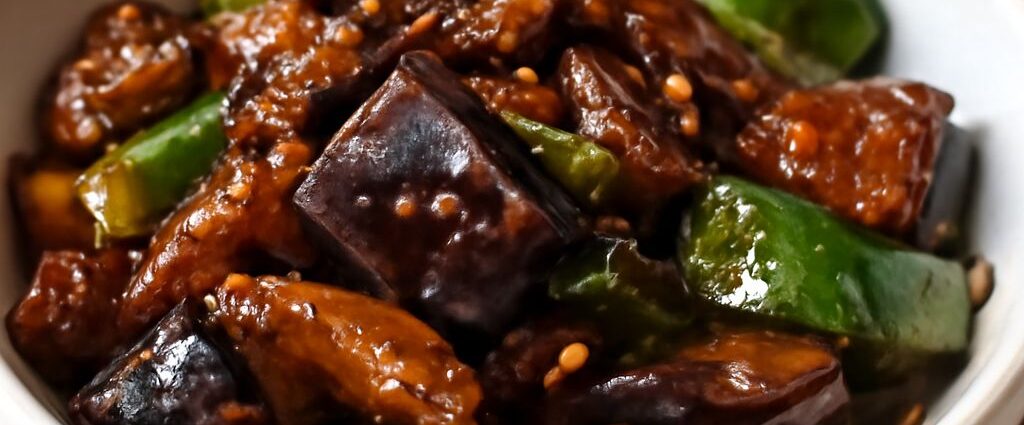
This Japanese eggplant recipe makes tender, browned slices in one skillet with a glossy savory-sweet-acidic sauce. It is built for weeknight speed, but the method still gives you good caramelization and soft flesh.
If you want sautéed Japanese eggplant that tastes balanced instead of flat or oily, use high heat, a little oil, and a short sauce finish. The eggplant stays creamy inside while the edges turn golden.
Japanese Eggplant Ingredients and Preparation
Yield: 4 side-dish servings
Time: about 25 minutes
Ingredients
- 1 1/2 pounds Japanese eggplant, about 4 medium
- 1 teaspoon kosher salt
- 2 tablespoons neutral oil, such as avocado or canola
- 2 cloves garlic, thinly sliced
- 1 tablespoon grated fresh ginger
- 2 tablespoons soy sauce
- 1 1/2 tablespoons rice vinegar
- 1 tablespoon mirin or 2 teaspoons honey
- 1/4 cup water
- 1 teaspoon toasted sesame oil
- 1 teaspoon sesame seeds, optional
- 2 sliced scallions, for serving
Wash the eggplants and trim the stems. Cut each one on a slight diagonal into 1/2-inch pieces. Keep the pieces similar in size so they cook evenly.
Sprinkle the cut eggplant with salt and let it sit for 10 minutes. This pulls out surface moisture and helps the pieces brown faster. Pat them dry with paper towels before cooking.
Mix the soy sauce, rice vinegar, mirin, and water in a small bowl. This gives you a balanced sauce that is savory, sweet, and bright.
Sauté the Eggplant and Add the Sauce
Set a large skillet over medium-high heat. When the pan is hot, add 1 tablespoon of the neutral oil. Add half the eggplant in a single layer. Do not crowd the pan.
Cook without stirring for 2 to 3 minutes, until the underside is golden brown. Turn the pieces and cook for another 2 minutes. Transfer the first batch to a plate.
Add the remaining 1 tablespoon oil and cook the second batch the same way. If the skillet looks dry, add a teaspoon more oil, but no more than needed. Japanese eggplant recipes work best when you use enough heat to brown, not enough oil to soak.
Lower the heat to medium. Return all the eggplant to the pan. Add the garlic and ginger, and stir for 30 seconds, just until fragrant.
Pour in the sauce. Let it bubble for 1 to 2 minutes, tossing gently, until the eggplant is tender and the liquid lightly coats the pieces. Add the sesame oil at the end.
Doneness cues: the eggplant should look glossy, feel soft when pierced with a fork, and hold its shape. The sauce should cling, not pool.
Failure cues: if the eggplant is pale and spongy, the pan was too cool or overcrowded. If it turns mushy, it cooked too long after the sauce went in.
Serve, Store, and Vary the Recipe
Serve this sautéed Japanese eggplant hot with steamed rice, soba, grilled tofu, or a simple protein of your choice. Finish with scallions and sesame seeds for extra texture.
For a more assertive flavor, add 1 teaspoon gochujang or a pinch of red pepper flakes to the sauce. For a richer version, stir in 1 tablespoon miso with the soy sauce. For a citrus note, swap 1 teaspoon of the vinegar for lime juice.
To make the dish more substantial, add sliced shiitake mushrooms or cubed tofu during the last few minutes of cooking. If you prefer a lighter profile, reduce the mirin slightly and add a touch more vinegar.
Storage: cool leftovers quickly and refrigerate in a covered container for up to 4 days. The eggplant will soften more as it sits, but the flavor stays good.
Reheating: warm leftovers in a skillet over medium heat with a teaspoon of water until heated through. A microwave works too, but the skillet keeps the texture better. If the sauce seems dry, add a small splash of water before reheating.










Comments are closed, but trackbacks and pingbacks are open.