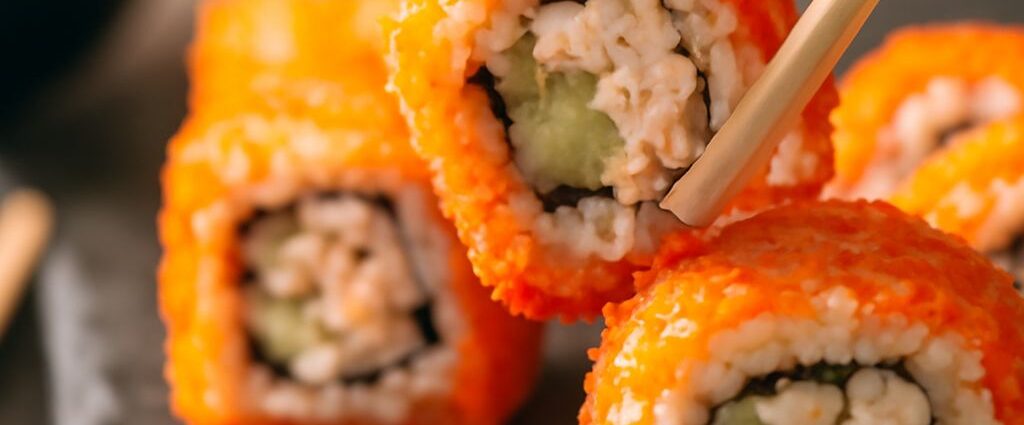
A conventional imitation crab stick made from fish-based surimi is neither vegetarian nor vegan. An explicitly plant-based alternative can be suitable, but its ingredients still need checking. The word “imitation” tells you the product resembles crab; it does not tell you that the ingredients come from plants.
To decide whether imitation crab fits a vegetarian meal, find the ingredient list or ask what the kitchen uses. For a vegan substitute for imitation crab, also check the dressing, breading, and other ingredients in the finished dish. Fish-based surimi and plant-derived alternatives may look similar in a sushi roll, yet they start with different ingredients.
Vegan Imitation Crab: How It Differs From Surimi
Conventional surimi is a preparation made from minced fish. Manufacturers combine it with other ingredients to create products resembling crab, often in sticks or flakes. According to FDA guidance on processed seafood, surimi can be made from fish such as pollock, cod, or Pacific whiting; a finished product may also contain starch, egg white, seafood flavoring, or other ingredients.
Is imitation crab vegetarian if it contains pollock instead of crab? No. Pollock is a fish, so a product made with it is not vegetarian. It is also not vegan. Some formulations contain actual crab extract or egg white as well, but the fish itself is enough to settle the question. Not every package contains the same extras, so read the particular label.
A product clearly identified as plant-based may use starches, plant proteins, vegetables, or other nonanimal ingredients to create pieces suitable for similar dishes. The package should identify the product and its ingredients. A vegan imitation crab option can be useful in a chilled salad or roll, but check its storage and preparation instructions: plant-based products are not all ready to eat in the same way.
What “imitation” means on the package
The name points to the food being copied, not to the origin of every ingredient. Conventional imitation crab is often intended to look or taste like crab while using fish as its main seafood ingredient. It may be sold as seafood sticks, flakes, or a filling in prepared food. Words such as “crab style” or “seafood style” alone do not establish a vegetarian ingredient list.
Look for the word surimi and the name of a fish, such as Alaska pollock, in the ingredients. Fish protein, fish extract, crab extract, egg white, and dairy ingredients are also relevant if you are avoiding animal products. A product with fish is unsuitable for a vegetarian diet even if the name contains no actual crab. Egg or dairy also matter for a vegan meal.
The FDA guidance cited above describes fish as the basis of conventional surimi and notes that egg white and seafood flavoring may be added. One package can differ from another, so check the complete ingredient list on the product you are actually buying.
“Vegetarian” and “vegan” are useful starting descriptions, but they answer different questions. A vegetarian alternative may contain egg or dairy; a vegan product should exclude animal ingredients. If the ingredients or the source of a flavoring are unclear, contact the manufacturer. In a restaurant, ask the staff to check the product or its packaging rather than assuming a crab-style filling is plant-based.
Read the whole dish, not just the filling
A sushi roll may combine a crab-style filling with mayonnaise, sauces, rice seasoning, and a topping. Conventional mayonnaise commonly contains egg. Some sauces or garnishes may contain fish, roe, or other animal ingredients. For a vegan roll, ask whether the filling and each sauce or topping are plant-based, and whether the kitchen can prepare it that way.
For a chilled salad, check the dressing as well as the pieces mixed into it. A package marked vegetarian can still include milk or egg, and a plant-based filling does not change what is in a dairy dressing. A simple dressing of vegan mayonnaise, lemon, and a little mustard can provide a creamy texture when its individual ingredients fit your needs.
For an allergy, ask about shared knives, cutting boards, fryers, and preparation surfaces as appropriate. Fish and crustacean shellfish are different major allergens under U.S. labeling rules; a product free of crab is not automatically free of fish. The FDA’s allergen guidance explains the labeling of major food allergens. If cross-contact matters, contact the manufacturer or restaurant about its practices.
Choose a texture for the dish
Prepared plant-based sticks or flakes are a convenient choice when you want a product shaped for a roll or salad. Their texture depends on the formulation: some are springy, while others separate into flakes. Check whether the package says to thaw, heat, or serve chilled, and follow those instructions. The red edge of a stick is a visual cue, not proof of its ingredients.
Hearts of palm have a tender, fibrous texture that separates into pieces. Drain and gently pull them apart for a chilled salad, then toss with a creamy plant-based dressing. Their mild flavor takes on lemon and herbs, but they are softer and less uniform than many prepared sticks. Rinse them if the packing liquid tastes salty or acidic, and pat them dry before dressing.
Young green jackfruit can also pull into strands. Choose a plain, unripe version packed in water or brine rather than sweet ripe jackfruit in syrup. Drain, rinse, and squeeze gently. It works in a seasoned warm filling, though its texture is often more stringy than a seafood stick. Follow the package instructions and taste it before adding salt.
Firm tofu makes neat cubes or crumbles for a salad or rice bowl. It is less fibrous than hearts of palm, but its mild flavor takes well to a lemony dressing. Press out some moisture before mixing so the dressing clings. For a small ocean-like note, add a pinch of crumbled nori; begin with a little, since its flavor can become strong quickly.
These choices serve different purposes. A packaged product described as vegan crab meat may be designed to resemble flakes, while vegetables and tofu contribute their own textures. Compare ingredients, protein, sodium, and serving size if they matter to your meal. A starch-based alternative and a soy-based one need not have the same nutritional profile.
A simple chilled salad idea
For two servings, drain one 14-ounce can of hearts of palm and pat the pieces dry. Pull them into small flakes with a fork. Fold together with 2 tablespoons vegan mayonnaise, 1 teaspoon lemon juice, 2 tablespoons finely diced celery, and a little chopped dill. Taste, then add salt and pepper as needed. Chill until ready to serve and keep refrigerated.
Spoon the mixture onto lettuce leaves or into a sandwich with cucumber. The hearts of palm provide a delicate, tender bite; celery adds crunch, and the dressing helps hold the flakes together. Add another teaspoon of mayonnaise if the mixture is dry, or a little more lemon if it tastes flat. Avoid crushing the pieces into a paste if you want a flaky result.
If using a prepared plant-based crab substitute instead, follow its label before mixing it into a cold dish. Some products need cooking or thawing first, and their saltiness varies. Start with less added salt, then taste the finished salad. A roll or rice bowl can use the same principle: prepare the filling as directed and add vegetables and a suitable sauce.
Questions to ask at a sushi counter
Ask, “Is the imitation crab made with fish-based surimi or with plants?” If the answer is unclear, ask staff to check the package. Then ask whether the mayonnaise, spicy sauce, and toppings contain egg, fish, or dairy. If a vegan roll is made to order, cucumber, avocado, and a confirmed plant-based filling can offer a clear combination.
For a vegetarian diner who eats eggs and dairy, the mayonnaise may be acceptable, but fish-based surimi is still not. If you are choosing for someone else, explain which ingredients are excluded rather than relying on a single label. For an allergy, mention it separately and ask how the kitchen manages cross-contact.
Packaged sushi deserves the same attention. An ingredient list may name the components within the filling and sauce separately. Check the whole list, not just the large words on the front. If no ingredient list is available and staff cannot confirm the filling, choose a roll whose ingredients they can identify.
Which substitute should you buy?
Choose a prepared plant-based stick when shape and convenience matter, and check whether it is intended for the use you have in mind. Choose hearts of palm for a tender, flaky salad; try tofu when you want a firmer cube that absorbs dressing. For a warm shredded filling, young jackfruit is another option.
If the question is whether imitation crab is vegetarian, begin with the source: fish-based surimi is not. Once you have found a suitable alternative, check the sauce, preparation directions, and any allergy information. The best choice is the one whose ingredients fit your meal and whose texture suits the dish you plan to make.




Comments are closed, but trackbacks and pingbacks are open.