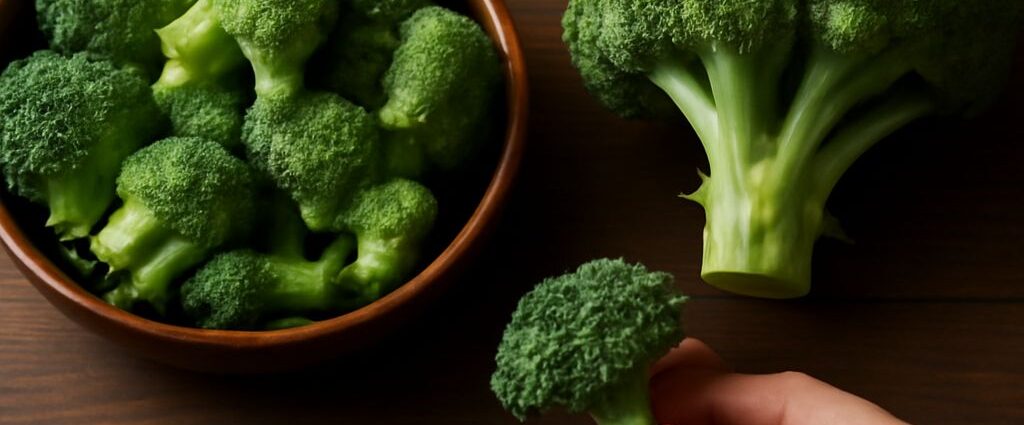
A half-cup of raw broccoli and a half-cup of cooked broccoli do not contain the same amount of vegetable by weight. Cooking softens and compacts the pieces, so a cup measure can hold more cooked broccoli. To understand the nutrients broccoli provides, check both the serving size and whether the numbers describe raw or cooked florets and stems.
Broccoli contributes vitamins, fiber, and other nutrients to a meal. Its nutritional value depends on the amount you eat and how it is prepared. A serving with olive oil, cheese, or sauce is a different combination from plain broccoli, even though the vegetable underneath is the same.
Broccoli Nutritional Value: Start With the Serving
For broccoli nutritional value, a useful reference is the National Institutes of Health’s vitamin C table. It lists about 39 milligrams of vitamin C for 1/2 cup of raw broccoli and 51 milligrams for 1/2 cup cooked. Those are estimates for the stated forms and volumes, not measurements of every head or prepared dish.
The higher figure per half-cup cooked does not mean cooking creates vitamin C. The two volumes do not necessarily represent the same starting weight: pieces become more compact when cooked. Vitamin C can also be lost during preparation, particularly with prolonged heating or contact with cooking water. The table helps compare usual portions; it does not isolate the effect of cooking on an identical amount of broccoli.
For other nutrients, USDA FoodData Central provides food entries with specific descriptions and measures. Search for plain broccoli in the form you plan to eat, then select the serving size. A raw entry is a useful reference for a salad; an entry describing cooked, drained broccoli is more useful for a side dish. The nutrition of broccoli in a particular bowl will also reflect anything mixed into it.
What vitamins does broccoli have?
What vitamins does broccoli have? It provides vitamin C, vitamin K, and folate, among others. The NIH table gives the vitamin C values above for raw and cooked portions. Vitamin C helps the body make collagen and helps with the absorption of iron from plant foods. It is one part of a varied diet.
Vitamin K is another nutrient found in broccoli. The NIH vitamin K fact sheet identifies broccoli among foods that provide it. Vitamin K has a role in normal blood clotting. For people taking warfarin or similar medication, consistent vitamin K intake matters; discuss significant dietary changes with the prescribing clinician rather than making changes based on a single food list.
Folate is a B vitamin found in a variety of foods, including green vegetables and beans. If a specific amount matters for meal planning, use a database entry matching the raw or cooked vegetable and portion.
Fiber, carbohydrates, and protein
Broccoli contains dietary fiber as well as carbohydrates. Fiber is part of the plant material that gives the stems and florets their structure. Cooking changes the texture, making the vegetable softer, but the food still contributes fiber. Eat the tender stems as well as the florets: peel the tougher outer layer of a thick stalk and slice the center thinly so it cooks evenly.
The vegetable also contains some protein, although its portion of protein is modest compared with a meal based on beans, lentils, tofu, or another concentrated source. For a satisfying plant-based plate, pair broccoli with chickpeas and rice, tofu and noodles, or lentils and a baked potato. The combination adds different flavors and textures as well as a broader range of nutrients.
Broccoli nutrition is best understood as part of the whole plate. A small side and a large bowl are different portions. If you track a nutrient, measure the vegetable in the form described by the source and add the other ingredients separately.
Minerals and everyday interpretation
Broccoli supplies minerals including potassium and calcium. Amounts differ by portion. Use the same portion and preparation when comparing database entries, especially if you are deciding between a raw snack and a cooked side.
A Nutrition Facts label on a frozen package may list nutrients per serving and express some as a percentage of the Daily Value. The percentage is a reference for the contribution of a stated serving, not a personal prescription. Check how many servings are in the bag and whether the label describes the food as sold or prepared. If you eat twice the stated serving, the amounts from that product are approximately doubled before you add a sauce or oil.
For nutritional information, broccoli should be compared with broccoli prepared in a similar way. A plain frozen product and a frozen product with cheese sauce are not equivalent entries. The second has a recipe built into the bag. Look at the ingredient list as well as the nutrition panel to see what has been added.
Raw, steamed, boiled, or roasted?
Raw broccoli has a crisp bite and can be chopped into salads or served with a dip. Wash it under running water before cutting and drain it well. Cut the florets into small pieces and slice peeled stems thinly if you prefer a more even texture. A dip changes the nutritional contribution of the snack, so account for it separately when comparing portions.
Steaming softens broccoli without immersing it in a large amount of water. Set florets in a steamer basket over simmering water, cover, and cook until a fork enters the stem with a little resistance. The exact time depends on the size of the pieces. Start checking after a few minutes; a small floret reaches tenderness before a thick stalk.
Boiling is useful when you want very tender broccoli for a purée. Use enough water for even cooking and check frequently. Some water-soluble nutrients can move into the cooking water, and prolonged heat can reduce vitamin C. If the cooking liquid forms part of a soup, some nutrients that moved into it remain in the dish; the amount cannot be inferred from a plain drained-broccoli entry.
Roasting gives the edges browned flavor. Toss dry, evenly sized pieces with a little oil and spread them on a baking sheet; crowding encourages steaming instead of browning. Roast at 425°F, turning once, until the stems are tender and edges browned. The oil becomes part of the portion, so include it if you are calculating the finished side. A sprinkle of cheese or a tahini sauce changes the total again.
Some broccoli nutrients respond differently to heat, water, and storage. There is no single cooking method that makes every nutrient highest in every serving. Choose the texture you enjoy, avoid cooking longer than needed for that texture, and use an entry that matches the method when you need a numerical estimate.
Fresh and frozen broccoli
Fresh broccoli is convenient when you want to use raw florets or slice the stalk yourself. Frozen broccoli is often sold as florets or cuts and can be a practical choice for a cooked side. Read the package: plain frozen broccoli and broccoli in a seasoned sauce are different foods for label comparison.
Frozen vegetables are commonly blanched before freezing, and their texture after cooking differs from fresh. Cook according to the package and stop when tender. The nutritional value of broccoli varies with processing, storage, portion, and preparation, so use a matching entry rather than assuming one form has the same numbers as another in every case.
If a bag gives a serving by weight, weighing the portion is a useful way to compare it with the label. If you use a cup measure, note whether the pieces are raw, frozen, or cooked and how tightly they sit in the cup. Floret size changes how much fits.
How to read numbers without mixing up portions
First identify the food: plain broccoli, a frozen blend, and a prepared side with sauce each have different entries. Next identify its state, such as raw or cooked and drained. Then match the amount. A 1/2-cup cooked serving and a 1/2-cup raw serving are both convenient kitchen measures, but they are not an experiment on the same starting pieces.
The nutrients in broccoli can be listed in grams, milligrams, or micrograms. Those units describe different scales, so compare the unit as well as the number. For instance, the NIH vitamin C figures are in milligrams. If a database lists vitamin K in micrograms, the two figures cannot be compared simply by looking at which number is larger.
Finally, add the other foods if you are estimating a whole dish. A spoonful of oil, a cheese sauce, and a squeeze of lemon each contribute something different. Weigh or measure what you actually use and consult its label or a matching database entry; there is no single reliable number for an unspecified “broccoli side.”
Should you eat it raw or cooked?
Choose the form you enjoy and will use. Raw broccoli offers crunch; cooked broccoli is softer and fits easily into a warm meal. Both can contribute vitamins and fiber. For a numerical comparison, match the serving and preparation to a reliable source, then include any additions separately.








Comments are closed, but trackbacks and pingbacks are open.