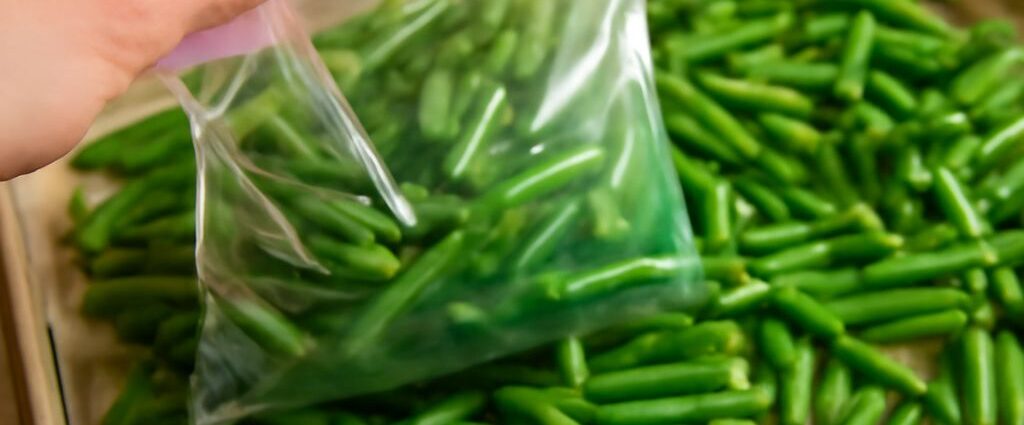
To learn how to freeze green beans for the best color and texture, blanch fresh pods for 3 minutes, cool them immediately in ice water, dry them thoroughly, and pack them airtight. This standard method slows enzyme activity, preserves a bright green color, and gives the beans a firmer texture after cooking.
If you want to freeze fresh green beans without sacrificing quality, blanching is the best choice. You can skip blanching when convenience matters more than appearance and texture, especially if you will use the beans in soups, stews, or casseroles.
How to Freeze Green Beans: Prepare, Blanch, and Cool
Use beans that are firm, brightly colored, and free from soft spots. Older beans can be frozen, but they may already have a stringy texture that freezing will not improve.
- Wash the beans. Rinse them under cold running water, rubbing away dirt. Drain well.
- Trim the ends. Snap or cut off the stem ends. Remove the pointed tips if desired, although they are edible. Pull away any visible strings.
- Cut the beans. Leave small beans whole, or cut larger beans into 1- to 2-inch pieces. Uniform pieces cook more evenly later.
- Boil the water. Use about 1 gallon of water for every pound of beans. A large volume helps the water return to a boil quickly.
- Blanch for 3 minutes. Add the beans to the boiling water, cover the pot, and start timing once the water returns to a boil. Blanch whole or cut green beans for 3 minutes.
- Move them to an ice bath. Transfer the beans immediately to a large bowl of ice water. Leave them there for about 3 minutes, or until they are completely cool.
- Drain and dry. Drain the beans in a colander, then spread them on clean kitchen towels or paper towels. Pat them dry and let surface moisture evaporate before packing.
The ice bath stops carryover cooking. Without it, the beans can become softer and darker while they cool. The beans should look bright green and feel slightly firm after blanching, not fully tender.
Drying is important because excess water freezes into large ice crystals. Those crystals damage the bean walls and create a mushier result. Do not pack the beans while they are visibly wet. For the driest finish, arrange them in one layer on a towel and turn them once after several minutes.
Pack and Freeze: Freezing Beans for Best Quality
Once the beans are cool and dry, divide them into portions you can use at one time. One to two cups per package works well for most meals. Smaller portions freeze faster and let you avoid thawing more beans than you need.
- Freezer bags: Put the beans in heavy-duty freezer bags, press out as much air as possible, and seal tightly. Flatten the bags into thin layers for faster freezing and easier storage.
- Vacuum-sealed bags: These remove the most air and help limit freezer burn. Dry the beans thoroughly before sealing so moisture does not interfere with the seal.
- Rigid freezer containers: Use containers with tight-fitting lids. Leave about 1/2 inch of headspace, since the beans and trapped moisture may expand slightly as they freeze.
Label each package with the contents and date. Freeze the beans at 0°F (-18°C) or colder. Arrange bags flat on a tray until solid, then stack them to save space. Once frozen, keep packages tightly sealed and avoid repeated thawing and refreezing.
Blanched green beans are generally at their best within 8 to 12 months. They may remain safe longer if they stay continuously frozen, but color, flavor, and texture gradually decline. A package with heavy frost, dry gray patches, or a stale odor has lost quality and should be discarded if it also shows signs of thawing or spoilage.
Freezing string beans follows the same process as freezing green beans. The names describe the same type of vegetable in most grocery and recipe contexts, so use the 3-minute blanching time for either one.
Can You Freeze Green Beans Without Blanching?
Yes, you can freeze green beans without blanching. The beans will remain safe when handled properly and kept continuously frozen, but they will not retain quality as well. Blanching is primarily a quality step: it slows enzymes that continue to affect color, flavor, and texture in frozen vegetables.
To use the no-blanch method, wash, trim, cut, and dry the beans exactly as described above. Spread them on a parchment-lined tray in a single layer and freeze until firm, usually for 1 to 2 hours. Transfer the frozen beans to airtight freezer bags or containers, remove excess air, label them, and return them to the freezer.
Skipping blanching saves time, but the trade-off is noticeable:
- Color: Unblanched beans are more likely to turn dull green or gray instead of staying bright green.
- Texture: They usually become softer, less crisp, or slightly leathery after cooking. Blanched beans hold their shape better.
- Flavor: The beans can develop a stronger grassy or stale flavor during longer storage.
- Best uses: Unblanched beans work best in soups, stews, casseroles, and other dishes where the beans cook with sauce or broth.
Use blanched beans for side dishes, salads, stir-fries, and meals where color and a firm bite matter. If you choose the no-blanch method, use the beans sooner rather than storing them for most of a year. Thorough drying and airtight packaging will limit ice buildup, but they cannot replace the quality protection provided by blanching.
Cook Green Beans From Frozen
For the best texture, cook blanched green beans directly from frozen. Thawing first is unnecessary and can make the beans softer. Break apart any pieces that have frozen together, then add them to the cooking method of your choice.
- Boil: Place 1 pound of frozen beans in a small amount of boiling, lightly salted water. Cover and cook for 4 to 6 minutes, until hot and tender with a slight bite. Drain immediately.
- Steam: Steam 1 pound for about 5 to 7 minutes. Check early because thin beans cook faster than thick ones.
- Sauté: Add frozen beans to a hot skillet with oil or butter. Cook for 6 to 8 minutes, stirring occasionally, until the surface moisture evaporates and the beans are hot.
- Microwave: Put the beans in a covered microwave-safe dish with 1 to 2 tablespoons of water. Microwave 3 to 5 minutes per pound, stirring halfway through.
- Soups and casseroles: Add the beans while still frozen. Allow several extra minutes for the dish to return to a simmer or reach serving temperature.
Stop cooking when the beans are heated through and tender but not limp. Unblanched beans may need a few extra minutes, particularly if they were frozen whole or are being used in a dense casserole.








Comments are closed, but trackbacks and pingbacks are open.