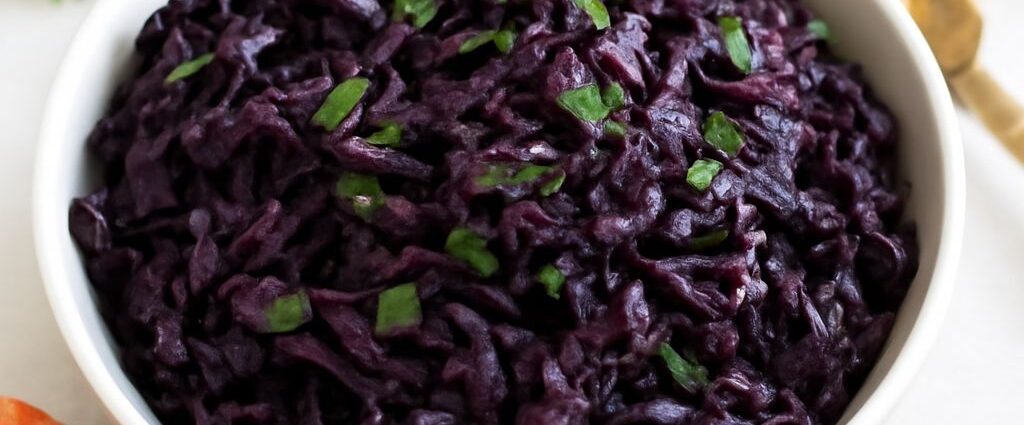
Learning how to cook purple cabbage is mostly a matter of controlling heat, time, and acidity. High heat keeps shredded cabbage pleasantly crisp, while longer cooking makes it soft and silky. A small amount of vinegar or lemon juice helps preserve its bright color and balances its natural sweetness.
The measured sauté below is the fastest everyday method. After that, use the roasting or braising instructions when you want browned edges or a softer, more deeply flavored result. These purple cabbage recipes work with the same basic preparation.
Prepare Purple Cabbage
Choose a firm head with tightly packed leaves and a glossy, deep purple color. Avoid cabbage with soft spots, cracked outer leaves, or a dry stem.
- Remove any damaged outer leaves.
- Cut the cabbage into quarters through the stem.
- Cut away the tough white core from each quarter.
- Rinse the wedges, then dry them well.
- Slice crosswise into ribbons about 1/4 inch thick.
Thin ribbons cook quickly and work best for sautéing. For roasting, cut the cabbage into wedges or thicker slices so the centers stay moist while the edges brown. For braising, use either thick wedges or 1/2-inch ribbons.
One medium head produces about 8 cups of sliced cabbage. If you are cooking less, halve the recipe below, but use a wide skillet whenever possible. Overcrowding traps steam and prevents browning.
How to Cook Purple Cabbage: A Measured Sauté
This purple cabbage recipe makes four side-dish servings. The cabbage becomes tender but retains a little bite, with a glossy, sweet-tangy finish.
Ingredients
- 2 tablespoons olive oil or unsalted butter
- 1 small yellow onion, thinly sliced
- 1 garlic clove, finely chopped
- 8 cups thinly sliced purple cabbage, about 1 medium head
- 1/2 teaspoon kosher salt, plus more to taste
- 1/4 teaspoon black pepper
- 2 tablespoons water
- 1 tablespoon apple cider vinegar
- 1 teaspoon honey or maple syrup
- 1 teaspoon Dijon mustard, optional
Method
- Heat the oil or butter in a large skillet over medium heat. Add the onion and cook for 3 to 4 minutes, stirring occasionally, until softened.
- Add the garlic and cook for 30 seconds. Do not let it brown, or it may taste bitter.
- Add the sliced cabbage, salt, and pepper. Toss until the cabbage is coated with the fat and begins to soften.
- Raise the heat to medium-high and cook for 5 to 7 minutes, stirring every minute or so. The edges should darken slightly while the thicker pieces remain crisp-tender.
- Add the water, cover the skillet, and reduce the heat to medium-low. Steam for 3 to 5 minutes, until the cabbage is tender enough to pierce easily but is not limp.
- Whisk the vinegar, honey, and Dijon mustard together. Uncover the skillet and stir in the mixture.
- Cook for 1 to 2 minutes more, stirring until the liquid coats the cabbage. Taste and adjust the salt, pepper, or vinegar before serving.
The full cooking time is about 12 to 17 minutes. For firmer cabbage, skip the covered steaming or limit it to 2 minutes. For softer cabbage, add another 2 tablespoons of water and steam for up to 5 additional minutes.
Add the vinegar near the end of a quick sauté. It brightens the color and flavor without giving the cabbage a harsh, sharp taste. Adding a large amount at the beginning can make the vegetables taste sour before their natural sweetness develops.
Recipes for Purple Cabbage: Roast and Braise
Roasting and braising create different results from a skillet sauté. Roasting concentrates sweetness and produces browned, crisp edges. Braising uses gentle heat and liquid to create tender cabbage with a richer, more rounded flavor.
Roasted purple cabbage
- Heat the oven to 425°F.
- Cut half a cabbage into 1-inch-thick wedges, keeping a little core attached to each wedge so it holds together.
- Arrange the wedges on a baking sheet. Brush with 2 tablespoons olive oil and season with 1/2 teaspoon kosher salt and 1/4 teaspoon black pepper.
- Roast for 20 minutes. Turn the wedges carefully and roast for 10 to 15 minutes more.
- Finish with 1 to 2 teaspoons lemon juice or apple cider vinegar, added after roasting.
The cabbage is ready when the centers are tender and the outer leaves have browned edges. Roast thinner wedges for 20 to 25 minutes total. If the edges darken before the centers soften, reduce the oven to 400°F and continue cooking for 5 to 10 minutes.
For more browning, leave space between the pieces and dry the cabbage thoroughly before oiling it. A crowded pan steams the cabbage instead of roasting it.
Braised purple cabbage
- Heat 1 tablespoon butter or oil in a heavy pot over medium heat.
- Add 1 sliced onion and cook for 5 minutes, until soft.
- Add 6 cups sliced cabbage, 1/2 cup apple juice or low-sodium vegetable stock, 2 tablespoons apple cider vinegar, 1 tablespoon brown sugar, 1/2 teaspoon salt, and a few grinds of black pepper.
- Bring the liquid to a simmer, cover, and reduce the heat to low.
- Braise for 30 to 40 minutes, stirring every 10 minutes, until the cabbage is very tender.
- Remove the lid and simmer for 5 to 10 minutes if excess liquid remains. Taste before serving.
Braising works best at a quiet simmer. A hard boil can break down the leaves unevenly and evaporate the liquid before the cabbage becomes tender. Add more stock or water, 1 tablespoon at a time, if the pot becomes dry during cooking.
The acid in this version goes in with the braising liquid because the longer cooking time allows its sharpness to mellow. It also helps the cabbage retain a vivid reddish-purple color. For a softer, less tangy result, use 1 tablespoon vinegar during cooking and add the remaining tablespoon at the end.
Keeping the Color Bright While Cooking Purple Cabbage
Purple cabbage contains natural pigments that react to acidity. Acidic ingredients such as vinegar, lemon juice, and apple juice push the color toward red or magenta. Without acid, long-cooked cabbage can turn bluish or dull gray-purple.
- Add acid for brightness: Stir vinegar or lemon juice into sautéed cabbage during the final minutes, or include it in a braising liquid.
- Use enough liquid for long cooking: A covered pot needs a small amount of stock, water, or juice to prevent scorching and uneven softening.
- Control the heat: Medium-high heat is suitable for quick sautéing, 425°F works for roasting, and low heat is best for braising.
- Match time to texture: Cook for 8 to 12 minutes for crisp-tender ribbons, 30 to 40 minutes for soft braised cabbage, or about 30 to 35 minutes for roasted wedges.
- Avoid alkaline ingredients: Baking soda can make purple cabbage turn blue-green and gives it a soft, unpleasant texture.
If the cabbage tastes flat, add salt first, then a small splash of vinegar. If it tastes too sharp, balance it with a pinch of sugar, honey, or maple syrup. For cooking purple cabbage as a filling or topping, stop when the ribbons are just tender so they do not become watery.
Serve sautéed cabbage immediately, while its edges are glossy and its texture is lively. Roasted wedges can rest for 5 minutes before serving. Braised cabbage keeps in a covered container in the refrigerator for up to four days and can be reheated gently in a skillet or saucepan.









Comments are closed, but trackbacks and pingbacks are open.