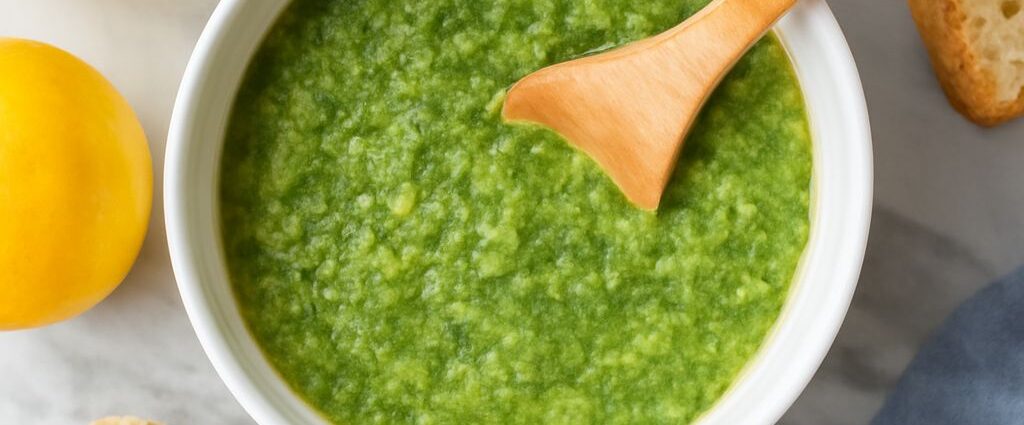
This dairy free pesto keeps the classic basil, garlic, and nut backbone, then replaces cheese with ingredients that add salt, body, and savory depth. The result is bright, spoonable, and flexible enough for pasta, sandwiches, vegetables, and grain bowls.
Use the recipe below as written first. After that, you can adjust the texture and flavor without losing the fresh pesto character. It is a practical pesto no cheese method, not a compromise version.
Dairy-Free Pesto Ingredients
This dairy free pesto recipe makes about 1 cup. For the best color, use a blender or food processor and add the greens first.
- 2 packed cups fresh basil leaves
- 1/3 cup raw or lightly toasted pine nuts, walnuts, or cashews
- 2 small garlic cloves, peeled
- 2 tablespoons nutritional yeast
- 1 tablespoon fresh lemon juice
- 1/2 teaspoon fine sea salt, plus more to taste
- 1/4 teaspoon black pepper
- 1/4 cup extra-virgin olive oil, plus 1 to 3 tablespoons more as needed
- 1 to 3 tablespoons cold water, only if needed for blending
Optional for more savoriness: 1 teaspoon white miso or 1 teaspoon capers, rinsed and drained.
Optional for extra richness: 1 tablespoon hemp seeds or 1 to 2 tablespoons additional nuts.
Blend and Adjust the Pesto
- Add the nuts, garlic, nutritional yeast, salt, pepper, and lemon juice to a food processor.
- Pulse 8 to 10 times until the nuts are finely chopped.
- Add the basil and pulse again until the leaves are broken down.
- With the machine running, drizzle in the olive oil slowly.
- Stop and scrape down the bowl. Blend again briefly until the mixture looks thick and slightly coarse.
- If it seems dry or will not move, add cold water 1 teaspoon at a time.
- Taste and adjust. Add more salt for brightness, more lemon for lift, or more oil for a smoother finish.
The ideal texture for non dairy pesto is soft and spoonable, with visible flecks of basil. It should hold on pasta without running off the plate. If it tastes flat, it usually needs salt first, then lemon, then a little more nut or miso depth.
If you want a creamier result, blend longer and add another tablespoon of oil or a tablespoon of cashews. If you want a looser sauce, thin it with pasta water after blending rather than adding too much water in the processor.
Cheese-Free Flavor and Texture Swaps
Cheese normally brings salt, umami, and a little body. In pesto without cheese, replace those jobs separately so the sauce still tastes complete.
- Nutritional yeast: Adds savory, slightly cheesy notes and works well in most dairy free pesto recipes.
- Miso: Use a small amount for deeper umami. Choose white miso for a milder taste.
- Capers: Bring salt and a briny edge. They are useful if your pesto tastes too round or sweet.
- Hemp seeds: Add creaminess without a strong nut flavor.
- Cashews: Make the pesto smoother and richer than pine nuts alone.
- Almonds or walnuts: Give a more rustic, robust flavor and work well if pine nuts are unavailable.
If the basil is very sharp or bitter, use slightly more oil and a touch more salt. If the sauce tastes heavy, add a little more lemon juice or extra basil. The best dairy free pesto balances freshness, fat, salt, and a savory finish, not just herb flavor.
For a vegan pesto variation with a softer profile, try basil, cashews, nutritional yeast, and lemon. For a stronger, earthier version, use walnuts and a small spoonful of miso. If you want a cleaner green color, avoid overblending and use cool ingredients.
Use, Store, and Freeze Pesto
This non dairy pesto is useful anywhere you would use classic pesto. Toss it with hot pasta, spread it on toast, spoon it over roasted potatoes, or use it under grilled vegetables. It also works in wraps, grain bowls, on pizza after baking, and as a dressing base when thinned with a little pasta water or olive oil.
For pasta: Reserve 1/2 cup pasta water. Start with 1/4 cup pesto per 8 ounces cooked pasta, then loosen with pasta water until glossy.
For sandwiches or toast: Use it straight from the fridge. A thicker blend is better here.
For vegetables or grains: Stir in 1 to 2 tablespoons at a time and taste before adding more.
To store, transfer the pesto to a jar or small container. Press plastic wrap directly onto the surface, or pour a thin layer of olive oil on top to slow browning. Refrigerate for up to 5 days.
For freezing, spoon the pesto into ice cube trays or small airtight containers. Freeze until firm, then transfer the cubes to a freezer bag. Frozen pesto keeps well for about 3 months. Thaw overnight in the refrigerator or melt directly into warm pasta and sauces.
If the pesto separates after chilling, stir it well before using. If it thickens too much, loosen it with a teaspoon of water, lemon juice, or olive oil until it spreads easily again.






Comments are closed, but trackbacks and pingbacks are open.